


x

Giclée- eller lerretsprint av museumskvalitet med rask produksjon og fleksible valgmuligheter for etterbehandling. ( Kjøp håndlaget maleri Kjøp bilde)





























Velg mellom våre forhåndsdefinerte størrelser som bevarer kunstverkets opprinnelige proporsjoner.

Du kan oppgi egne mål for å tilpasse en spesifikk ramme eller et bestemt område. Dersom den valgte størrelsen ikke samsvarer med det originale bildets proporsjoner, vil vi enten beskjære kunstverket eller utvide bildet med en speilet eller ensfarget kant. En digital mockup vil bli sendt til din godkjenning før produksjonen starter.
Vennligst merk at forhåndsvisningen på skjermen ikke gjenspeiler den faktiske beskjæringen eller utvidelsen. Kun mockuppen vil vise den endelige komposisjonen nøyaktig.
Selv om tilpassede størrelser er tilgjengelige, anbefaler vi å velge et mål fra den forhåndsdefinerte listen for å bevare de originale proporsjonene.
Verdensomspennende levering () på 2 uker i stedet for standard 4/5 uker. (21 August)


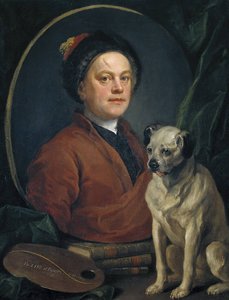
Self-Portrait with Pug-Dog
Størrelse på reproduksjon
In the quiet, contemplative depths of William Hogarth’s 1745 masterpiece, Self-Portrait with Pug-Dog, we find much more than a mere likeness of the artist. This evocative canvas serves as a profound window into the intellectual and social landscape of Enlightenment London, an era defined by a delicate tension between burgeoning optimism and a simmering anxiety regarding morality and societal reform. As you gaze upon the figure of Hogarth, you are not simply looking at a man, but at a visual historian capturing the very essence of his age. The painting transcends the boundaries of traditional portraiture, offering an intimate encounter with a creator who was as much a satirist and social commentator as he was a master of the brush.
The composition invites the viewer into a space of quiet reflection, where the atmosphere is thick with the weight of thought and the warmth of companionship. There is an undeniable emotional resonance in the way Hogarth presents himself—not through the grand, sweeping gestures of aristocratic portraiture, but through a grounded, naturalistic presence that feels remarkably modern even centuries later. For the collector or the designer, this piece offers a sense of timelessness, bringing a sophisticated, scholarly air to any curated space.
Stylistically, the work is a brilliant embodiment of the Rococo period, yet it avoids the excessive frivolity often associated with the movement. Instead, Hogarth employs a masterful balance between delicate ornamentation and underlying seriousness. The palette is a masterclass in restraint, dominated by soothing tones of brown, cream, and ochre that create an atmosphere of contemplative calm. This muted color scheme allows the subtle highlights to perform their magic, drawing the eye toward the textures of fabric, the sheen of skin, and the weathered edges of books.
Technically, the painting showcases Hogarth’s ability to use smooth gradations and a restrained brushstroke to achieve a lifelike illusion. Rather than relying on dramatic, jarring contrasts, he utilizes soft transitions that lend the scene a refined elegance. This technique creates a sense of depth and three-dimensionality that makes the subject feel present in the room with you. For those seeking to incorporate fine art into an interior, the painting’s harmonious tones provide a versatile foundation that complements both classical and contemporary decor, adding a layer of historical texture and quiet luxury.
Every element within the frame has been carefully orchestrated to communicate Hogarth's identity and aspirations. The prominent inclusion of stacked books serves as a silent testament to his erudition, signaling his deep engagement with the intellectual debates of the Enlightenment. These volumes are not mere props; they represent the pursuit of virtue through reason and observation—ideals that were central to the Georgian era. Through these symbols, Hogarth establishes himself as a man of intellect and character.
Adding a touch of warmth and personality to this scholarly setting is the presence of his beloved pug, Trump. The dog’s distinctive features and loyal posture provide a charming contrast to the serious intellectual pursuits depicted in the background. This companionship softens the artist's persona, adding a layer of human vulnerability and affection that makes the portrait deeply relatable. To own a reproduction of this work is to possess a piece of history that celebrates the duality of the human experience: the pursuit of high intellect alongside the simple, profound joys of life.

1697 - 1764 , Storbritannia

Explore the elegance of Rococo art. From Watteau to Fragonard, discover the history, aesthetics, and masters of 18th-century luxury in this expert guide for art lovers and collectors.

Explore the profound history of the world's most iconic dog portraits. From ancient symbols to 19th-century masters, journey through canine art history with expert insights and discover museum-quality, hand-painted oil reproductions and bespoke pet commissions.

Explore the exquisite world of Rococo art. From Watteau's intimacy to Fragonard's grace, discover the history, motifs, and masters of this era of light and ornament in our expert guide for art lovers and collectors.


Hold deg oppdatert med de siste kunstnyhetene, eksklusive tilbud og dekorasjonsideer.
Fortell oss om prosjektet ditt, så vil våre kunsteksperter gi deg 3 personlige kunstforslag.
Vi velger ut 3 alternativer kun for deg – helt gratis!


 Forhåndsvisning
 Send
Send Del med andre
 Vis detaljer

 Last ned bildet
 Liknende objekter
 Røntgenundersøkelse
 Lysbildefremvisning

 Vis hele teksten







 Glassalternativet er kun tilgjengelig i størrelser under 110 cm


