


x

 Academic Portraiture
 125.0 x 99.0 cm
Håndmalt olje på lerret i din valgte størrelse og ramme, laget på bestilling av våre kunstnere. ( Kjøp trykk Kjøp bilde)





























Velg mellom våre forhåndsdefinerte størrelser som bevarer kunstverkets opprinnelige proporsjoner.

Du kan angi egne mål for å tilpasse en spesifikk ramme eller plass. Dersom den valgte størrelsen ikke samsvarer med originalbildets proporsjoner, vil vi enten beskjære kunstverket eller utvide maleriet med ytterligere håndmalte elementer. En digital mockup vil bli sendt til din godkjenning før produksjonen starter.
Vennligst merk at forhåndsvisningen på skjermen ikke gjenspeiler den faktiske beskjæringen eller utvidelsen. Kun mockuppen vil vise den endelige komposisjonen nøyaktig.
Selv om tilpassede størrelser er tilgjengelige, anbefaler vi å velge et mål fra den forhåndsdefinerte listen for å bevare de originale proporsjonene.
Verdensomspennende levering () på 3–4 uker i stedet for standard 5 uker. (14 August). Ingen kompromisser med kvaliteten.


Edwin Yates
Størrelse på reproduksjon

In the heart of the industrial Midlands, amidst the burgeoning smoke and steel of Victorian England, William Thomas Roden emerged as a definitive voice of his era. Born in 1818 on Bradford Street, Birmingham, Roden was far more than a mere chronicler of faces; he was the city’s portrait laureate, a man capable of distilling the very essence of the nineteenth century onto canvas. His lineage was deeply entwined with the artistic fabric of the region, born to William and Sarah Roden, a family that stood as a testament to the creative vitality flourishing within the industrial landscape. His early years were defined by a rigorous discipline, shaped by a meticulous apprenticeship under the esteemed engraver George Thomas Doo. This foundational period in engraving instilled in him an unparalleled command over tonal gradation and precision—a technical mastery that would later allow his oil paintings to possess a profound, almost sculptural, clarity.
Roden’s journey was one of both local devotion and outward ambition. While his roots remained firmly planted in the soil of Birmingham, his pursuit of artistic excellence led him to the vibrant art circles of London. This period of exploration expanded his horizons, yet it was his return to his home city that truly cemented his legacy. He did not merely paint the elite; he captured the psychological weight of an age. His brush danced between the rigid requirements of academic realism and a soulful, romantic sensitivity, allowing him to immortalize figures of immense historical gravity. To look upon a Roden portrait is to encounter the quiet dignity of the Victorian era, where every fold of fabric and every subtle shadow served to illuminate the character of the sitter.
The true measure of Roden’s significance lies in the illustrious company he captured. His studio became a sanctuary for the architects of British society, where he collaborated with luminaries whose names would define the Victorian epoch. Through his eyes, we encounter the political weight of Lord Palmerston and Lord Gladstone, the spiritual depth of Cardinal Newman, and the transformative energy of Joseph Chamberlain. These were not mere likenesses; they were studies in power, intellect, and grace. His ability to navigate the complexities of such diverse personalities required a versatility that transcended simple portraiture. Beyond the faces of the powerful, Roden’s imagination wandered through landscapes, biblical narratives, and classical themes, demonstrating a breadth of vision that prevented him from being pigeonholed as a mere specialist.
His commitment to the artistic community was as steadfast as his dedication to his craft. For nearly three decades, spanning from 1848 to 1873, Roden was a pillar of the Royal Birmingham Society of Artists (RBSA). His influence within the society was profound; serving as a Director for two years, he helped steer the artistic direction of the region’s most important gallery. This period of leadership allowed him to shape the very ecosystem in which he thrived, ensuring that the standards of excellence he had learned through apprenticeship were passed down to subsequent generations. His work remains a vital link to a vanished world, offering a window into the textures and tensions of a society in transition.
The enduring impact of William Thomas Roden can be summarized through his multifaceted contributions:

1818 - 1892 , United Kingdom

Utforsk kunsten av håndlagde oljemalerier for gallerier og hoteller. Ekspertguide til teknikker, stilvalg og reproduksjonens kunst. Finn unike mesterverk med Most-Famous-Paintings.com!

Opplev 1800-tallets kunst gjennom 10 ikoniske mesterverk! Fra romantikk til impresjonisme – lær om Munch, Van Gogh og Monet. Finn museumskvalitets reproduksjoner & interiørinspirasjon på Most-Famous-Paintings.com. Utforsk samlingen online!
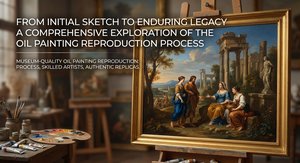
Oppdag kunsten bak oljemalerireproduksjon! Lær om prosessen fra skisse til ferdig kunstverk, håndmalt av profesjonelle artister. Museumskvalitet og personlig tilpasning – garantert.

Utforsk kunsten å reprodusere mesterverk med ! Vi tilbyr høykvalitets oljemaleri, lerretstrykk og papirkopier. Finn din perfekte kunstreplika eller bestill et tilpasset maleri i dag.

Explore the enduring legacy of hand-painted oil paintings. Discover the aesthetic value, material longevity & emotional resonance that sets original art—and expertly crafted reproductions—apart. Invest in timeless beauty.


Hold deg oppdatert med de siste kunstnyhetene, eksklusive tilbud og dekorasjonsideer.
Fortell oss om prosjektet ditt, så vil våre kunsteksperter gi deg 3 personlige kunstforslag.
Vi velger ut 3 alternativer kun for deg – helt gratis!


 Forhåndsvisning
 Send
Send Del med andre
 Vis detaljer

 Last ned bildet
 Liknende objekter
 Røntgenundersøkelse
 Lysbildefremvisning
 Vis hele teksten







 Glassalternativet er kun tilgjengelig i størrelser under 110 cm


