


x

Ręcznie malowany obraz olejny na płótnie, wykonany na zamówienie przez naszych artystów w wybranym przez Ciebie wymiarze i oprawie. ( Zamów wydruk Kup obraz wysokiej rozdzielczości)





























Wybierz spośród naszych standardowych rozmiarów, które zachowują oryginalne proporcje dzieła sztuki.

Możesz wprowadzić własne wymiary, aby dopasować obraz do konkretnej ramy lub przestrzeni. Jeśli wybrany rozmiar nie będzie odpowiadał proporcjom oryginału, przytniecie dzieło sztuki lub rozszerzymy je o dodatkowe elementy, ręcznie domalowane przez artystę. Przed rozpoczęciem produkcji wyślemy projekt cyfrowy do Twojej akceptacji.
Należy pamiętać, że podgląd na ekranie nie odzwierciedla rzeczywistego przycinania ani rozszerzania obrazu. Tylko projekt dokładnie pokaże ostateczną kompozycję.
Choć oferujemy możliwość zamówienia niestandardowych rozmiarów, zalecamy wybór wymiaru z gotowej listy, aby zachować oryginalne proporcje dzieła.
Dostawa na całym świecie () w ciągu 3–4 tygodni zamiast standardowych 5 tygodni. (21 Sierpień). Bez kompromisów w kwestii jakości.


untitled (9973)
Wymiary reprodukcji
Amedeo Modigliani's "Untitled (9973)" is not merely a portrait; it’s an exquisitely rendered distillation of melancholy, a visual echo of the artist’s own turbulent life and profound artistic vision. Painted in 1918, just two years before his untimely death at the age of 35, this work embodies the core tenets of Modigliani's distinctive style – elongated forms, piercing gazes, and an underlying current of poignant longing. The painting captures a quiet intimacy between a man and a woman, their postures suggesting a shared moment of contemplation, yet hinting at unspoken complexities. The scene unfolds within a modestly furnished interior, the muted palette dominated by browns, ochres, and subtle blues – colors that contribute to the overall atmosphere of subdued elegance and restrained emotion.

Born in Livorno, Italy, in 1884 into a family grappling with financial hardship after their mining business collapsed, Amedeo Modigliani’s life was marked by both artistic brilliance and personal struggle. His early years were shaped by his mother's intellectual influence – she introduced him to the works of Nietzsche, Baudelaire, and Lautréamont, fueling a rebellious spirit that would reject conventional artistic norms. Modigliani’s health was consistently precarious; recurring illnesses, including pleurisy and typhoid fever, cast a shadow over his youth, perhaps contributing to the introspective quality evident in his art. He arrived in Paris in 1906, immersing himself within the vibrant, albeit often challenging, artistic circles of the avant-garde. This period saw him forging connections with figures like Pablo Picasso and Constantin Brâncuși, absorbing influences while simultaneously developing a uniquely personal style – one characterized by its elegant distortions and haunting beauty.
Modigliani’s technique in “Untitled (9973)” is immediately recognizable. The figures are rendered with a deliberate elongation of the faces, necks, and limbs—a hallmark of his style that departs significantly from traditional portraiture. This exaggeration isn't merely decorative; it serves to heighten emotional expression, suggesting vulnerability and an almost ethereal quality. The man’s tie, a small detail yet crucial in conveying a sense of formality and perhaps social standing, contrasts subtly with the woman’s relaxed posture and direct gaze. The brushstrokes are loose and expressive, creating a sense of movement and immediacy. Notice how Modigliani uses subtle gradations of color to model the forms, lending them depth and volume without resorting to sharp outlines. The background, deliberately understated, focuses attention entirely on the central figures.
Beyond its formal qualities, “Untitled (9973)” is rich in symbolic potential. The woman’s averted gaze suggests a private preoccupation, perhaps a reflection on her own thoughts or memories. The man's attentive posture hints at an unspoken connection—a shared understanding or a moment of quiet intimacy. The presence of the clock on the wall adds a layer of temporal significance, reminding us of the fleeting nature of time and the poignant beauty of captured moments. Considering Modigliani’s own life – marked by unrequited love and personal loss – it's not surprising that this painting exudes an atmosphere of melancholy and longing. It invites viewers to contemplate themes of connection, solitude, and the enduring power of human emotion. The work speaks to a universal experience: the quiet contemplation of another person, the unspoken words hanging in the air, and the poignant awareness of life’s transient beauty.


1884 - 1920 , Włochy

Explore the profound history of Expressionism. From Edvard Munch to Jackson Pollock, discover how artists used distortion and color to convey raw emotion. A definitive guide for art lovers seeking deep historical context and mastery in fine art reproductions.
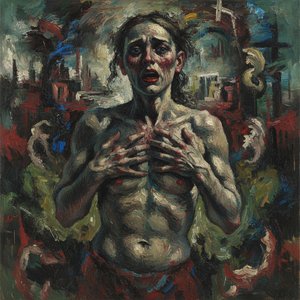
Explore the profound depth of Figurative Expressionism. From Edvard Munch to William H. Johnson, learn how masters use the human form to capture raw emotion through color and distortion in this expert art history guide.

Explore the profound history of Surrealist Expressionism. Discover how artists blended dream logic with raw emotion to navigate post-war trauma through masterful, evocative imagery and psychological depth.


Bądź na bieżąco z najnowszymi wiadomościami ze świata sztuki, ekskluzywnymi ofertami i inspiracjami dekoratorskimi.
Opowiedz nam o swoim projekcie, a nasi eksperci przygotują dla Ciebie 3 spersonalizowane propozycje dzieł sztuki.
Przygotujemy dla Ciebie 3 propozycje zupełnie za darmo!


 Podgląd w skali
 Wyślij jako kartkę
 Udostępnij
 Szczegóły dzieła

 Pobierz
 Podobne obiekty
 RTG
RTG Pokaz slajdów
 Rozwiń treść







 Opcja ze szkłem jest dostępna wyłącznie w rozmiarach poniżej 110 cm


