
Sprzedawaj swoją sztukę
Lista życzeń Koszyk zakupowy Cart
Zamów ręcznie malowaną reprodukcję Zamów ręcznie malowaną reprodukcjęKup obraz wysokiej rozdzielczości Kup obraz wysokiej rozdzielczości Wyślij jako kartkęWyślij jako kartkę
Szczegóły dziełaSzczegóły dzieła Dodaj do ulubionych Dodaj do ulubionych PobierzPobierz Podobne obiektyPodobne obiekty Pokaz slajdówPokaz slajdów

Dwie Formy

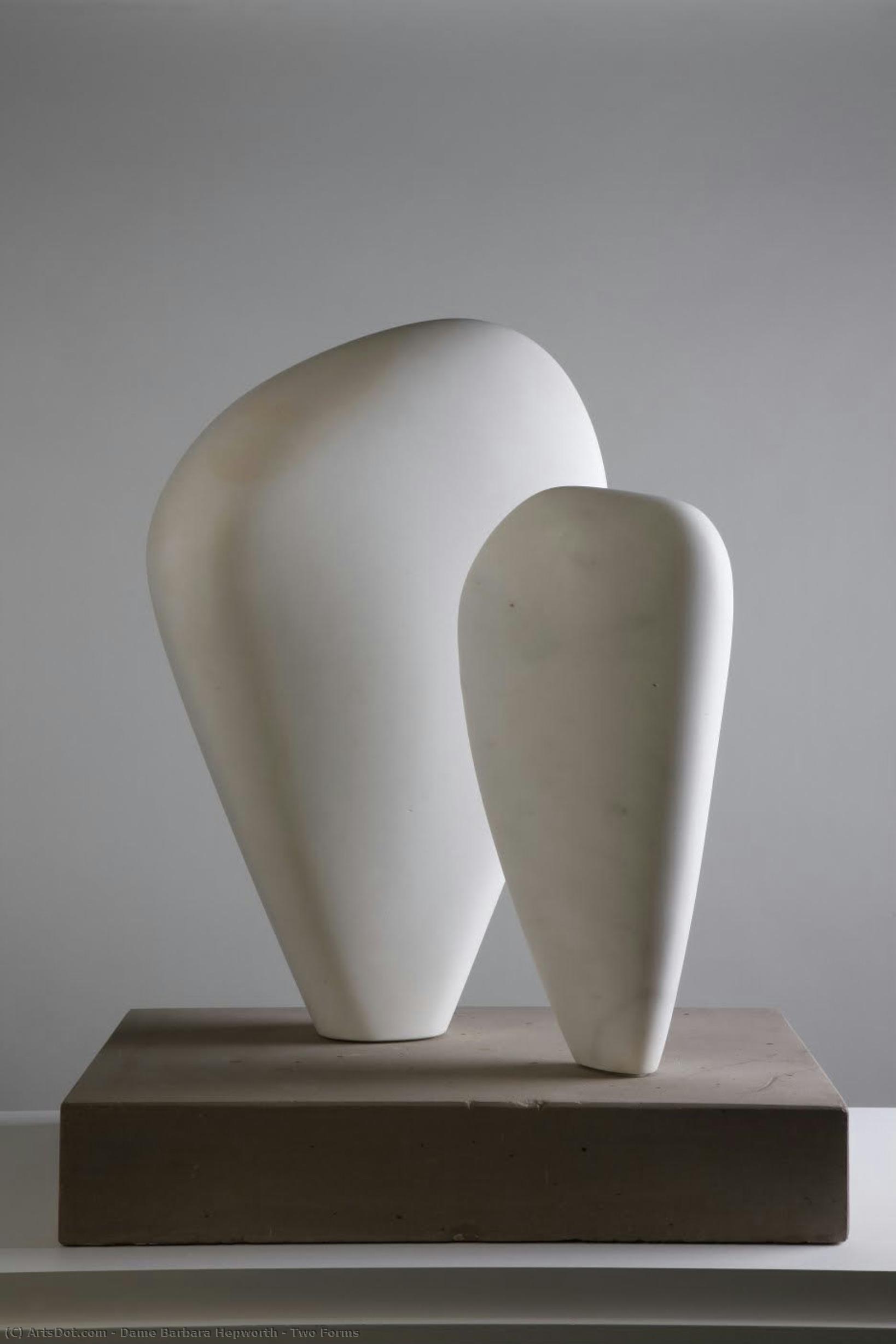
Monumental abstrakcyjna escultura Barbary Hepworth z roku 1937. Dwie formy wykonane z betonu prezentują się niezwykle elegancko i wpisują się w kanon sztuki nowoczesnej.

Poznaj modernistyczne rzeźby Barbary Hepworth (1903-1975). Pionierką sztuki abstrakcyjnej była Hepworth, której dzieła – w tym 'Oval Form' i 'Two Forms' – łączą surrealizm z abstrakcją. Odkryj jej dziedzictwo w Muzeum Hepworth Wakefield.

Giclée / Wydruk artystyczny

Druk giclée lub płótno o jakości muzealnej, szybka realizacja i szeroki wybór opcji wykończenia. (Zamów ręcznie malowaną reprodukcję Zamów ręcznie malowaną reprodukcjęKup obraz wysokiej rozdzielczości Kup obraz wysokiej rozdzielczości)

Standard
custom
CM
INCH

Wybierz spośród naszych standardowych rozmiarów, które zachowują oryginalne proporcje dzieła sztuki.

szerokość
wysokość

Możesz wprowadzić własne wymiary, aby dopasować dzieło do konkretnej ramy lub przestrzeni. Jeśli wybrany rozmiar nie będzie odpowiadał proporcjom oryginalnego obrazu, przytniecie dzieło lub rozszerzymy obraz za pomocą odbicia lustrzanego lub jednolitego wypełnienia krawędzi. Przed rozpoczęciem produkcji prześlemy cyfrową wizualizację do Twojej akceptacji.
Prosimy pamiętać, że podgląd na ekranie nie odzwierciedla faktycznego przycinania ani rozszerzania. Tylko wizualizacja dokładnie pokaże końcową kompozycję.
Mimo dostępności niestandardowych rozmiarów, zalecamy wybór wymiaru z listy zdefiniowanej, aby zachować oryginalne proporcje.

Dostawa na cały świat () w ciągu 2 tygodni zamiast standardowych 4/5 tygodni. (14 Sierpień)

why_choose_icon
Bezpłatna ekspresowa wysyłka na cały świat
why_choose_icon
Wysokiej jakości płótno lniane
why_choose_icon
Pełne ubezpieczenie przesyłki
why_choose_icon
Gwarancja zwrotu należności celnych i podatków importowych
why_choose_icon
Gwarancja wiernego odwzorowania kolorów
why_choose_icon
Polityka 60-dniowego zwrotu (tylko w przypadku wad)
why_choose_icon
Gwarancja 100% zwrotu kosztów
why_choose_icon
Zniżka przy zamówieniu wielu produktów

Suma całkowita

$ 68

reproduction

Dwie Formy

Giclée / Wydruk artystyczny

Wymiary reprodukcji

-

Cena całkowita

$ 68

Szybki podgląd

  • Artistic style: Modern Sculpture
  • Subject or theme: Abstract Form
  • Location: Private Collection
  • Artist: Barbara Hepworth
  • Notable elements or techniques: Curved Shape
  • Title: Two Forms
  • Year: 1937

Quiz o sztuce

Do każdego pytania dotyczy tylko jedna poprawna odpowiedź.

Pytanie 1:
What artistic movement is Dame Barbara Hepworth associated with?
Pytanie 2:
In what year was the sculpture 'Two Forms' created?
Pytanie 3:
What material is Dame Barbara Hepworth’s sculpture ‘Two Forms’ primarily composed of?
Pytanie 4:
Where can you find a notable piece by Dame Barbara Hepworth?
Pytanie 5:
What is the overall aesthetic style of ‘Two Forms’?

Opis kolekcjonerski

Barbara Hepworth: Two Forms – A Testament to Organic Minimalism

Barbara Hepworth (1903–1975), a pivotal figure in British modernism, continues to captivate audiences with her sculptures that embody a profound connection to the natural world. “Two Forms,” created in 1937 during Hepworth’s formative years as an artist and sculptor, exemplifies her signature style – organic minimalism – a deliberate rejection of representational art in favor of exploring pure geometric shapes imbued with emotional resonance.

The sculpture itself is strikingly simple yet undeniably powerful. Constructed from concrete, “Two Forms” presents two interlocking white forms that ascend vertically, separated by a shallow concave curve. This subtle indentation isn’t merely an aesthetic detail; it's integral to Hepworth’s conceptual approach. Rather than depicting recognizable objects or landscapes, she sought to distill the essence of form itself, mirroring the underlying structure of geological formations and organic matter.

Hepworth’s involvement with the Unit One movement—a collaborative effort spearheaded by Ben Nicholson, Paul Nash, and others—was crucial in shaping her artistic vision. This group championed a synthesis between Surrealism and Abstraction, rejecting traditional academic conventions and embracing experimentation with materials and techniques. The concrete chosen for “Two Forms” reflects this spirit of innovation, demonstrating Hepworth’s willingness to push boundaries and explore unconventional mediums.

Symbolically, “Two Forms” speaks to themes of duality and balance—a recurring motif in Hepworth's oeuvre. The upward thrust of the forms represents aspiration and dynamism, while the concave curve embodies stillness and containment. These opposing forces coexist harmoniously, mirroring the interconnectedness of nature and suggesting a contemplation on fundamental principles of existence.

More than just aesthetically pleasing, “Two Forms” invites viewers to engage in an emotional dialogue. Its austere materiality and geometric precision create a sense of contemplative calm, prompting reflection on form’s ability to convey profound ideas without resorting to explicit imagery. It remains a testament to Hepworth's unwavering commitment to exploring the expressive potential of abstract sculpture—a legacy that continues to inspire artists and collectors alike.


O artyście

Barbara Hepworth: Pioneer of Organic Abstraction

Barbara Hepworth (1903–1975) stands as one of the most influential figures in British sculpture of the 20th century, a sculptor whose uncompromising vision reshaped artistic conventions and cemented her place among the foremost innovators of modernism. Born Jocelyn Barbara Hepworth on January 10, 1903, in Wakefield, Yorkshire—the eldest child of Herbert and Gertrude Johnson Hepworth—her formative years were steeped in the rugged beauty of the Pennines landscape, an environment that would profoundly inform her artistic sensibility for decades to come.Herbert Hepworth was a civil engineer for the West Riding County Council, who in 1921 advanced to the role of county surveyor.
  • Early Education: Hepworth attended Wakefield Girls’ High School where she excelled academically and musically.
  • Leeds School of Art: At Leeds School of Art from 1920, she encountered Henry Moore, forging a friendship that would endure throughout their careers—a relationship characterized by mutual respect and spirited debate about artistic direction.

Formal Training and Artistic Beginnings

Hepworth’s formal training culminated in her enrollment at the Royal College of Art (RCA) in London in 1921, where she honed her sculptural skills under the tutelage of Henry Moore and others. Her diploma in 1924 marked a pivotal moment, propelling her into the burgeoning avant-garde movement of the time—specifically Abstraction-Création—and establishing her connection with fellow artists like Ben Nicholson and Paul Nash.Together with Moore and other students at the College, makes occasional trips to Paris.
  • Early Style: Hepworth’s initial explorations embraced simplified forms inspired by Egyptian sculpture, reflecting a fascination with ancient art traditions.
  • Direct Carving Technique: She championed “direct carving,” prioritizing the tactile engagement between artist and material—a method that distinguished her work from more conventional modeling techniques.

Collaboration and Influence of Ben Nicholson

Hepworth’s artistic partnership with Ben Nicholson began in 1931, transforming into a deeply intertwined relationship both personally and professionally.She marries sculptor John Skeaping in 1925. Their shared studio in Hampstead became a crucible for experimentation—a space where they wrestled with questions of form, texture, and spatial relationships. Nicholson’s influence on Hepworth's aesthetic was undeniable, fostering her embrace of geometric abstraction and shaping her exploration of the interplay between mass and void.She would later relate this shift to having triplets with Nicholson in 1934, noting that after this ‘the work was more formal, and all traces of naturalism had disappeared, and for some years I was absorbed in the relationships in space, in size and texture and weight, as well as in the tensions between the forms.’
  • Unit One Movement: Hepworth’s involvement with Unit One—a collective dedicated to synthesizing Surrealist and Abstract Expressionist impulses—solidified her position at the forefront of British modernism.
  • Landscape Sculpture: Hepworth's artistic vision was profoundly shaped by her immersion in the Yorkshire landscape, which served as a constant source of inspiration for her sculptures—particularly those exploring the relationship between organic forms and geometric abstraction.“The main sources of my inspiration are the human figure and the landscape; also the one in relation to the other.” Barbara Hepworth

Mature Style and Legacy

Hepworth’s mature style—characterized by a sensual exploration of material and space—produced monumental sculptures that captivated audiences worldwide.She was made a Commander of the Order of the British Empire in 1958, and was later awarded the rank of Dame in 1965. Notable works include *Oval Form*, *Two Forms*, and *Totem*, which exemplify her unwavering commitment to abstraction while retaining an evocative connection to nature.“Carving to me is more interesting than modelling, because there is an unlimited variety of materials from which to draw inspiration.” Barbara Hepworth
  • Hepworth Wakefield: Her legacy continues to inspire artists and art enthusiasts alike, enshrined in the Hepworth Wakefield—a museum dedicated to showcasing her oeuvre and fostering dialogue about contemporary sculpture.
  • Notable Exhibitions: Hepworth’s sculptures graced prestigious venues such as the Kimbell Art Museum in Fort Worth, Texas, cementing her reputation as a globally recognized artist.The Hepworth Wakefield houses numerous masterpieces from renowned artists, including hepworth's own works.
Hepworth’s pioneering approach to sculpture—her insistence on exploring fundamental geometric principles while simultaneously honoring the tactile qualities of natural materials—established her as an enduring icon of modernist art. Her work remains a testament to her artistic genius and continues to resonate with audiences today.More about barbara hepworth on wikipedia
Barbara Hepworth

Barbara Hepworth

1903 - 1975 , Wielka Brytania

Krótka nota

  • Artistic Movement Or Style: Modernizm
  • Artists Or Movements Influenced By This Artist: ['Unit One']
  • Artists Who Influenced This Artist: ['Henry Moore']
  • Date Of Birth: 10 stycznia 1903
  • Full Name: Jocelyn Barbara Hepworth
  • Nationality: Angielka
  • Notable Artworks:
    • Oval Form
    • Two Forms
    • Totem
  • Place Of Birth: Wakefield, Anglia
Odkryj dzieła sztuki uporządkowane według tematów, stylów i cech charakterystycznych.





































