x

Druk giclée lub płótno o jakości muzealnej, szybka realizacja i szeroki wybór opcji wykończenia. ( Zamów ręcznie malowaną reprodukcję Kup obraz wysokiej rozdzielczości)
Wybierz spośród naszych standardowych rozmiarów, które zachowują oryginalne proporcje dzieła sztuki.

Możesz wprowadzić własne wymiary, aby dopasować dzieło do konkretnej ramy lub przestrzeni. Jeśli wybrany rozmiar nie będzie odpowiadał proporcjom oryginalnego obrazu, przytniecie dzieło lub rozszerzymy obraz za pomocą odbicia lustrzanego lub jednolitego wypełnienia krawędzi. Przed rozpoczęciem produkcji prześlemy cyfrową wizualizację do Twojej akceptacji.
Prosimy pamiętać, że podgląd na ekranie nie odzwierciedla faktycznego przycinania ani rozszerzania. Tylko wizualizacja dokładnie pokaże końcową kompozycję.
Mimo dostępności niestandardowych rozmiarów, zalecamy wybór wymiaru z listy zdefiniowanej, aby zachować oryginalne proporcje.
Dostawa na cały świat () w ciągu 2 tygodni zamiast standardowych 4/5 tygodni. (17 Sierpień)


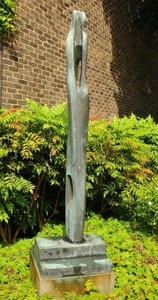
Wave
Wymiary reprodukcji
Dame Barbara Hepworth's "Wave," created in 1943 during a pivotal period of artistic and personal transformation, is more than just a sculpture; it’s a profound meditation on movement, form, and the elemental power of nature. Born amidst the turmoil of World War II, Hepworth sought refuge and inspiration in the rugged Cornish coastline, a landscape that profoundly shaped her evolving aesthetic. “Wave” embodies this connection, capturing not merely the visual appearance of a breaking wave but its very essence – the dynamic tension between potential energy and released force, the suggestion of ceaseless motion frozen in stone.
The sculpture itself is remarkably understated in its execution. Crafted primarily from wood, meticulously polished to a luminous sheen, it’s a deceptively simple form: a gently curving line extending outwards from a central, circular core. This isn't an attempt at literal representation; rather, Hepworth employed a reductive approach, stripping away extraneous detail to reveal the underlying structure and rhythm of the subject. The wood, chosen for its warmth and inherent grain, provides a tactile counterpoint to the smooth, almost ethereal quality of the polished surface. The subtle variations in tone within the wood itself – hints of amber, ochre, and grey – subtly mimic the shifting hues of the sea under different lighting conditions.
“Wave” firmly establishes Hepworth as a key figure within the burgeoning movement of Modern sculpture. Rejecting traditional representational approaches, she embraced abstraction, prioritizing the exploration of form, texture, and spatial relationships. Influenced by Cubism and Surrealism, Hepworth sought to capture not just what something *looked* like but how it *felt*, translating internal experiences into tangible three-dimensional forms. This approach aligns with the broader modernist ethos of breaking away from established conventions and forging new paths in artistic expression.
The sculpture’s design reflects a conscious engagement with geometric principles, yet it avoids rigid formality. The curve is organic and flowing, suggesting the unpredictable nature of water – its capacity to both crash against the shore with violent force and gently lap at the sand. Hepworth's use of negative space—the areas surrounding and between the form—is equally crucial, creating a sense of lightness and airiness that further emphasizes the sculpture’s dynamic quality. It is this careful balance between positive and negative forms that gives “Wave” its remarkable visual power.
Beyond its purely formal qualities, "Wave" carries significant symbolic weight. Created during a time of global conflict and uncertainty, the sculpture can be interpreted as an emblem of resilience – a testament to the enduring strength and adaptability of nature. The wave itself represents constant change, ceaseless movement, and the cyclical rhythms of life and death. The polished surface reflects light, suggesting hope and renewal, while the underlying structure hints at the potential for transformation.
Hepworth’s personal experiences also informed the sculpture's meaning. Following her divorce from John Skeaping in 1933, she sought solace and creative rejuvenation in Cornwall, a landscape that offered both beauty and emotional depth. “Wave” can be seen as an expression of this journey – a celebration of freedom, independence, and the power to overcome adversity. The work’s inherent dynamism mirrors Hepworth's own evolving artistic practice, reflecting her willingness to experiment with new materials and techniques.
Reproductions of “Wave” offer a compelling opportunity to bring this iconic sculpture into your home or office. The meticulous detail captured in high-quality reproductions allows you to appreciate Hepworth’s masterful use of form, texture, and space. Consider placing a reproduction within a light-filled room to maximize its reflective qualities, creating a focal point that draws the eye and evokes a sense of tranquility.
“Wave”’s understated elegance makes it exceptionally versatile for interior design. Its clean lines and subtle color palette complement a wide range of styles, from minimalist modern spaces to more traditional settings. The sculpture's inherent dynamism adds visual interest and energy to any room, serving as a constant reminder of the beauty and power of the natural world.


1903 - 1975 , Wielka Brytania

Discover the enduring elegance of bronze sculpture. Our expert guide explores lost-wax casting, patina mastery, and professional tips for collecting and commissioning museum-quality bronze art to create a lasting legacy in your private collection.
Elevate your collection with our expert guide to bronze sculpture. Discover the mastery of lost-wax casting, the artistry of patination, and professional insights for acquiring timeless metal masterpieces that define sophisticated interiors.


Bądź na bieżąco z najnowszymi wiadomościami ze świata sztuki, ekskluzywnymi ofertami i inspiracjami dekoratorskimi.
Opowiedz nam o swoim projekcie, a nasi eksperci przygotują dla Ciebie 3 spersonalizowane propozycje dzieł sztuki.
Przygotujemy dla Ciebie 3 propozycje zupełnie za darmo!


 Wyślij jako kartkę
 Udostępnij
 Szczegóły dzieła

 Pobierz
 Podobne obiekty
 Pokaz slajdów


 Rozwiń treść




































 Opcja ze szkłem jest dostępna wyłącznie w rozmiarach poniżej 110 cm