Sprzedawaj swoją sztukę
Lista życzeń Koszyk zakupowy Cart
Podgląd w skaliPodgląd w skali Podgląd ARPodgląd AR Zamów wydruk Zamów wydrukZamów ręcznie malowaną reprodukcję Zamów ręcznie malowaną reprodukcję Wyślij jako kartkęWyślij jako kartkę
Szczegóły dziełaSzczegóły dzieła Dodaj do ulubionych Dodaj do ulubionych PobierzPobierz Podobne obiektyPodobne obiekty RTGRTG Pokaz slajdówPokaz slajdów

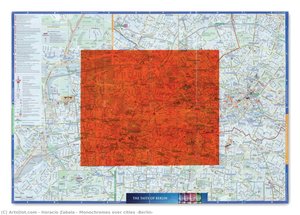
Untitled

  • Data powstania2014
  • Wymiary700.0 x 80.0 cm

Explore the minimalist abstract art of Choi Byungso (1943-2020), a celebrated Korean artist known for his elegant pencil works & profound simplicity.

Kup wysokiej rozdzielczości, ulepszony obraz cyfrowy o znacznie wyższej jakości niż podgląd online.

Każdy plik jest starannie przygotowywany przez naszych specjalistów przy użyciu zaawansowanych narzędzi oraz profesjonalnej, ręcznej retuszy. Dbamy o to, aby każdy obraz cechował się wyjątkową ostrością, precyzyjnym odwzorowaniem kolorów i subtelnymi detalami.

Ostateczny plik dostarczany jest drogą mailową w ciągu 72 godzin, zoptymalizowany do natychmiastowego wykorzystania w profesjonalnych zastosowaniach redakcyjnych i poligraficznych. To ta sama jakość, której ufają czołowe studia projektowe, wydawnictwa oraz galerie sztuki.

Obraz cyfrowy

Pobierz plik o wysokiej rozdzielczości do osobistego wyświetlania, druku oraz projektów kreatywnych. (Zamów wydruk Zamów wydrukZamów ręcznie malowaną reprodukcję Zamów ręcznie malowaną reprodukcję)

Suma do zapłaty

$ 24,90

W każdym zamówieniu na obraz cyfrowy znajduje się

Profesjonalna dostawa cyfrowa z gwarancją

Wybierając Most-Famous-Paintings.com, nie otrzymujesz jedynie obrazu – otrzymujesz profesjonalnie udoskonalone cyfrowe dzieło sztuki, stworzone z najwyższą precyzją i objęte gwarancją satysfakcji. Oto wszystko, co automatycznie dołączane jest do Twojego zamówienia:

shipping_icon
Błyskawiczna wysyłka e-mailowa

Plik z obrazem cyfrowym w wysokiej rozdzielczości zostanie przesłany na Twój adres e-mail w ciągu 72 godzin od złożenia zamówienia – gotowy do natychmiastowego użycia.

canvas_icon
Plik cyfrowy wzbogacony przez AI

Twoja grafika została profesjonalnie zoptymalizowana przy użyciu zaawansowanych narzędzi AI oraz ręcznej edycji, co zapewnia maksymalną szczegółowość, klarowność i wierność kolorów.

insurance_icon
Dożywotnia darmowa ponowna dostawa

Przypadkowo usunąłeś lub zgubiłeś swój plik? Bez obaw – prześlemy go Tobie ponownie w dowolnym momencie, bez żadnych opłat.

tax_icon
Bez opłat importowych – zawsze

Ciesz się swoją sztuką natychmiast, bez żadnych opłat celnych, należności ani kosztów dostawy – pliki cyfrowe są zawsze wolne od podatku.

color_icon
Gwarancja wierności kolorów

Dzięki zastosowaniu profesjonalnych narzędzi i procesów zarządzania barwą zapewniamy, że Twoje cyfrowe zdjęcie odzwierciedla oryginalne kolory tak wiernie, jak to tylko możliwe.

return_icon
60-dniowa gwarancja satysfakcji

Jeśli nie będziesz zadowolony ze swojego cyfrowego obrazu, dokonamy jego poprawki lub zwrócimy 100% kosztów w ciągu 60 dni – bez żadnych pytań.

guarantee_icon
100% Gwarancja zwrotu pieniędzy

Nie jesteś zadowolony? Otrzymaj pełny zwrot kosztów w ciągu 60 dni od otrzymania pliku cyfrowego – bez zbędnych pytań.

discount_icon
Rabaty przy zamówieniach hurtowych

Kup 3 obrazy, oszczędź 10% - Kup 5, oszczędź 15% - Kup 10+, oszczędź 20%. Idealne do projektów kreatywnych, galerii i agencji.

Opis kolekcjonerski

In the 1970s, CHOI Byungso repeatedly erased newspapers with pencils and ballpoint pens to show his existence as an injustice of meaning. Instead of canvas and paint, the writer chooses newspaper and ballpoint pen, which are easily seen in daily life, as the main ingredients for his work. After countless repetitions with a ballpoint pen on a newspaper full of type, even the traces of the ballpoint pen are erased with a pencil, leaving a black monochromatic screen. Newspapers are similar, thinned or torn, and eventually turned into shiny black skins. In this way, the writer is absorbed in integrating the newspaper with the ballpoint pen. They are absorbed and brought into contact with each other and broken, and generate heat and burn by friction. Through this process, Choi Byung-seo experiences living things and trains his mind. Newspapers are then reborn as one noble and pure substance.

Biografia artysty

A Life Etched in Graphite: The Singular Vision of Choi Byungso

Choi Byungso, born in Seoul, South Korea, in 1943 and passing away in 2020, was an artist whose work resonated with a quiet power—a testament to the enduring human spirit amidst political turbulence and a profound exploration of time’s relentless passage. His life unfolded against a backdrop of immense change; the Korean War cast a long shadow over his childhood, while the authoritarian regimes that followed shaped not only the social landscape but also the very fabric of artistic expression. It was within this context that Choi began to forge a unique path, one defined by an almost monastic dedication to the act of erasure and re-creation on the humble surface of newspaper. He wasn’t merely creating art; he was engaging in a dialogue with history, memory, and the ephemeral nature of existence itself.

The Birth of a Practice: Resistance, Ritual, and the Newspaper Page

In the 1970s, as South Korea grappled with strict government control over information, Choi Byungso embarked on a practice that was both deeply personal and subtly subversive. He began systematically covering newspaper pages—a readily available medium saturated with often-distorted narratives—with layers of ballpoint pen ink, followed by countless strokes of pencil. This wasn’t simply about obliterating content; it was an act of resistance against the manipulation of truth, a reclaiming of space from imposed ideologies. The repetitive nature of this process transformed the mundane into ritual, each stroke a visible manifestation of discipline and a quiet defiance. As he himself noted, his work reflected “an attitude of returning to a pre-civilization era by eliminating text and images.” The resulting surfaces—charred black planes bearing the ghostly imprint of former headlines—became potent symbols of loss, memory, and the weight of history. The act itself became paramount; the newspaper wasn’t merely a support but an active participant in the creation, its inherent fragility mirroring the impermanence of information and the fleeting nature of time.

Beyond Dansaekhwa: A Unique Voice in Korean Minimalism

While Choi Byungso's monochromatic palette and emphasis on materiality often drew comparisons to the *Dansaekhwa* movement—the Korean monochrome painting tradition that emerged in the 1970s—his work occupies a distinctive space within the broader landscape of contemporary art. Like his *Dansaekhwa* contemporaries, such as Park Seo-Bo and Ha Chong-Hyun, he explored the physicality of materials and sought to transcend representational forms. However, Choi’s practice diverged in its specific methodology and conceptual underpinnings. He wasn't solely focused on exploring the inherent qualities of paint or canvas; his engagement with newspaper introduced a layer of social commentary and historical consciousness absent in much of *Dansaekhwa*. Early works, including installations featuring iron cores and decaying fish, further demonstrated his willingness to experiment beyond traditional boundaries, challenging conventional notions of artistic expression. He participated in pivotal early contemporary art festivals like the Daegu Contemporary Art Festival in 1974, solidifying his role as a pioneer of avant-garde exploration in Korea.

Simplicity and Elegance: The Enduring Legacy

Choi Byungso’s work is characterized by its remarkable simplicity—a deceptive quality that belies the profound depth of its conceptual underpinnings. His elegant pencil works, often devoid of overt symbolism or narrative content, invite contemplation on fundamental themes of time, memory, and existence. The relentless repetition of his process creates surfaces that are both visually arresting and deeply meditative. The subtle variations in texture and tone—the delicate interplay of graphite and ink—reveal the artist’s unwavering dedication to his craft. Exhibitions at galleries like Arario Gallery showcased decades of his work, from early experiments with iron and organic materials to the refined pencil drawings that defined his later career. His influence extends beyond the visual realm; he championed a spirit of innovation and transformation during a period of social and political upheaval, inspiring generations of artists to challenge conventions and explore new modes of expression. His legacy lies not only in the striking beauty of his artworks but also in the enduring power of his quiet resistance—a testament to the transformative potential of art in the face of adversity.

A Profound Simplicity: Continuing Dialogue

Choi Byungso’s passing in 2020 marked the end of an era, yet his work continues to resonate with audiences worldwide. His exploration of materiality, repetition, and the ephemeral nature of existence remains profoundly relevant in a world saturated with information and increasingly defined by impermanence. His art is not about finding answers; it’s about asking questions—about history, memory, and the very essence of being. The simple act of erasing and re-creating on the surface of newspaper becomes a metaphor for our own attempts to make sense of the world around us, to find meaning in chaos, and to leave our mark on the relentless flow of time. His works stand as quiet monuments to the power of individual expression and the enduring human spirit.
choi byungso

choi byungso

1943 - 2020 , South Korea

Krótka nota

  • Artistic Movement Or Style: Abstract Minimalism
  • Date Of Birth: 1943
  • Date Of Death: 2020
  • Full Name: Choi Byungso
  • Nationality: South Korean
  • Place Of Birth: Seoul, South Korea