


x

Kup wysokiej rozdzielczości, ulepszony obraz cyfrowy o znacznie wyższej jakości niż podgląd online.
Każdy plik jest starannie przygotowywany przez naszych specjalistów przy użyciu zaawansowanych narzędzi oraz profesjonalnej, ręcznej retuszy. Dbamy o to, aby każdy obraz cechował się wyjątkową ostrością, precyzyjnym odwzorowaniem kolorów i subtelnymi detalami.
Ostateczny plik dostarczany jest drogą mailową w ciągu 72 godzin, zoptymalizowany do natychmiastowego wykorzystania w profesjonalnych zastosowaniach redakcyjnych i poligraficznych. To ta sama jakość, której ufają czołowe studia projektowe, wydawnictwa oraz galerie sztuki.
Pobierz plik o wysokiej rozdzielczości do osobistego wyświetlania, druku oraz projektów kreatywnych. ( Zamów wydruk Zamów ręcznie malowaną reprodukcję)
Wybierając Most-Famous-Paintings.com, nie otrzymujesz jedynie obrazu – otrzymujesz profesjonalnie udoskonalone cyfrowe dzieło sztuki, stworzone z najwyższą precyzją i objęte gwarancją satysfakcji. Oto wszystko, co automatycznie dołączane jest do Twojego zamówienia:

Plik z obrazem cyfrowym w wysokiej rozdzielczości zostanie przesłany na Twój adres e-mail w ciągu 72 godzin od złożenia zamówienia – gotowy do natychmiastowego użycia.

Twoja grafika została profesjonalnie zoptymalizowana przy użyciu zaawansowanych narzędzi AI oraz ręcznej edycji, co zapewnia maksymalną szczegółowość, klarowność i wierność kolorów.

Przypadkowo usunąłeś lub zgubiłeś swój plik? Bez obaw – prześlemy go Tobie ponownie w dowolnym momencie, bez żadnych opłat.

Ciesz się swoją sztuką natychmiast, bez żadnych opłat celnych, należności ani kosztów dostawy – pliki cyfrowe są zawsze wolne od podatku.

Dzięki zastosowaniu profesjonalnych narzędzi i procesów zarządzania barwą zapewniamy, że Twoje cyfrowe zdjęcie odzwierciedla oryginalne kolory tak wiernie, jak to tylko możliwe.

Jeśli nie będziesz zadowolony ze swojego cyfrowego obrazu, dokonamy jego poprawki lub zwrócimy 100% kosztów w ciągu 60 dni – bez żadnych pytań.

Nie jesteś zadowolony? Otrzymaj pełny zwrot kosztów w ciągu 60 dni od otrzymania pliku cyfrowego – bez zbędnych pytań.

Kup 3 obrazy, oszczędź 10% - Kup 5, oszczędź 15% - Kup 10+, oszczędź 20%. Idealne do projektów kreatywnych, galerii i agencji.
In the quiet, shadowed corridors of art history, few works possess the haunting, spectral allure of Untitled (5170). This striking monochrome portrait by the master Doménikos Theotokópoulos, known eternally as El Greco, invites the viewer into a realm where the boundaries between the physical and the spiritual begin to dissolve. At first glance, the painting presents two figures standing shoulder to shoulder, their forms rendered in a sophisticated palette of greys and deep blacks. There is an undeniable gravity to their presence; they stand as silent sentinenes against a muted, textured wall, their gaze fixed upon something unseen by the spectator. Whether they are contemplating a sacred text or lost in a moment of profound religious devotion, their stillness commands a contemplative silence that resonates long after one turns away.
The composition is masterfully balanced, utilizing the stark contrast of light and shadow to sculpt the figures from the darkness. One man, marked by the wisdom of a well-groomed beard, stands alongside his companion, whose smoother features suggest a different stage of life or perhaps a different station within their mysterious order. Their attire—heavy, flowing robes reminiscent of ancient togas—hints at a connection to the classical world or a high-ranking religious brotherhood. This sense of historical weight is further enhanced by the subtle presence of a chair tucked near the edge of the frame, a small domestic detail that grounds these ethereal beings in a tangible, albeit somber, reality.
To understand the technical brilliance of this piece, one must look to the unique artistic lineage of El Greco himself. Born in Crete under Venetian rule, the artist was a bridge between worlds. This painting serves as a breathtaking synthesis of his Byzantine heritage and the burgeoning Baroque movement. From his early training, he retained a profound respect for the symbolic clarity and meticulous detail found in Eastern iconography. However, he infused this tradition with a dramatic, almost restless energy. Through the masterful application of sfumato, El Greco softens the edges of reality, allowing the contours of the figures to bleed subtly into the background. This technique creates an atmospheric, dreamlike quality that is essential to the painting's emotional impact.
The artist’s signature use of elongated proportions—a hallmark of his mature style—is present here in a more restrained, monochromatic form. These stretched silhouettes do not merely serve a stylistic purpose; they act as visual metaphors for spiritual elevation, pulling the viewer's eye upward and away from the mundane. For the collector or interior designer, this technique offers a unique way to introduce movement and verticality into a space. The interplay of light across the folds of the robes creates a rhythmic texture that provides depth to any wall, making it an ideal centerpiece for rooms designed for reflection, study, or sophisticated conversation.
Beyond its technical merits, Untitled (5170) carries a profound emotional weight. It is a work that thrives on ambiguity, making it a timeless addition to any curated collection. The painting does not provide easy answers; instead, it poses questions about identity, faith, and the passage of time. This sense of mystery is precisely what makes El Greco’s work so enduringly relevant in contemporary interior design. In an era of visual noise, the monochromatic serenity of this portrait offers a sanctuary of calm.
Integrating a high-quality reproduction of such a masterpiece allows one to bring the historical gravity of 16th-century Toledo into a modern setting. Whether placed in a minimalist gallery-style living room or a richly textured library, the painting acts as an anchor of sophistication. It is more than mere decoration; it is an invitation to engage with the ghosts of the past and to find beauty in the shadows. For those seeking to adorn their homes with art that inspires deep thought and aesthetic reverence, this work by El Greco remains an incomparable choice.
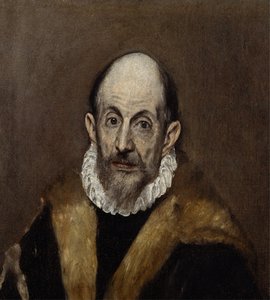
1541 - 1614 , Grecja


Bądź na bieżąco z najnowszymi wiadomościami ze świata sztuki, ekskluzywnymi ofertami i inspiracjami dekoratorskimi.
Opowiedz nam o swoim projekcie, a nasi eksperci przygotują dla Ciebie 3 spersonalizowane propozycje dzieł sztuki.
Przygotujemy dla Ciebie 3 propozycje zupełnie za darmo!


 Podgląd w skali
 Wyślij jako kartkę
 Udostępnij
 Szczegóły dzieła

 Pobierz
 Podobne obiekty
 RTG
RTG Pokaz slajdów

 Rozwiń treść


