Sprzedawaj swoją sztukę
Lista życzeń Koszyk zakupowy Cart
Podgląd w skaliPodgląd w skali Podgląd ARPodgląd AR Zamów ręcznie malowaną reprodukcję Zamów ręcznie malowaną reprodukcjęKup obraz wysokiej rozdzielczości Kup obraz wysokiej rozdzielczości Wyślij jako kartkęWyślij jako kartkę
Szczegóły dziełaSzczegóły dzieła Dodaj do ulubionych Dodaj do ulubionych PobierzPobierz Podobne obiektyPodobne obiekty RTGRTG Pokaz slajdówPokaz slajdów

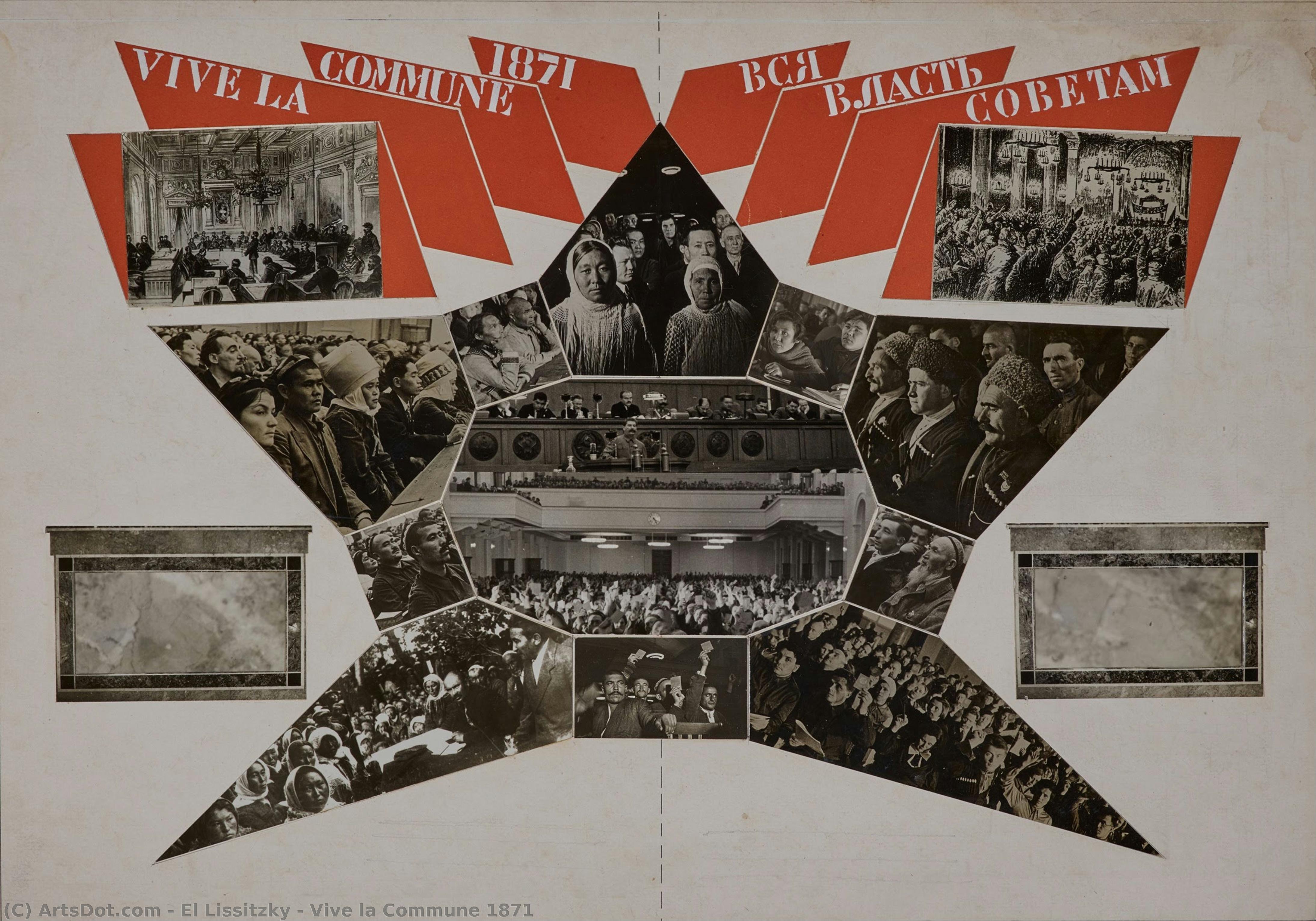
Vive la Commune 1871

El Lissitzky (1890-1941): rewolucyjny artysta, pionier suprematyzmu i konstrukcjonizmu. Jego dzieła łączą geometrię, architekturę i ideologię. Odkryj świat jego Prounów, typografii i projektów!

Giclée / Wydruk artystyczny

Druk giclée lub płótno o jakości muzealnej, szybka realizacja i szeroki wybór opcji wykończenia. (Zamów ręcznie malowaną reprodukcję Zamów ręcznie malowaną reprodukcjęKup obraz wysokiej rozdzielczości Kup obraz wysokiej rozdzielczości)

P118B $10
P118H $10
P118W $10
P438Z $10
P508JH $12
P508YH $12
P805H $10
P805Z $10
P919BZ $10
P919G $10
P919XJ $10
P959ZH $10
P968JZ $12
W106C $8
W218G $10
W218JH $8
W218Y $10
W307PJ $10
W316G $10
W316PJ $8
W316Y $10
W398PJ $8
W4111J $10
W500HY $15
W500JH $15
W692G $12
W849H $8
W940BG $15
W953PJ $8

Standard
custom
CM
INCH

Wybierz spośród naszych standardowych rozmiarów, które zachowują oryginalne proporcje dzieła sztuki.

szerokość
wysokość

Możesz wprowadzić własne wymiary, aby dopasować dzieło do konkretnej ramy lub przestrzeni. Jeśli wybrany rozmiar nie będzie odpowiadał proporcjom oryginalnego obrazu, przytniecie dzieło lub rozszerzymy obraz za pomocą odbicia lustrzanego lub jednolitego wypełnienia krawędzi. Przed rozpoczęciem produkcji prześlemy cyfrową wizualizację do Twojej akceptacji.
Prosimy pamiętać, że podgląd na ekranie nie odzwierciedla faktycznego przycinania ani rozszerzania. Tylko wizualizacja dokładnie pokaże końcową kompozycję.
Mimo dostępności niestandardowych rozmiarów, zalecamy wybór wymiaru z listy zdefiniowanej, aby zachować oryginalne proporcje.

Dostawa na cały świat () w ciągu 2 tygodni zamiast standardowych 4/5 tygodni. (20 Sierpień)

why_choose_icon
Bezpłatna ekspresowa wysyłka na cały świat
why_choose_icon
Wysokiej jakości płótno lniane
why_choose_icon
Pełne ubezpieczenie przesyłki
why_choose_icon
Gwarancja zwrotu należności celnych i podatków importowych
why_choose_icon
Gwarancja wiernego odwzorowania kolorów
why_choose_icon
Polityka 60-dniowego zwrotu (tylko w przypadku wad)
why_choose_icon
Gwarancja 100% zwrotu kosztów
why_choose_icon
Zniżka przy zamówieniu wielu produktów

Suma całkowita

$ 68

reproduction

Vive la Commune 1871

Giclée / Wydruk artystyczny

Wymiary reprodukcji

-

Cena całkowita

$ 68

Szybki podgląd

  • Subject or theme: Revolutionary symbolism
  • Artistic style: Geometric abstraction
  • Artist: El Lissitzky
  • Location: Private Collection
  • Title: Vive la Commune 1871
  • Notable elements or techniques: Photographic montage

Opis kolekcjonerski

A Bold Declaration in Collage: Exploring El Lissitzky’s “Vive la Commune 1871”

El Lissitzky's "Vive la Commune 1871" isn’t merely a painting; it’s an audacious manifesto rendered in visual form. Created in 1921, shortly after the Bolshevik Revolution reshaped Russia, this artwork embodies the fervor and complexity of that transformative era—a testament to Lissitzky's unwavering belief in art as a tool for social change. The piece immediately captivates with its unconventional approach: eschewing traditional representation for a dynamic collage composed of photographs interwoven with geometric abstractions. This deliberate disruption of artistic conventions speaks volumes about Lissitzky’s intellectual engagement with the burgeoning modernist movement and his desire to communicate ideas beyond conventional visual language.

Style and Technique: Geometric Abstraction Meets Photographic Documentation

Lissitzky's stylistic choices are deliberately provocative. He abandons realistic depiction, opting instead for a geometric abstraction that prioritizes form and color over detailed representation. The dominant shapes—primarily rectangles and triangles—are meticulously arranged to create a visual rhythm that echoes the energy of the revolution itself. These geometric forms aren’t simply decorative; they serve as conduits for conveying concepts of unity and progress – mirroring the aspirations of the Bolshevik leadership. Simultaneously, Lissitzky incorporates photographic images, capturing fragments of Parisian life during the Commune. This juxtaposition creates a fascinating tension between documentation and abstraction, forcing viewers to confront both the tangible realities of history and the conceptual framework through which Lissitzky interprets them. The printing technique employed—likely offset lithography—ensures color vibrancy and precision, crucial for conveying the emotional intensity of the composition.

Historical Context: Echoes of Revolution and Artistic Experimentation

“Vive la Commune 1871” sits firmly within the context of Russia’s turbulent post-revolutionary years. The Bolshevik government sought to disseminate propaganda effectively, utilizing visual media to galvanize support for their ideology. Lissitzky recognized this imperative and responded with an artwork that transcends mere illustration; it's a deliberate attempt to communicate a powerful message about solidarity and defiance. The Commune itself represented a radical experiment in self-governance—a brief but significant challenge to Tsarist authority—and Lissitzky’s collage reflects this spirit of rebellion. Furthermore, the painting aligns with broader trends in European art at the time, where artists were actively exploring new forms of expression influenced by Cubism and Futurism. Lissitzky's work stands as a beacon of artistic innovation amidst political upheaval.

Symbolism: Geometric Shapes as Representations of Ideals

The geometric shapes employed within “Vive la Commune 1871” are laden with symbolic significance. Rectangles represent stability and order—a deliberate contrast to the chaos of revolution—while triangles symbolize aspiration and upward movement, mirroring the Bolshevik vision for Russia’s future. Lissitzky consciously utilizes these forms to communicate abstract concepts – unity, progress, and resistance – transforming them into visual emblems that resonate powerfully with viewers. The careful placement of these shapes contributes to the overall composition's dynamism and reinforces its message of optimism amidst adversity.

Emotional Impact: A Visual Anthem for Collective Action

Ultimately, “Vive la Commune 1871” succeeds in conveying a profound emotional response. Its bold colors—primarily reds and yellows—evoke feelings of passion and determination, mirroring the fervor of the revolutionary movement. The collage’s fragmented imagery captures the multifaceted nature of experience during this pivotal moment in history – celebrating triumph while acknowledging the difficulties encountered along the way. Lissitzky's artwork isn’t simply aesthetically pleasing; it compels viewers to contemplate the role of art in shaping social consciousness and inspiring collective action—a legacy that continues to inspire artists and collectors alike.

O artyście

A Revolutionary Vision: The Life and Art of El Lissitzky

El Lissitzky, urodzony Lazar Markowitsch Lissitzky w 1890 roku w niewielkiej rosyjskiej miejscowości Pochinok, stał się kluczową postacią w burzliwym krajobrazie sztuki wczesnego XX wieku. Jego życie było podróżą ciągłej metamorfozy, napędzaną gorącą wiarą w moc sztuki do kształtowania społeczeństwa i odzwierciedlania dynamiki współczesnego świata. Już od początku swojej edukacji jako architekta i inżyniera – zajęcia utrudnione przez ograniczenia nakładane na studentów żydowskich – jego ścieżka artystyczna zaczęła się rozwijać, początkowo poprzez ilustracje osadzone w rosyjskim folklorze. Te wczesne prace, takie jak okładka dla ‘Chad Gadya’, ujawniają talent dopiero rozwijający się, który już mierzył się z narracją i wizualną opowieścią, sugerując głębokie korzenie kulturowe, które miały nadal wpływać na jego estetykę. Przenosiny do Berlina i Darmstadt poszerzyły jego horyzonty, ale to powrót do Rosji dał Lissitzky’emu prawdziwy głos artystyczny, nieodłącznie związany z rewolucyjnym zgiełkiem nadejście w kraju.

The Embrace of Abstraction: Suprematism and Proun

Przełomowym momentem okazało się spotkanie z Kazimierzem Malevichiem i przyjęcie suprematyzmu. Ruch ten, poświęcony czystej geometrycznej abstrakcji, głęboko rezonował z pragnieniem Lissitzky’ego przekroczenia sztuki reprezentacyjnej i dotarcia do uniwersalnego języka wizualnego. Stał się kluczowym członkiem UNovis, grupy suprematystycznej założonej w Witebsku, aktywnie szerząc swoje zasady poprzez nauczanie i produkcję artystyczną. Jednak Lissitzky nie po prostu kopiował styl Malevich’a; stworzył własną, odrębną drogę z rozwojem *Proun*. Ta unikalna seria, wywodząca się z fuzji suprematyzmu i konstrukcjonizmu, badała relacje przestrzenne i geometryczne formy w dynamicznych kompozycjach, często przypominających schematy architektoniczne lub eksplozje diagramów. Proun nie był po prostu malowaniem; była to eksploracja samej struktury przestrzeni, premonicja przyszłych możliwości architektonicznych. Widoczny tu wpływ jego wykształcenia inżynierskiego jest oczywisty – dodaje on logiczny aspekt konstrukcyjny do abstrakcyjnych form.

Constructivism and the Role of the Artist

Lissitzky’s artistic vision extended far beyond the canvas. He passionately believed that art should serve a social purpose, actively engaging with political ideologies and seeking ways to integrate design into everyday life. This conviction led him to become deeply involved in Soviet propaganda efforts, creating powerful posters and graphic designs intended to mobilize public support for the Bolshevik regime. His 1941 rok poster calling for tank construction stands as a testament to this commitment – a stark, impactful image reflecting the urgency of wartime. Beyond propaganda, Lissitzky revolutionized typography, exhibition design, and photomontage. He understood that effective communication required innovative visual strategies, and he fearlessly experimented with new techniques to convey his message. His photomontages, such as ‘The Constructor’ (1924), are particularly striking – self-portraits that blend photography with geometric abstraction, offering a complex commentary on identity and the role of the artist in society.

Proun: A Spatial Investigation

The *Proun* series represents a pivotal shift in Lissitzky's artistic practice. Initially conceived as architectural diagrams, these works evolved into dynamic compositions that explored spatial relationships and the interplay of geometric forms. They weren’t merely representations of objects; they were investigations into how space itself could be constructed and experienced. Lissitzky described *Proun* as a “spatial poem,” a visual language designed to evoke emotions and stimulate thought. The use of floating planes, intersecting lines, and bold colors created a sense of dynamism and movement, challenging traditional notions of perspective and representation. The series can be seen as a bridge between the rationalism of engineering and the expressive power of art, reflecting Lissitzky’s belief in the potential of design to shape our perception of reality.

Legacy and Enduring Influence

El Lissitzky’s life was tragically cut short in 1941 in Moscow, but his legacy continues to resonate today. He bridged the gap between art and architecture, abstraction and social purpose, leaving behind a body of work that is both intellectually stimulating and visually captivating. The establishment of the Lissitzky Foundation in 2014 underscores the ongoing commitment to preserving his artistic heritage and preparing a comprehensive catalogue raisonné of his creations. His innovations in typography, exhibition design, and photomontage continue to inspire contemporary artists and designers, while his unwavering belief in the power of art as a force for social change remains profoundly relevant. His work is held in numerous international collections, including museums in Taganrog and Novokuznetsk. Lissitzky wasn’t simply an artist; he was a visionary who dared to imagine a new world, and whose art continues to shape our understanding of visual communication and its potential for transformation.
El Lissitzky

El Lissitzky

1890 - 1941 , Rosja

Krótka nota

  • Artistic Movement Or Style:
    • Suprematyzm
    • Konstrukcjonizm
    • Proun
  • Artists Or Movements Influenced By This Artist:
    • Bauhaus
    • De Stijl
  • Artists Who Influenced This Artist: ['Kazimir Malevich']
  • Date Of Birth: 1890
  • Date Of Death: 1941
  • Full Name: El Lissitzky
  • Nationality: Rosyjski
  • Notable Artworks:
    • The Constructor
    • Chad Gadya
    • Proun
  • Place Of Birth: Pochinki, Rosja
Odkryj dzieła sztuki uporządkowane według tematów, stylów i cech charakterystycznych.