x

Druk giclée lub płótno o jakości muzealnej, szybka realizacja i szeroki wybór opcji wykończenia. ( Zamów ręcznie malowaną reprodukcję Kup obraz wysokiej rozdzielczości)





























Wybierz spośród naszych standardowych rozmiarów, które zachowują oryginalne proporcje dzieła sztuki.

Możesz wprowadzić własne wymiary, aby dopasować dzieło do konkretnej ramy lub przestrzeni. Jeśli wybrany rozmiar nie będzie odpowiadał proporcjom oryginalnego obrazu, przytniecie dzieło lub rozszerzymy obraz za pomocą odbicia lustrzanego lub jednolitego wypełnienia krawędzi. Przed rozpoczęciem produkcji prześlemy cyfrową wizualizację do Twojej akceptacji.
Prosimy pamiętać, że podgląd na ekranie nie odzwierciedla faktycznego przycinania ani rozszerzania. Tylko wizualizacja dokładnie pokaże końcową kompozycję.
Mimo dostępności niestandardowych rozmiarów, zalecamy wybór wymiaru z listy zdefiniowanej, aby zachować oryginalne proporcje.
Dostawa na cały świat () w ciągu 2 tygodni zamiast standardowych 4/5 tygodni. (18 Sierpień)


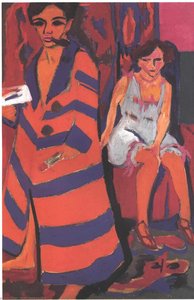
The calla
Wymiary reprodukcji
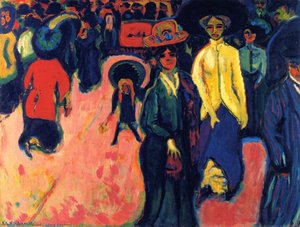
Ernst Ludwig Kirchner's "The Calla" isn’t merely a depiction of a street scene; it’s a visceral plunge into the anxieties and intensities of early 20th-century urban life. Painted in 1913, during a period of immense social and political upheaval in Germany, this oil on canvas explodes with a raw energy characteristic of German Expressionism. Kirchner, a founding member of Die Brücke (The Bridge), sought to move beyond the constraints of academic realism, aiming instead to capture not just what he saw, but how he *felt* about it – a deeply subjective and often unsettling experience. The painting immediately assaults the viewer with its bold color palette dominated by fiery reds, deep greens, and bruised pinks, all grounded in earthy browns, creating a sense of immediate tension and unease. These aren’t colors that describe a pleasant afternoon; they are the hues of a simmering, restless city.
The composition itself is deliberately chaotic, mirroring the perceived disorder of modern urban existence. Kirchner abandons traditional perspective, flattening the space and layering figures in an overlapping mass that seems to press forward, almost overwhelming the viewer. There’s no single focal point; instead, our eye is drawn on a journey through this crowded tableau, encountering fleeting glimpses of faces, fragments of clothing, and the suggestion of movement at every turn. Diagonal lines – evident in the arrangement of figures and the brushstrokes themselves – contribute to this sense of dynamism, as if the scene is perpetually caught in motion. The distortion of forms, particularly the simplified, almost flattened rendering of the human figures, speaks directly to the Expressionist impulse to prioritize emotional impact over accurate representation.
Kirchner’s technique is deliberately loose and expressive, a hallmark of his approach. Thick impasto – the application of paint in heavy, textured layers – is evident throughout the canvas, creating a palpable sense of physicality and immediacy. The brushstrokes are visible, not concealed or blended, adding to the painting's raw energy. Lines aren’t clean or precise; they’re blurred and gestural, contributing to the overall feeling of disorientation and anxiety. This disregard for meticulous detail is central to the Expressionist aesthetic – a rejection of photographic realism in favor of conveying inner experience. The use of complementary colors—particularly the stark juxtaposition of red and green—intensifies the visual drama and amplifies the emotional impact.
“The Calla” is more than just a street scene; it’s a potent symbol of the alienation and anxieties inherent in modern urban life. The densely packed figures, lost within the anonymity of the crowd, represent the individual swallowed by the overwhelming scale of the city. Kirchner masterfully captures this sense of isolation through his deliberate distortion of form and color. The faces are often obscured, their features simplified to suggest a lack of identity. The overall impression is one of unease, as if the figures are trapped in a perpetual state of agitation. Some art historians interpret the painting as a commentary on the social unrest brewing in Germany at the time, reflecting the anxieties surrounding war and political instability. The title itself, “The Calla,” might allude to the ephemeral nature of beauty and life amidst this chaotic backdrop – a fleeting moment of grace within an overwhelming world.
Kirchner’s "The Calla" stands as a powerful testament to the expressive potential of art. It exemplifies the core tenets of German Expressionism, prioritizing emotional impact over objective representation. Its bold colors, distorted forms, and dynamic composition continue to resonate with viewers today, offering a glimpse into the turbulent psychological landscape of early 20th-century Europe. Reproductions of this iconic work offer a unique opportunity to experience Kirchner’s vision firsthand, bringing his intense emotions and unsettling observations to your own space. Considered alongside other works by Kirchner within the context of Die Brücke, “The Calla” provides a crucial window into the birth of modern art and its enduring exploration of the human condition.

1880 - 1938 , Niemcy

Explore the raw energy of Jean-Michel Basquiat and the Neo-Expressionist movement. Discover how urban rebellion and SAMO© transformed 1980s New York art history through deep academic insight and visual analysis.


Bądź na bieżąco z najnowszymi wiadomościami ze świata sztuki, ekskluzywnymi ofertami i inspiracjami dekoratorskimi.
Opowiedz nam o swoim projekcie, a nasi eksperci przygotują dla Ciebie 3 spersonalizowane propozycje dzieł sztuki.
Przygotujemy dla Ciebie 3 propozycje zupełnie za darmo!


 Podgląd w skali
 Wyślij jako kartkę
 Udostępnij
 Szczegóły dzieła

 Pobierz
 Podobne obiekty
 RTG
RTG Pokaz slajdów

 Rozwiń treść







 Opcja ze szkłem jest dostępna wyłącznie w rozmiarach poniżej 110 cm