
Sprzedawaj swoją sztukę
Lista życzeń Koszyk zakupowy Cart
Podgląd w skaliPodgląd w skali Podgląd ARPodgląd AR Zamów wydruk Zamów wydrukZamów ręcznie malowaną reprodukcję Zamów ręcznie malowaną reprodukcję Wyślij jako kartkęWyślij jako kartkę
Szczegóły dziełaSzczegóły dzieła Dodaj do ulubionych Dodaj do ulubionych PobierzPobierz Podobne obiektyPodobne obiekty RTGRTG Pokaz slajdówPokaz slajdów

Sleeping Deer

Franz Marc was a pivotal figure in German Expressionism, known for his emotive animal paintings and exploration of spiritual themes. He co-founded Der Blaue Reiter journal and sought to express the essence of life through color and form.

Franz Marc (1880-1916) – niemiecki malarz ekspresjonistyczny, znany z symbolicznych obrazów zwierząt i duchowego przesłania. Odkryj jego unikalny styl i wpływ na sztukę nowoczesną!

Kup wysokiej rozdzielczości, ulepszony obraz cyfrowy o znacznie wyższej jakości niż podgląd online.

Każdy plik jest starannie przygotowywany przez naszych specjalistów przy użyciu zaawansowanych narzędzi oraz profesjonalnej, ręcznej retuszy. Dbamy o to, aby każdy obraz cechował się wyjątkową ostrością, precyzyjnym odwzorowaniem kolorów i subtelnymi detalami.

Ostateczny plik dostarczany jest drogą mailową w ciągu 72 godzin, zoptymalizowany do natychmiastowego wykorzystania w profesjonalnych zastosowaniach redakcyjnych i poligraficznych. To ta sama jakość, której ufają czołowe studia projektowe, wydawnictwa oraz galerie sztuki.

Obraz cyfrowy

Pobierz plik o wysokiej rozdzielczości do osobistego wyświetlania, druku oraz projektów kreatywnych. (Zamów wydruk Zamów wydrukZamów ręcznie malowaną reprodukcję Zamów ręcznie malowaną reprodukcję)

Suma do zapłaty

$ 24,90

W każdym zamówieniu na obraz cyfrowy znajduje się

Profesjonalna dostawa cyfrowa z gwarancją

Wybierając Most-Famous-Paintings.com, nie otrzymujesz jedynie obrazu – otrzymujesz profesjonalnie udoskonalone cyfrowe dzieło sztuki, stworzone z najwyższą precyzją i objęte gwarancją satysfakcji. Oto wszystko, co automatycznie dołączane jest do Twojego zamówienia:

shipping_icon
Błyskawiczna wysyłka e-mailowa

Plik z obrazem cyfrowym w wysokiej rozdzielczości zostanie przesłany na Twój adres e-mail w ciągu 72 godzin od złożenia zamówienia – gotowy do natychmiastowego użycia.

canvas_icon
Plik cyfrowy wzbogacony przez AI

Twoja grafika została profesjonalnie zoptymalizowana przy użyciu zaawansowanych narzędzi AI oraz ręcznej edycji, co zapewnia maksymalną szczegółowość, klarowność i wierność kolorów.

insurance_icon
Dożywotnia darmowa ponowna dostawa

Przypadkowo usunąłeś lub zgubiłeś swój plik? Bez obaw – prześlemy go Tobie ponownie w dowolnym momencie, bez żadnych opłat.

tax_icon
Bez opłat importowych – zawsze

Ciesz się swoją sztuką natychmiast, bez żadnych opłat celnych, należności ani kosztów dostawy – pliki cyfrowe są zawsze wolne od podatku.

color_icon
Gwarancja wierności kolorów

Dzięki zastosowaniu profesjonalnych narzędzi i procesów zarządzania barwą zapewniamy, że Twoje cyfrowe zdjęcie odzwierciedla oryginalne kolory tak wiernie, jak to tylko możliwe.

return_icon
60-dniowa gwarancja satysfakcji

Jeśli nie będziesz zadowolony ze swojego cyfrowego obrazu, dokonamy jego poprawki lub zwrócimy 100% kosztów w ciągu 60 dni – bez żadnych pytań.

guarantee_icon
100% Gwarancja zwrotu pieniędzy

Nie jesteś zadowolony? Otrzymaj pełny zwrot kosztów w ciągu 60 dni od otrzymania pliku cyfrowego – bez zbędnych pytań.

discount_icon
Rabaty przy zamówieniach hurtowych

Kup 3 obrazy, oszczędź 10% - Kup 5, oszczędź 15% - Kup 10+, oszczędź 20%. Idealne do projektów kreatywnych, galerii i agencji.

Szybki podgląd

  • Notable elements: Cubist style, red/white
  • Dimensions: 37 x 44 cm
  • Subject or theme: Animals, nature
  • Year: 1913
  • Artistic style: Cubism
  • Location: Osthaus Museum
  • Influences: Van Gogh

Quiz o sztuce

Do każdego pytania dotyczy tylko jedna poprawna odpowiedź.

Pytanie 1:
What artistic movement is Franz Marc’s ‘Sleeping Deer’ primarily associated with?
Pytanie 2:
The painting features a striking red and white color scheme. What effect does this color combination primarily create?
Pytanie 3:
Franz Marc’s work often focused on animals. What does this thematic choice typically represent in his art?
Pytanie 4:
In what year was Franz Marc’s ‘Sleeping Deer’ painted?
Pytanie 5:
The Karl Ernst Osthaus Museum in Hagen, Germany, is significant for its role in Franz Marc’s legacy. What is the museum's primary mission?

Opis kolekcjonerski

A Moment of Serene Contemplation: Franz Marc’s “Sleeping Deer”

Franz Marc's "Sleeping Deer," painted in 1913, isn’t merely a depiction of an animal resting; it’s a profound meditation on the interconnectedness between humanity and the natural world. This captivating work, measuring 37 x 44 cm, embodies the core tenets of German Expressionism – a movement driven by intense emotion and a desire to capture the inner spirit of subjects rather than simply their outward appearance. Marc, born in Munich in 1880, possessed an almost mystical connection with animals, viewing them as embodiments of primal instincts and spiritual truths. His early flirtation with theology, coupled with his deep appreciation for Vincent van Gogh’s expressive brushwork, profoundly shaped his artistic philosophy – a belief that art could serve as a pathway to experiencing the sublime.

Cubist Fragmentation and Vibrant Color

“Sleeping Deer” is executed in the innovative style of Cubism, a revolutionary approach pioneered by artists like Pablo Picasso and Georges Braque. Marc doesn’t strive for realistic representation; instead, he breaks down the deer's form into geometric shapes – triangles, rectangles, and circles – presenting multiple viewpoints simultaneously. This fragmentation isn’t chaotic, however. It’s carefully orchestrated to heighten the sense of stillness and introspection. The bold use of color is equally crucial. A striking red and white background dominates the composition, creating a dramatic contrast against the earthy tones of the deer's body. These colors aren’t chosen arbitrarily; they evoke feelings of both vitality and tranquility, mirroring the animal’s state of repose.

  • Red: Represents passion, energy, and perhaps even a hint of danger – a primal force contained within the serene scene.
  • White: Symbolizes purity, innocence, and the quiet beauty of nature.

Symbolism and Spiritual Resonance

Beyond its formal qualities, “Sleeping Deer” is laden with symbolic meaning. The deer itself has long been associated with grace, gentleness, and connection to the wild. Marc’s choice to depict it lying down suggests a surrender to the present moment, a recognition of the cyclical nature of life and death. The setting – a simplified landscape with trees in the distance – reinforces this theme of interconnectedness. The deer isn't isolated; it’s part of a larger ecosystem, existing in harmony with its surroundings. This resonates deeply with Marc’s broader spiritual concerns, reflecting his belief that art could reveal hidden truths about our place within the universe.

A Legacy Preserved: Context and Reproduction

“Sleeping Deer” was created during a period of intense artistic experimentation and social upheaval in Germany. It’s housed at the Karl Ernst Osthaus Museum in Hagen, an institution dedicated to integrating art into everyday life – a philosophy that aligns perfectly with Marc's own vision. Most-Famous-Paintings offers meticulously crafted hand-painted reproductions of this iconic work, allowing you to bring its profound beauty and symbolic depth into your home or office. Each reproduction is created using traditional techniques by skilled artists who have painstakingly studied Marc’s original style, ensuring an authentic representation of this seminal piece of German Expressionism. Whether you are a seasoned art collector, an admirer of modern art, or simply seeking a captivating work of art to inspire and uplift, a Most-Famous-Paintings reproduction of “Sleeping Deer” is a timeless investment in beauty and contemplation.

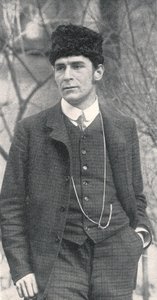
Biografia artysty

A Life Immersed in Color and Spirit

Franz Moritz Wilhelm Marc, born in Munich in 1880, was a painter whose brief but intensely focused career irrevocably altered the course of German Expressionism. His story is one of profound spiritual seeking translated into a vibrant visual language, a quest to understand the essence of life through the purity he found in the natural world—particularly within the animal kingdom. Initially influenced by his father, Wilhelm Marc, a landscape painter, young Franz’s artistic path wasn't immediately certain. He briefly considered theology, grappling with questions of faith and existence before ultimately dedicating himself to art at the Academy of Fine Arts in Munich. These early explorations into religious thought would remain deeply embedded within his work, shaping his belief that art could be a conduit for spiritual experience. His academic training provided him with technical foundations, but it was encounters with the works of Vincent van Gogh during visits to Paris that truly ignited his artistic vision. Van Gogh’s emotive use of color and raw expression resonated profoundly with Marc, liberating him from conventional techniques and setting him on a path toward a more subjective and emotionally charged style.

The Blue Rider and a New Artistic Vision

Marc's artistic development wasn’t solitary; it flourished within the dynamic context of early 20th-century Munich. He experimented with various artist groups, including the Neue Künstlervereinigung München, before co-founding *Der Blaue Reiter* (The Blue Rider) in 1911 alongside Wassily Kandinsky. This wasn’t merely a group or an exhibition series; it was a philosophical and artistic revolution. *Der Blaue Reiter* sought to move beyond mere representation, aiming instead to express inner spiritual truths through abstraction and symbolic color. The journal of the same name became a platform for disseminating these ideas, showcasing not only their own work but also that of other forward-thinking artists and exploring diverse cultural influences from folk art to primitive sculpture. Marc’s contributions during this period were pivotal. He moved away from depicting landscapes as static scenes, instead focusing on animals—horses, deer, foxes—as vessels of spiritual energy. These weren’t simply animal portraits; they were symbolic representations of innocence, harmony, and a connection to the natural world that he believed humanity had lost. The influence of Robert Delaunay’s exploration of abstract forms and vibrant colors further propelled Marc toward simplification and heightened emotional expression in his work. Paintings like *The Tiger* (1912) and *Red Deer* (1912) exemplify this shift, showcasing bold color choices and a growing focus on the inherent qualities of his subjects rather than realistic depiction.

Symbolism, Color, and the Essence of Being

Marc’s artistic style is immediately recognizable for its distinctive use of color and form. He didn't employ color descriptively; instead, he imbued it with symbolic meaning. Blue represented spirituality and masculinity, yellow signified joy and femininity, and red embodied violence and materiality. These weren’t arbitrary choices but a carefully constructed system designed to convey specific emotional and philosophical ideas. His animals aren’t merely subjects; they are embodiments of these concepts. The simplification of forms—reducing figures to their essential shapes—further emphasized the underlying spiritual essence he sought to capture. *The Tower of Blue Horses* (1913), sadly lost during World War II, is perhaps the most iconic example of this approach, a powerful and evocative composition that encapsulates his artistic vision. He believed animals possessed an inherent purity and connection to nature that humans had forfeited through societal constraints and intellectualization. By portraying them with such reverence and symbolic weight, Marc sought to remind viewers of this lost harmony and inspire a deeper appreciation for the natural world. His work wasn’t about depicting *what* he saw but rather *how* he felt—a deeply personal and spiritual response to his surroundings.

Influences and Development

Marc's artistic journey was shaped by a confluence of influences. Initially, his father’s landscape paintings instilled in him an appreciation for the beauty of nature. However, it was his exposure to Impressionism during his time in Paris that fundamentally altered his approach. The vibrant colors and fleeting moments captured by artists like Monet ignited within him a desire to express emotion through color rather than simply replicating reality. Van Gogh’s raw emotionality and expressive brushstrokes proved particularly transformative, liberating Marc from the constraints of academic tradition. He also drew inspiration from Symbolist art, which emphasized subjective experience and spiritual symbolism. The writings of Nietzsche and Schopenhauer, exploring themes of spirituality and existentialism, further informed his artistic vision. The encounter with Kandinsky within *Der Blaue Reiter* was crucial; their shared interest in abstraction and the exploration of inner states led to a collaborative dialogue that pushed both artists toward new creative horizons. Marc’s early works, characterized by meticulous detail and realistic depictions, gradually gave way to a more expressive style marked by simplified forms, bold colors, and symbolic imagery.

A Tragic End and Lasting Legacy

The outbreak of World War I in 1914 dramatically altered Marc's life and artistic trajectory. Despite seeking exemption due to his status as an artist, he was drafted into the German army, serving as a cavalryman. The horrors of war deeply affected him, yet even amidst the chaos, he continued to paint, finding solace and meaning in his art. Tragically, Franz Marc died on March 4, 1916, at the Battle of Verdun, a devastating loss for the art world. His untimely death cut short a career brimming with potential, but it also cemented his place as a pivotal figure in modern art history. His work continues to resonate today, influencing generations of artists and captivating audiences with its emotional depth and spiritual resonance. Marc’s paintings are exhibited in major museums worldwide, including the Lenbachhaus in Munich, which holds an extensive collection of his work. He is remembered not only as a pioneer of German Expressionism but also as a visionary artist who dared to explore the profound connection between art, spirituality, and the natural world—a legacy that continues to inspire awe and contemplation. His artistic vision remains a testament to the power of art to transcend the material realm and touch upon something deeper within the human spirit.
Franz Marc

Franz Marc

1880 - 1916 , Niemcy

Krótka nota

  • Artistic Movement Or Style: Ekspresjonizm
  • Artists Or Movements Influenced By This Artist: ['Der Blaue Reiter']
  • Artists Who Influenced This Artist:
    • Van Gogh
    • Delaunay
  • Date Of Birth: 8 lutego 1880
  • Date Of Death: 4 marca 1916
  • Full Name: Franz Moritz Wilhelm Marc
  • Nationality: Niemiec
  • Notable Artworks:
    • Kruk
    • Jeździec
    • Koń
  • Place Of Birth: Monachium, Niemcy

