x

 Olej na płótnieSztuka ściennaRomantic Realism
 1853XIX wiek
 178.0 x 246.0 cm
 Metropolitan Museum of Art
Druk giclée lub płótno o jakości muzealnej, szybka realizacja i szeroki wybór opcji wykończenia. ( Zamów ręcznie malowaną reprodukcję Kup obraz wysokiej rozdzielczości)





























Wybierz spośród naszych standardowych rozmiarów, które zachowują oryginalne proporcje dzieła sztuki.

Możesz wprowadzić własne wymiary, aby dopasować dzieło do konkretnej ramy lub przestrzeni. Jeśli wybrany rozmiar nie będzie odpowiadał proporcjom oryginalnego obrazu, przytniecie dzieło lub rozszerzymy obraz za pomocą odbicia lustrzanego lub jednolitego wypełnienia krawędzi. Przed rozpoczęciem produkcji prześlemy cyfrową wizualizację do Twojej akceptacji.
Prosimy pamiętać, że podgląd na ekranie nie odzwierciedla faktycznego przycinania ani rozszerzania. Tylko wizualizacja dokładnie pokaże końcową kompozycję.
Mimo dostępności niestandardowych rozmiarów, zalecamy wybór wymiaru z listy zdefiniowanej, aby zachować oryginalne proporcje.
Dostawa na cały świat () w ciągu 2 tygodni zamiast standardowych 4/5 tygodni. (19 Sierpień)


Florinda
Wymiary reprodukcji
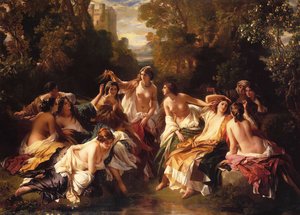
Franz Xaver Winterhalter's "Florinda," painted in 1853, is more than just a depiction of nude figures; it’s an invitation to step into a world of aristocratic leisure and serene beauty. This captivating oil painting transports us to a sun-drenched landscape where a group of women – seemingly plucked from the pages of classical mythology – engage in a moment of shared joy and quiet contemplation. Winterhalter, renowned for his portraits of European royalty, masterfully blends realism with a romantic sensibility, creating an image that resonates with both historical significance and timeless appeal.
The composition itself is a testament to Winterhalter’s skill. A central gathering of figures forms a loose, circular arrangement, suggesting intimacy and connection. The artist employs fluid lines and organic shapes – mirroring the natural world surrounding them – to evoke a sense of movement and vitality. Notice how the figures are not rigidly posed but appear caught in spontaneous interaction, their limbs gracefully curved and flowing. The careful balance of light and shadow adds depth and dimension, drawing the viewer’s eye into the scene and highlighting the textures of fabric and skin with remarkable detail. The overall effect is one of harmonious dynamism, a visual representation of effortless grace.
Dominating the canvas is a warm, earthy palette – browns, golds, and greens – punctuated by softer hues that create a sense of tranquility. This deliberate choice in color evokes a connection to nature, subtly reinforcing the painting’s symbolic meaning. The artist skillfully uses light and shadow not merely for realism but as an expressive tool. The strong, upper-lighting casts dramatic highlights on the figures' bodies, emphasizing their form and creating a luminous quality that elevates the scene beyond simple representation. This masterful manipulation of light contributes significantly to the emotional impact of the work, imbuing it with a sense of warmth and serenity.
Franz Xaver Winterhalter’s success stemmed from his ability to capture the essence of aristocratic society while subtly flattering his subjects. “Florinda” exemplifies this talent; the figures are presented with an idealized beauty, reflecting the prevailing aesthetic values of the mid-19th century. While primarily known for royal portraits, this painting demonstrates Winterhalter's versatility and artistic range. Interestingly, the scene draws inspiration from a legend surrounding Roderick, the last king of the Visigoths – a tale of mistaken identity and romantic intrigue. The distant structure glimpsed in the background may represent civilization or a place of significance, adding another layer of narrative to the composition. The painting’s historical context reveals Winterhalter's keen understanding of his audience and his ability to craft images that were both visually stunning and politically astute.
"Florinda" is rich in symbolic meaning. The natural setting, with its lush foliage and tranquil waters, can be interpreted as a symbol of purity or a connection to the earth – a deliberate choice reflecting the Romantic movement’s fascination with nature. The figures themselves embody ideals of beauty, grace, and leisure, inviting viewers to contemplate themes of pleasure, harmony, and perhaps even a touch of sensuality. The painting's emotional tone is undeniably joyful and convivial, capturing a moment of shared experience that transcends time. It’s a powerful reminder of the enduring appeal of beauty, connection, and the simple pleasures of life – qualities that continue to resonate with audiences today.


1805 - 1873 , Niemcy

Poznaj historię i technikę malarstwa olejnego! Eksperckie artykuły o konserwacji, renowacji oraz współczesnych zastosowaniach. Dowiedz się więcej o mistrzach i trwałości obrazów olejnych.

Explore the rich history & enduring techniques of oil painting with Most-Famous-Paintings. Discover masterpieces, learn about art collecting, and find authentic handmade reproductions crafted by skilled artists.

Poznaj historię i techniki malarstwa olejowego! Od renesansowych mistrzów po współczesne zastosowania – wszystko o oleju na płótnie. Poradniki, konserwacja i inspiracje dla pasjonatów sztuki.

Poznaj historię i techniki malarstwa olejnego. Poradniki dla artystów, informacje o konserwacji oraz możliwość zamówienia wysokiej jakości reprodukcji obrazów. Ekspercka wiedza i gwarancja trwałości dzieł sztuki.

Poznaj historię i technikę malarstwa olejnego na desce! Odkryj walory estetyczne renesansowych arcydzieł, metody konserwacji oraz współczesne możliwości reprodukcji z Most-Famous-Paintings.com – ręcznie malowane obrazy najwyższej jakości.


Bądź na bieżąco z najnowszymi wiadomościami ze świata sztuki, ekskluzywnymi ofertami i inspiracjami dekoratorskimi.
Opowiedz nam o swoim projekcie, a nasi eksperci przygotują dla Ciebie 3 spersonalizowane propozycje dzieł sztuki.
Przygotujemy dla Ciebie 3 propozycje zupełnie za darmo!


 Podgląd w skali
 Wyślij jako kartkę
 Udostępnij
 Szczegóły dzieła

 Pobierz
 Podobne obiekty
 RTG
RTG Pokaz slajdów
 Rozwiń treść







 Opcja ze szkłem jest dostępna wyłącznie w rozmiarach poniżej 110 cm