Lista życzeń Koszyk Cart
PreviewPreview Zamów wydruk Zamów wydrukKup cyfrowy obraz Kup cyfrowy obraz UdostępnijUdostępnij
Szczegóły dziełaSzczegóły dzieła Dodaj do ulubionych Dodaj do ulubionych PobierzPobierz Podobne obiektyPodobne obiekty RTGRTG Pokaz slajdówPokaz slajdów

Mrs Musters

Admire George Romney’s ‘Mrs. Musters’ (1780), a stunning Georgian portrait showcasing refined elegance & delicate brushwork. Explore this exquisite oil painting's beauty!

George Romney (1734-1802) – brytyjski malarz portretowy, znany z eleganckich portretów arystokracji. Jego prace charakteryzują subtelny wdzięk i psychologiczna głębia. Odkryj jego świat!

Ręcznie malowana reprodukcja olejowa

Ręcznie malowany olej na płótnie w Twoim wymiarze i ramie, tworzony na zamówienie przez naszych artystów.


P118B $10
P118H $10
P118W $10
P438Z $10
P508JH $12
P508YH $12
P805H $10
P805Z $10
P919BZ $10
P919G $10
P919XJ $10
P959ZH $10
P968JZ $12
W106C $8
W218G $10
W218JH $8
W218Y $10
W307PJ $10
W316G $10
W316PJ $8
W316Y $10
W398PJ $8
W4111J $10
W500HY $15
W500JH $15
W692G $12
W849H $8
W940BG $15
W953PJ $8

Standard
custom
CM
INCH

Wybierz spośród naszych predefiniowanych rozmiarów, które zachowują oryginalne proporcje dzieła sztuki.

szerokość
wysokość

Możesz wprowadzić własne wymiary, aby dopasować obraz do konkretnej ramy lub przestrzeni. Jeśli wybrany rozmiar nie będzie odpowiadał proporcjom oryginału, przytniecie dzieło sztuki lub rozszerzymy je o dodatkowe elementy, ręcznie domalowane przez artystę. Przed rozpoczęciem produkcji wyślemy projekt cyfrowy do Twojej akceptacji.
Należy pamiętać, że podgląd na ekranie nie odzwierciedla rzeczywistego przycinania ani rozszerzania obrazu. Tylko projekt dokładnie pokaże ostateczną kompozycję.
Choć oferujemy możliwość zamówienia niestandardowych rozmiarów, zalecamy wybór wymiaru z gotowej listy, aby zachować oryginalne proporcje dzieła.

Przykłady możliwych zmian: Zamień twarz na zdjęcie klienta; Dodaj zwierzę domowe (np. zamień kota na psa); Ukryj wiadomość w tle; Zmień krajobraz lub elementy tła.
Po złożeniu zamówienia zespół Most-Famous-Paintings.com skontaktuje się z klientem drogą mailową w celu uzyskania instrukcji i prześle wizualizację projektu

Dostawa na całym świecie () w ciągu 3/4 tygodni zamiast standardowych 5 tygodni. (27 Lipiec). Bez kompromisów w kwestii jakości.

why_choose_icon
Bezpłatna ekspresowa wysyłka na cały świat
why_choose_icon
Wysokiej jakości płótno lniane
why_choose_icon
Pełne ubezpieczenie przesyłki
why_choose_icon
Gwarancja zwrotu należności celnych
why_choose_icon
Gwarancja pełnego zgodności kolorystycznej
why_choose_icon
Polityka 60-dniowego zwrotu (tylko w przypadku wad)
why_choose_icon
Gwarancja 100% zwrotu pieniędzy
why_choose_icon
Zniżka przy większych zamówieniach

Suma całkowita

-

reproduction

Mrs Musters

Technika reprodukcji

Wymiary reprodukcji

-

Cena całkowita

-

Szybkie fakty

  • Year: 1780
  • Dimensions: 76 x 64 cm
  • Notable elements: Soft lighting, brushwork
  • Title: Mrs Musters
  • Subject or theme: Portrait of a woman
  • Artistic style: Georgian portraiture
  • Influences: Rococo

Quiz o sztuce

Na każde pytanie istnieje tylko jedna poprawna odpowiedź.

Pytanie 1:
What is the primary artistic style of George Romney’s ‘Mrs. Musters’?
Pytanie 2:
The portrait depicts a woman named:
Pytanie 3:
In what century was ‘Mrs. Musters’ painted?
Pytanie 4:
What type of paint is predominantly used in ‘Mrs. Musters’?
Pytanie 5:
The lighting in the portrait contributes to which of the following effects?

Opis dzieła

A Portrait of Refinement: George Romney’s ‘Mrs. Musters’

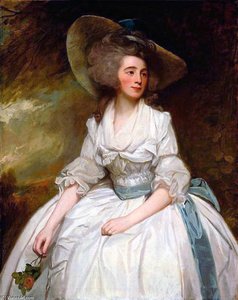
George Romney's “Mrs. Musters,” painted in 1780, is more than just a portrait; it’s a meticulously crafted window into the elegance and social intricacies of Georgian England. This captivating half-length depiction of Sophia Catherine Heywood, later Mrs. Brisby from C.S. Lewis’s beloved novel, embodies the refined sensibilities of the era while simultaneously hinting at the quiet dignity beneath a carefully constructed facade. Romney, one of the most sought-after portrait painters of his time, masterfully captures not just her likeness but also a sense of poised composure and subtle vulnerability – qualities that have ensured its enduring appeal.

The painting’s style firmly anchors it within the Rococo tradition, though with a distinctly English sensibility. Romney skillfully employs soft lighting, diffused across Mrs. Musters' face and gown, creating an atmosphere of gentle intimacy. The composition is centered around her, drawing the viewer’s eye to her expressive eyes and delicately arched eyebrows. Notice how he uses lines – precise yet fluid – to define her facial structure, the folds of her luxurious dress, and even the intricate details of her elaborate hat. These carefully rendered elements contribute to a sense of depth and realism that was highly valued in portraiture during this period.

The Painter’s Technique: Oil on Canvas

Romney's technical prowess is immediately apparent in the smooth blending of colors and the subtle variations in texture throughout “Mrs. Musters.” The painting is executed in oil paint on canvas, a medium that allowed for both rich color saturation and nuanced tonal shifts. Observe how he’s achieved the sheen of silk and velvet through layering and glazing – techniques that create an almost tactile quality. The background landscape, rendered with atmospheric perspective, recedes into a hazy blue distance, subtly emphasizing Mrs. Musters' presence without overwhelming her. The use of muted tones—primarily blues, whites, and creams—is characteristic of the period, reflecting a preference for understated elegance over flamboyant display.

Symbolism and Social Context

Beyond its aesthetic qualities, “Mrs. Musters” is rich in symbolic meaning. Her attire – the elaborate gown, the towering hat adorned with feathers and jewels – speaks volumes about her social standing and wealth. The hat, a particularly prominent feature, was not merely decorative; it served as a visual shorthand for status and fashion trends of the time. It’s a symbol of belonging to the upper echelons of Georgian society. The gentle expression on Mrs. Musters' face suggests a quiet confidence and self-possession – qualities admired in women of her station. The painting, therefore, offers a glimpse into the carefully constructed world of the English aristocracy, where appearances were paramount.

A Legacy of Elegance: Reproduction Possibilities

Reproductions of “Mrs. Musters” offer an exceptional opportunity to bring this exquisite portrait into your home or office. Available in a range of sizes and mediums – from fine art prints on archival-quality canvas to watercolor reproductions, each option faithfully captures Romney’s masterful technique and the painting's captivating atmosphere. Whether you are an art collector, an interior designer seeking to infuse a room with timeless elegance, or simply someone who appreciates the beauty of Georgian portraiture, this piece provides a stunning focal point for any space. Consider framing it in a classic style to further enhance its historical charm.


Biografia artysty

A Life in Portraiture: The World of George Romney

Born in the picturesque landscape of Dalton-in-Furness, Lancashire, on December 15th, 1734, George Romney ascended to become one of the most sought-after portrait painters of his era. His journey from a cabinet maker’s son to the favored artist of British high society is a compelling narrative of innate talent and unwavering ambition. Early life offered little indication of the artistic path he would forge; initially apprenticed to his father, it was an inherent inclination towards drawing and craftsmanship that led him to Christopher Steele, a local portraitist who had studied in Paris. This apprenticeship proved pivotal, providing Romney with foundational skills and an introduction to European artistic traditions. He quickly surpassed his master, however, demonstrating a precocious talent demanding further cultivation. A brief, unhappy marriage and subsequent separation propelled him towards London in 1762, a city brimming with opportunity but also fierce competition.

Establishing a Reputation: Style and Technique

London proved to be a crucible for Romney’s artistic development. He swiftly established himself as a formidable portraitist, challenging the dominance of artists like Thomas Gainsborough and Sir Joshua Reynolds. While he never sought membership in the Royal Academy – a decision that perhaps limited his access to certain patronage – his success was undeniable. Romney's style evolved over time, initially reflecting the influence of Steele and his Parisian training, but soon blossomed into something distinctly his own. He possessed an exceptional ability to capture not merely the likeness, but also the personality and social standing of his sitters. His portraits are characterized by elegant poses, a refined use of light and shadow, and a subtle psychological insight that set him apart. Romney’s technique was marked by a delicate touch and a preference for flowing lines, often drawing inspiration from classical sculpture. He skillfully employed color to convey texture and depth, creating portraits that were both visually striking and emotionally resonant. His ability to flatter his subjects while maintaining artistic integrity earned him the loyalty of an elite clientele. He understood the power of suggestion, hinting at character rather than explicitly defining it, a quality that appealed to those who valued discretion and refinement. Romney’s compositions often avoided overly dramatic settings, favoring intimate interiors or carefully arranged outdoor scenes – a deliberate choice designed to focus attention on his subjects' expressions and demeanor.

The Muse and Her Influence: Emma Hamilton

Romney’s life took a dramatic turn with his encounter with Emma Hart, later known as Lady Hamilton, in 1782. She became not only his most celebrated model but also his muse, profoundly influencing his artistic output. Emma's beauty, intelligence, and theatrical flair captivated Romney, inspiring a series of portraits that explored themes of classical mythology, dramatic narrative, and feminine grace. He depicted her in various roles – as a bacchante, as the tragic Miranda from Shakespeare’s *The Tempest*, and in numerous allegorical scenes that showcased her expressive range. These works demonstrate Romney's willingness to experiment with composition and symbolism, moving beyond conventional portraiture into more imaginative territory. The Tempest series, in particular, reveals a Romantic sensibility at play, anticipating the emotional intensity of later artists. The relationship was intense and all-consuming for Romney, though ultimately unfulfilled romantically; Emma eventually became the mistress of Lord Nelson, a union that cemented her place in history. Nevertheless, their artistic collaboration left an indelible mark on both their lives and produced some of Romney’s most enduring masterpieces. He painted over 80 portraits of her, each revealing a different facet of her captivating personality. The influence of Emma is evident not only in the subject matter but also in the way Romney handled light and shadow, creating a sense of drama and intimacy within his paintings.

Key Works and Artistic Development

Romney’s artistic journey can be traced through several key works that reveal his evolving style and interests. His early portraits, such as *The Death of General Wolfe*, demonstrated a technical proficiency honed during his apprenticeship but lacked the psychological depth of later pieces. However, after moving to London and encountering Emma Hamilton, Romney's work underwent a significant transformation. Paintings like *Mrs. Carwardine and Son* (1775) and *Sir Christopher and Lady Sykes* (1786) showcased a greater understanding of human emotion and a more refined use of color and composition. The series of portraits depicting Emma Hamilton, particularly those exploring her mythological associations, represent the pinnacle of his artistic achievement. These works are characterized by their elegance, grace, and psychological insight – qualities that cemented Romney’s reputation as one of the leading portrait painters of his time. His later work continued to explore themes of beauty, mythology, and social status, reflecting a growing interest in Romanticism and its emphasis on emotion and imagination.

Legacy and Historical Significance

George Romney's impact on British portraiture is undeniable. He helped shape the aesthetic sensibilities of the late 18th century, contributing to a style that emphasized elegance, psychological depth, and artistic flair. His portraits offer invaluable insights into the lives and tastes of the British elite during his time, providing a visual record of their social customs, fashion, and intellectual pursuits. While he faced periods of self-doubt and struggled with mental health issues in later life – leading to a decline in productivity before his death in Kendal in 1802 – his legacy endures through the hundreds of paintings and drawings that remain as testaments to his skill. Romney’s portraits are not merely representations of individuals; they are windows into a vanished world. His work continues to be admired for its technical brilliance and emotional resonance, securing his place as a significant figure in the history of art.
George Romney

George Romney

1734 - 1802 , Wielka Brytania

Kluczowe informacje

  • Artistic Movement Or Style: Portretystyka, Romantyzm
  • Artists Or Movements Influenced By This Artist: ['Brytyjscy portrecisci']
  • Artists Who Influenced This Artist:
    • Christopher Steele
    • Carle Vanloo
    • Raphael
  • Date Of Birth: 15 grud 1734
  • Date Of Death: 15 list 1802
  • Full Name: George Romney
  • Nationality: Brytyjski
  • Notable Artworks:
    • Śmierć generała Wolfe
    • Panie Carwardine
    • Sir Christopher
  • Place Of Birth: Dalton-in-Furness, UK
Odkryj dzieła sztuki uporządkowane według tematów, stylów i cech charakterystycznych.