Wishlist Koszyk Cart
Zamów wydruk Zamów wydrukKup cyfrowy obraz Kup cyfrowy obraz UdostępnijUdostępnij
Szczegóły dziełaSzczegóły dzieła Dodaj do ulubionych Dodaj do ulubionych PobierzPobierz Podobne obiektyPodobne obiekty RTGRTG Pokaz slajdówPokaz slajdów

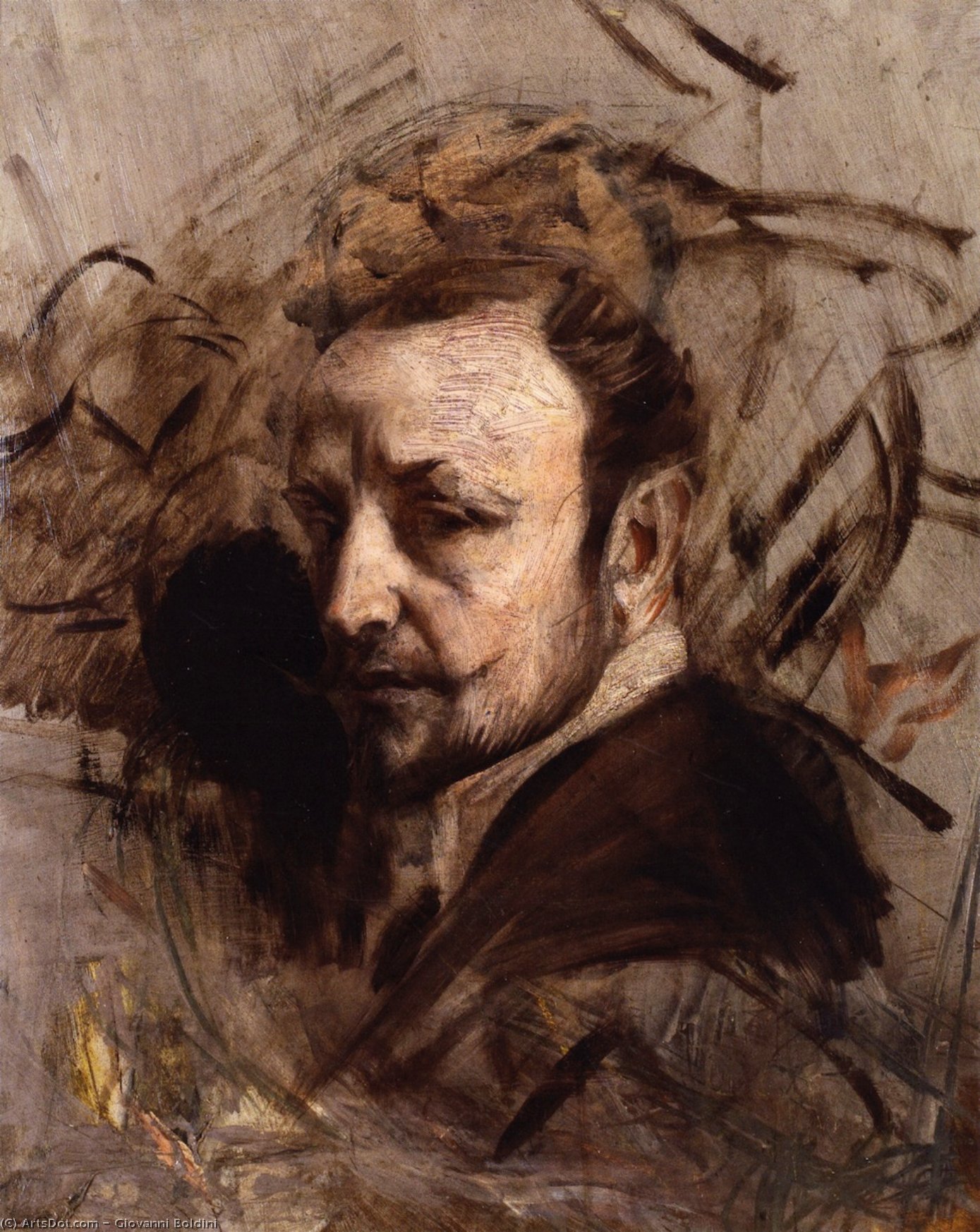
Self Portrait

Giovanni Boldini’s captivating 1892 ‘Self Portrait’ showcases the Italian artist's signature elegance and realism during the Belle Époque. This oil-on-panel masterpiece, featuring a serious gaze and symbolic clocks, invites you to own a piece of art history.

Giovanni Boldini (1842-1931) – włoski malarz portrecista, znany jako "Mistrz Swiłu". Uwieczniał elegancję i życie paryskiej wyższości. Odkryj jego wyjątkowy styl!

Ręcznie malowana reprodukcja olejowa

Ręcznie malowany olej na płótnie w Twoim wymiarze i ramie, tworzony na zamówienie przez naszych artystów.


P118B $10
P118H $10
P118W $10
P438Z $10
P508JH $12
P508YH $12
P805H $10
P805Z $10
P919BZ $10
P919G $10
P919XJ $10
P959ZH $10
P968JZ $12
W106C $8
W218G $10
W218JH $8
W218Y $10
W307PJ $10
W316G $10
W316PJ $8
W316Y $10
W398PJ $8
W4111J $10
W500HY $15
W500JH $15
W692G $12
W849H $8
W940BG $15
W953PJ $8

Standard
custom
CM
INCH

Wybierz spośród naszych predefiniowanych rozmiarów, które zachowują oryginalne proporcje dzieła sztuki.

szerokość
wysokość

Możesz wprowadzić własne wymiary, aby dopasować obraz do konkretnej ramy lub przestrzeni. Jeśli wybrany rozmiar nie będzie odpowiadał proporcjom oryginału, przytniecie dzieło sztuki lub rozszerzymy je o dodatkowe elementy, ręcznie domalowane przez artystę. Przed rozpoczęciem produkcji wyślemy projekt cyfrowy do Twojej akceptacji.
Należy pamiętać, że podgląd na ekranie nie odzwierciedla rzeczywistego przycinania ani rozszerzania obrazu. Tylko projekt dokładnie pokaże ostateczną kompozycję.
Choć oferujemy możliwość zamówienia niestandardowych rozmiarów, zalecamy wybór wymiaru z gotowej listy, aby zachować oryginalne proporcje dzieła.

Przykłady możliwych zmian: Zamień twarz na zdjęcie klienta; Dodaj zwierzę domowe (np. zamień kota na psa); Ukryj wiadomość w tle; Zmień krajobraz lub elementy tła.
Po złożeniu zamówienia zespół Most-Famous-Paintings.com skontaktuje się z klientem drogą mailową w celu uzyskania instrukcji i prześle wizualizację projektu

Dostawa na całym świecie () w ciągu 3/4 tygodni zamiast standardowych 5 tygodni. (18 Lipiec). Bez kompromisów w kwestii jakości.

why_choose_icon
Bezpłatna ekspresowa wysyłka na cały świat
why_choose_icon
Wysokiej jakości płótno lniane
why_choose_icon
Pełne ubezpieczenie przesyłki
why_choose_icon
Gwarancja zwrotu należności celnych
why_choose_icon
Gwarancja pełnego zgodności kolorystycznej
why_choose_icon
Polityka 60-dniowego zwrotu (tylko w przypadku wad)
why_choose_icon
Gwarancja 100% zwrotu pieniędzy
why_choose_icon
Zniżka przy większych zamówieniach

Suma całkowita

-

reproduction

Self Portrait

Technika reprodukcji

Wymiary reprodukcji

-

Cena całkowita

-

Szybkie fakty

  • Notable elements: Clocks, tie
  • Subject or theme: Self-portrait
  • Location: Ferrara, Italy
  • Title: Self Portrait
  • Year: 1892
  • Medium: Oil on panel
  • Dimensions: 61 x 47 cm

Opis dzieła

Giovanni Boldini’s ‘Self Portrait’: A Window into the Soul of the Belle Époque

Giovanni Boldini's “Self Portrait,” painted in 1892, is more than just a likeness; it’s a meticulously crafted meditation on time, identity, and the very nature of artistic endeavor. This oil-on-panel work, measuring 61 x 47 cm, offers a rare glimpse into the mind of one of the most celebrated portraitists of the Belle Époque, a period defined by its opulent elegance and burgeoning modernity. Housed within the Gallerie d'Arte Moderna e Contemporanea di Ferrara, Italy, the painting immediately draws the viewer in with Boldini’s direct gaze – a serious, almost contemplative expression that speaks volumes about his artistic process and perhaps, his self-awareness.

  • Subject & Composition: The portrait depicts Boldini himself, rendered with remarkable precision. Dressed in formal attire—a testament to the era's social conventions—he exudes an air of quiet confidence. The composition is carefully balanced, drawing attention initially to his face before subtly guiding the eye across the panel through the strategic placement of objects and details.
  • Technique & Materials: Executed in oil on panel, Boldini’s technique showcases a mastery of texture and color. The rich pigments create a luminous quality, characteristic of his style, while the subtle blending suggests a deliberate effort to capture not just appearance but also the very essence of his subject.

Symbolism Woven into the Canvas

Beyond a simple self-portrait, “Self Portrait” is laden with symbolic elements that invite deeper interpretation. The presence of two clocks immediately elevates the work’s complexity. The larger clock in the upper right corner, a common motif in art history representing the relentless march of time, serves as a poignant reminder of mortality – a theme frequently explored by artists during this period. The smaller clock on the right side adds another layer to this contemplation, perhaps suggesting the artist's focus on capturing fleeting moments or the urgency of his craft.

  • The Tie: The tie, positioned centrally, could be interpreted as a direct reference to Boldini’s profession – a symbol of his status and connection to the world of portraiture.
  • Time & Reflection: The clocks collectively represent not just time passing but also Boldini's own introspection, inviting viewers to consider the artist's role in preserving memories and capturing moments for posterity.

Historical Context & Artistic Legacy

Created in 1892, “Self Portrait” firmly places Boldini within the context of the late 19th century – a period of significant artistic innovation and social change. Boldini’s work reflects the influence of both Realism and Impressionism, blending meticulous observation with a sensitivity to light and color. His style was highly sought after by European aristocracy and high society, solidifying his reputation as one of the leading portraitists of his time. The painting's location within the Gallerie d'Arte Moderna e Contemporanea di Ferrara highlights the city’s rich artistic heritage, a legacy that Boldini himself helped to shape.

Size: 61 x 47 cm Date: 1892

A Timeless Masterpiece – Recreated for Your Collection

Most-Famous-Paintings offers a stunning, hand-painted reproduction of Giovanni Boldini’s “Self Portrait,” allowing you to bring this captivating artwork into your home or office. Each reproduction is meticulously crafted by skilled artists, ensuring an unparalleled level of detail and authenticity. More than just a print, it's a tangible connection to a pivotal moment in art history – a testament to Boldini’s genius and the enduring allure of the Belle Époque.


Biografia artysty

A Master of Swish: The Life and Art of Giovanni Boldini

Giovanni Boldini, a name synonymous with the elegance and allure of the Belle Époque, was an Italian artist who carved his niche in Parisian society as a celebrated portraitist. Born on December 31, 1842, in Ferrara, Italy, Boldini’s artistic journey began under the guidance of his father, a painter specializing in religious subjects. This early exposure instilled in him a foundational understanding of technique and composition, yet it was his move to Florence in 1862 that truly ignited his creative spirit. There, he encountered the Macchiaioli—a group of Italian realist painters who foreshadowed Impressionism with their emphasis on light, color, and spontaneous execution. This encounter proved pivotal, influencing Boldini’s landscapes with a newfound vibrancy and responsiveness to nature. However, it was in capturing the essence of his subjects through portraiture that he would ultimately achieve lasting renown.

From Florence to Parisian Society

Boldini's artistic path led him first to London, where he quickly gained recognition for his portraits of prominent figures like Lady Holland and the Duchess of Westminster. This early success paved the way for his relocation to Paris in 1872—a city that would become both his home and his muse. In Paris, Boldini immersed himself in the artistic milieu, befriending Edgar Degas and navigating the complex social landscape of the French capital. He developed a distinctive style characterized by its fluidity, dynamism, and an almost theatrical flair. His brushstrokes were not merely descriptive; they seemed to capture movement, personality, and the very air surrounding his subjects. This unique approach earned him the moniker “Master of Swish” in 1933, a testament to the graceful energy that permeated his work. He became *the* portraitist for Parisian high society, immortalizing the glamorous lives of actresses, socialites, and members of the aristocracy. Boldini’s portraits weren't just likenesses; they were statements—capturing not only physical appearance but also the spirit and social standing of his subjects.

Technique and Influences

Boldini’s technique was as captivating as the personalities he portrayed. He often worked on a grand scale, utilizing large canvases to convey a sense of grandeur and presence. His approach involved layering colors with loose, expressive brushstrokes, building up textures and depths that seemed to shimmer with life. This method, combined with his keen eye for detail and ability to capture fleeting expressions, resulted in portraits that were both strikingly realistic and imbued with an undeniable sense of style. Boldini’s work was deeply influenced by the Macchiaioli's focus on capturing light and spontaneous moments, but he also drew inspiration from artists like John Singer Sargent and Paul Helleu, whose dynamic brushwork resonated with his artistic sensibilities. He wasn’t simply replicating likenesses; he was creating impressions—evocative representations of character and social standing. The interplay of light and shadow, the subtle nuances of expression – these were the hallmarks of Boldini's distinctive style.

A Legacy Rediscovered

Throughout his career, Boldini exhibited widely, including at the Venice Biennale in 1895, 1903, 1905, and 1912. He received the Légion d’honneur for his contributions to the arts, solidifying his position as a leading figure in the Parisian art world. However, Boldini's popularity waned somewhat after his death in Paris on January 11, 1931, as artistic tastes shifted. His work fell into relative obscurity until recent decades have witnessed a remarkable resurgence of interest. The rediscovery of lost works, such as the captivating portrait of Marthe de Florian found hidden away in a Parisian apartment in 2010, has ignited appreciation for Boldini’s artistry and brought renewed attention to his significant contribution to Belle Époque art. The story surrounding this painting—a forgotten treasure unearthed after decades of seclusion—only adds to the mystique that surrounds both the artist and his subjects. Boldini's portraits continue to be studied and admired, offering a glimpse into a bygone era of elegance, sophistication, and artistic brilliance.

Key Works

Here are some of Giovanni Boldini’s most celebrated works:
  • Countess de Rasty
  • The Machine at Marly
  • Portrait of Giuseppe Verdi
  • Portrait of John Singer Sargent
  • Portrait of Marthe de Florian
Boldini's legacy extends beyond his individual paintings. His influence can be seen in the work of subsequent portrait artists, and his portraits are now featured in major museums around the world. The rediscovery of lost works continues to fuel scholarly interest and ensure that this “Master of Swish” remains a vital figure in the history of art.
Giovanni Boldini

Giovanni Boldini

1842 - 1931 , Włochy

Kluczowe informacje

  • Artistic Movement Or Style: Impressionizm
  • Artists Or Movements Influenced By This Artist: ['John Singer Sargent']
  • Artists Who Influenced This Artist: ['Macchiaioli']
  • Date Of Birth: 31 grudnia 1842
  • Date Of Death: 11 stycznia 1931
  • Full Name: Giovanni Boldini
  • Nationality: Włoski
  • Notable Artworks:
    • Portret lady Colin Campbell
    • Portret mężczyzny w kościele
  • Place Of Birth: Ferrara, Włochy
Odkryj dzieła sztuki uporządkowane według tematów, stylów i cech charakterystycznych.