
Sprzedawaj swoją sztukę
Lista życzeń Koszyk zakupowy Cart
Podgląd w skaliPodgląd w skali Podgląd ARPodgląd AR Zamów wydruk Zamów wydrukZamów ręcznie malowaną reprodukcję Zamów ręcznie malowaną reprodukcję Wyślij jako kartkęWyślij jako kartkę
Szczegóły dziełaSzczegóły dzieła Dodaj do ulubionych Dodaj do ulubionych PobierzPobierz Podobne obiektyPodobne obiekty RTGRTG Pokaz slajdówPokaz slajdów

Centaures

Gustave Moreau’s "Centaures" captures a dramatic Symbolist scene of centaurs and riders in a wild landscape, showcasing the artist's evocative style and mythical subject matter. Explore this captivating artwork and bring its timeless beauty into your space.

Poznaj Gustave Moreau – francuskiego mistrza Symbolizmu! Jego dzieła fascynują bogactwem kolorów i głęboką symboliką. Odkryj jego niezwykły świat sztuki XIX wieku!

Kup wysokiej rozdzielczości, ulepszony obraz cyfrowy o znacznie wyższej jakości niż podgląd online.

Każdy plik jest starannie przygotowywany przez naszych specjalistów przy użyciu zaawansowanych narzędzi oraz profesjonalnej, ręcznej retuszy. Dbamy o to, aby każdy obraz cechował się wyjątkową ostrością, precyzyjnym odwzorowaniem kolorów i subtelnymi detalami.

Ostateczny plik dostarczany jest drogą mailową w ciągu 72 godzin, zoptymalizowany do natychmiastowego wykorzystania w profesjonalnych zastosowaniach redakcyjnych i poligraficznych. To ta sama jakość, której ufają czołowe studia projektowe, wydawnictwa oraz galerie sztuki.

Obraz cyfrowy

Pobierz plik o wysokiej rozdzielczości do osobistego wyświetlania, druku oraz projektów kreatywnych. (Zamów wydruk Zamów wydrukZamów ręcznie malowaną reprodukcję Zamów ręcznie malowaną reprodukcję)

Suma do zapłaty

$ 24,90

W każdym zamówieniu na obraz cyfrowy znajduje się

Profesjonalna dostawa cyfrowa z gwarancją

Wybierając Most-Famous-Paintings.com, nie otrzymujesz jedynie obrazu – otrzymujesz profesjonalnie udoskonalone cyfrowe dzieło sztuki, stworzone z najwyższą precyzją i objęte gwarancją satysfakcji. Oto wszystko, co automatycznie dołączane jest do Twojego zamówienia:

shipping_icon
Błyskawiczna wysyłka e-mailowa

Plik z obrazem cyfrowym w wysokiej rozdzielczości zostanie przesłany na Twój adres e-mail w ciągu 72 godzin od złożenia zamówienia – gotowy do natychmiastowego użycia.

canvas_icon
Plik cyfrowy wzbogacony przez AI

Twoja grafika została profesjonalnie zoptymalizowana przy użyciu zaawansowanych narzędzi AI oraz ręcznej edycji, co zapewnia maksymalną szczegółowość, klarowność i wierność kolorów.

insurance_icon
Dożywotnia darmowa ponowna dostawa

Przypadkowo usunąłeś lub zgubiłeś swój plik? Bez obaw – prześlemy go Tobie ponownie w dowolnym momencie, bez żadnych opłat.

tax_icon
Bez opłat importowych – zawsze

Ciesz się swoją sztuką natychmiast, bez żadnych opłat celnych, należności ani kosztów dostawy – pliki cyfrowe są zawsze wolne od podatku.

color_icon
Gwarancja wierności kolorów

Dzięki zastosowaniu profesjonalnych narzędzi i procesów zarządzania barwą zapewniamy, że Twoje cyfrowe zdjęcie odzwierciedla oryginalne kolory tak wiernie, jak to tylko możliwe.

return_icon
60-dniowa gwarancja satysfakcji

Jeśli nie będziesz zadowolony ze swojego cyfrowego obrazu, dokonamy jego poprawki lub zwrócimy 100% kosztów w ciągu 60 dni – bez żadnych pytań.

guarantee_icon
100% Gwarancja zwrotu pieniędzy

Nie jesteś zadowolony? Otrzymaj pełny zwrot kosztów w ciągu 60 dni od otrzymania pliku cyfrowego – bez zbędnych pytań.

discount_icon
Rabaty przy zamówieniach hurtowych

Kup 3 obrazy, oszczędź 10% - Kup 5, oszczędź 15% - Kup 10+, oszczędź 20%. Idealne do projektów kreatywnych, galerii i agencji.

Szybki podgląd

  • Title: Centaures
  • Movement: Symbolism
  • Influences:
    • Mythology
    • Religion
  • Notable elements: Myth, horses, bird
  • Subject or theme: Centaurs, wilderness

Opis kolekcjonerski

Gustave Moreau’s “Centaures”: A Descent into Mythic Realms

Gustave Moreau's "Centaures" is not merely a depiction of mythological figures; it’s an immersion into the richly layered symbolism and emotional intensity that defined the Symbolist movement. Painted during a pivotal moment in artistic history – between the waning influence of Realism and the burgeoning explorations of Modernism – this work exemplifies Moreau’s profound engagement with ancient myths, religious iconography, and the darker recesses of the human psyche. Born in Paris in 1826, Moreau rejected the objective observation favored by his contemporaries, instead choosing to construct worlds populated by dreamlike figures and potent allegories. “Centaures” embodies this approach perfectly, offering a glimpse into a realm where primal instincts and spiritual anxieties collide.

  • Subject Matter: The painting centers on the iconic Greek myth of the Centaurs – half-human, half-horse creatures known for their wildness and untamed nature. Moreau doesn't present them as heroic warriors; rather, he captures a moment of raw power and unsettling beauty within a vast, primeval landscape.
  • Style & Technique: Moreau’s style is immediately recognizable – characterized by opulent color palettes, intricate detail, and a deliberate avoidance of naturalistic representation. He employs a meticulous technique, layering brushstrokes to create a sense of depth and texture that draws the viewer into the scene. The figures are rendered with an almost sculptural quality, emphasizing their physicality and imposing presence.

Symbolism and Mythological Resonance

Moreau’s use of symbolism is central to understanding “Centaures.” The centaurs themselves represent a potent blend of human intellect and animal instinct – a recurring theme in Moreau's work, reflecting his fascination with the duality of human nature. The wilderness setting—trees stretching into the distance, suggesting an untamed and potentially dangerous world—further amplifies this symbolism. The inclusion of a soaring bird adds another layer of meaning, often interpreted as representing aspiration, freedom, or even divine intervention. It’s crucial to remember that Moreau wasn't simply illustrating a myth; he was using it as a vehicle for exploring profound philosophical and psychological questions.

  • Color Palette: The rich, jewel-toned colors – deep reds, blues, and golds – contribute significantly to the painting’s evocative atmosphere. These hues were not chosen for their representational accuracy but rather for their symbolic associations—red representing passion and danger, blue signifying spirituality and mystery, and gold symbolizing divinity and power.
  • Composition: The composition itself is deliberately unbalanced, creating a sense of unease and instability. This reflects the chaotic nature of the centaurs’ world and mirrors Moreau's own artistic intention to disrupt conventional notions of beauty and harmony.

Historical Context & Moreau’s Vision

“Centaures” was created during a period of intense intellectual ferment in Paris, fueled by the rise of occultism, spiritualism, and a renewed interest in ancient mythology. Moreau's work aligns with the broader Symbolist movement, which sought to express subjective emotions and ideas through symbolic imagery rather than objective representation. He was deeply influenced by artists like William Blake and Arnold Böcklin, both of whom explored similar themes of myth, dream, and the subconscious. Moreau’s artistic vision was profoundly personal; he aimed to create works that would resonate with viewers on a deep emotional level, inviting them to contemplate the mysteries of existence.

Emotional Impact & Artistic Value

Moreau's "Centaures" possesses a haunting beauty and undeniable power. It’s a painting that demands attention, prompting reflection on themes of primal instinct, spiritual struggle, and the enduring allure of myth. This artwork represents a significant contribution to Symbolist art and offers a rare glimpse into the creative mind of one of France's most enigmatic artists. A hand-painted reproduction captures not only the visual splendor of Moreau’s masterpiece but also the emotional depth and intellectual complexity that make it so compelling.

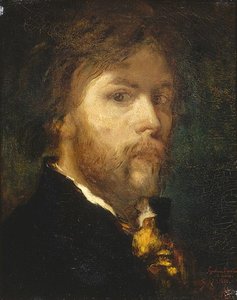
Biografia artysty

A Dream Weaver of Symbolism: The Life and Art of Gustave Moreau

Gustave Moreau, a name inextricably linked to the ethereal beauty and profound mysteries of Symbolist painting, emerged from 19th-century Paris as an artist utterly distinct in his vision. Born in 1826 into a comfortable bourgeois family—his father an architect and archivist—Moreau’s early life was steeped in intellectual curiosity and a deep appreciation for aesthetics. From a remarkably young age, he displayed a prodigious talent for drawing, nurtured through the rigorous training of the École des Beaux-Arts under esteemed figures like François-Édouard Picot. However, Moreau's artistic trajectory swiftly diverged from the prevailing Realist and Impressionist currents dominating his time. He wasn’t driven by a desire to capture fleeting moments or represent objective reality; instead, he sought to unlock the hidden realms of myth, religion, and the intricate workings of the human psyche through a deeply personal and symbolic visual language. His artistic journey became an inward exploration, translating subjective emotions and spiritual yearnings onto canvas with meticulous detail and a palette often rich in vibrant, almost opulent hues.

The Forge of Imagination: Influences and Artistic Development

Moreau’s artistic development wasn't forged in isolation. While rejecting the dominant trends of his era, he drew inspiration from a remarkably diverse range of sources. The dramatic use of color and exotic subject matter found in the works of Eugène Delacroix ignited within him a passionate interest in narrative painting imbued with intense emotionality. He held Renaissance masters—Michelangelo and Leonardo da Vinci, in particular—in the highest esteem, deeply admiring their mastery of composition, anatomical precision, and their remarkable ability to penetrate the complexities of human psychology. Yet, Moreau wasn’t merely imitating these giants; he was synthesizing their influences into something entirely new, a distinctly personal style. His pivotal journey to Italy during the 1850s proved transformative, immersing him in the art of antiquity and the Renaissance. This experience provided an unparalleled wealth of motifs and stylistic cues that would subsequently populate his future works. He meticulously copied Old Master paintings—not as mere reproductions, but as a means of absorbing their techniques and unlocking their secrets—carefully studying brushstrokes, color palettes, and compositional strategies. This dedication to craft, combined with his burgeoning fascination with mythology and literature, formed the bedrock of his unique artistic vision.

A World of Symbols: Themes and Techniques

Moreau’s paintings are not simply illustrations of myths or biblical stories; they are complex allegories designed to provoke contemplation and interpretation. He didn't aim to retell these narratives literally but rather to explore their underlying psychological and spiritual truths. His canvases are populated with a rich tapestry of symbolic imagery—serpents representing temptation, jewels signifying earthly desires, and figures embodying abstract concepts such as grief, loss, or redemption. He masterfully created an atmosphere of dreaminess through intricate detail, shimmering textures, and often unsettling juxtapositions of light and shadow. Moreau’s technique was characterized by a painstaking layering of paint—a deliberate process that resulted in surfaces brimming with iridescent colors and evoking a sense of otherworldly beauty. His skillful use of gold leaf further enhanced this effect, lending his works a Byzantine quality that underscored their spiritual dimension. He prioritized the expressive power of color and form over strict adherence to realistic representation, focusing on conveying mood and meaning rather than photographic accuracy.

Notable Works and Legacy

Throughout his career, Moreau produced an astonishing body of work, including iconic paintings such as *Salomé tańcząca przed Herodem* (Salome Dancing before Herod), *Jupiter i Semele*, *Orfeusz*, *Widzenie*, and *Święta Elżbieta z Anglii lub Cud róż*. These works demonstrate his extraordinary skill in depicting mythological scenes, biblical narratives, and allegorical themes. Moreau’s influence extended far beyond the Symbolist movement itself. He mentored numerous artists at the École des Beaux-Arts, encouraging them to embrace imagination, symbolism, and individual expression—a radical departure from the prevailing academic norms of the time. Though initially met with mixed reactions, Moreau's work gained recognition in the late 19th and early 20th centuries, solidifying his place as a pivotal figure in modern art. Today, the Musée Gustave Moreau in Paris stands as a testament to his enduring legacy—a sanctuary where visitors can immerse themselves in the captivating world of this extraordinary artist, experiencing firsthand the power and beauty of his symbolic vision.

Key Characteristics

  • Symbolic Imagery: Moreau’s paintings are replete with symbols representing complex ideas and emotions.
  • Dreamlike Atmosphere: He skillfully created an ethereal and otherworldly atmosphere through meticulous detail and color manipulation.
  • Rich Palette: His use of vibrant, often opulent colors contributed to the overall sense of mystery and beauty.
  • Influence of Renaissance Masters: Moreau drew inspiration from the techniques and philosophies of Michelangelo and Leonardo da Vinci.
Gustaw Moreau

Gustaw Moreau

1826 - 1898 , Francja

Krótka nota

  • Artistic Movement Or Style: Symbolizm
  • Artists Or Movements Influenced By This Artist:
    • Matisse
    • Rouault
  • Artists Who Influenced This Artist:
    • Delacroix
    • Michelangelo
  • Date Of Birth: 6 kwietnia 1826
  • Date Of Death: 18 kwietnia 1898
  • Full Name: Gustave Moreau
  • Nationality: Francuz
  • Notable Artworks:
    • Salome tańcząca
    • Prometeusz
    • Święta Elżbieta
  • Place Of Birth: Paryż, Francja

