x

 Olej na płótnieSztuka ściennaNeoclassicism
 1819XIX wiek
 105.0 x 145.0 cm
Ręcznie malowany obraz olejny na płótnie, wykonany na zamówienie przez naszych artystów w wybranym przez Ciebie wymiarze i oprawie. ( Zamów wydruk Przełącz na obraz)





























Wybierz spośród naszych standardowych rozmiarów, które zachowują oryginalne proporcje dzieła sztuki.

Możesz wprowadzić własne wymiary, aby dopasować obraz do konkretnej ramy lub przestrzeni. Jeśli wybrany rozmiar nie będzie odpowiadał proporcjom oryginału, przytniecie dzieło sztuki lub rozszerzymy je o dodatkowe elementy, ręcznie domalowane przez artystę. Przed rozpoczęciem produkcji wyślemy projekt cyfrowy do Twojej akceptacji.
Należy pamiętać, że podgląd na ekranie nie odzwierciedla rzeczywistego przycinania ani rozszerzania obrazu. Tylko projekt dokładnie pokaże ostateczną kompozycję.
Choć oferujemy możliwość zamówienia niestandardowych rozmiarów, zalecamy wybór wymiaru z gotowej listy, aby zachować oryginalne proporcje dzieła.
Dostawa na całym świecie () w ciągu 3–4 tygodni zamiast standardowych 5 tygodni. (10 Sierpień). Bez kompromisów w kwestii jakości.


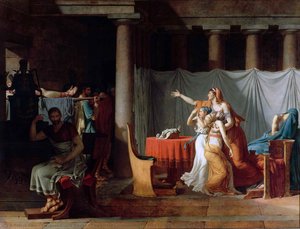
Gniew Achilla
Wymiary reprodukcji
Jacques-Louis David’s “The Anger of Achilles,” painted in 1819, transcends mere depiction; it embodies a profound meditation on human emotion rendered with the meticulous precision characteristic of Neoclassical artistry. This monumental oil on canvas, residing within the Kimbell Art Museum in Fort Worth, Texas, offers a captivating glimpse into the turbulent era following Napoleon’s downfall and David’s own complex relationship with power—a reflection of his artistic journey away from Rococo extravagance toward classical ideals.
David’s stylistic evolution is inextricably linked to this work. Emerging from the shadow of François Boucher's flamboyant Rococo, he spearheaded a movement toward a return to classical principles – austerity, clarity, and heightened moral seriousness. This shift mirrored the political climate of post-revolutionary France, where stability was paramount. “The Anger of Achilles” embodies this ethos, stripping away superfluous ornamentation and focusing on the raw truth of human experience. The composition is deliberately constructed to draw the viewer into the drama: Agamemnon, representing authority, stares intently at Achilles with an expression of restrained disappointment—a subtle commentary on leadership and duty.
Behind him stands Clytemnestra, embodying maternal anguish. Her outstretched hand towards her daughter Iphigenia serves as a poignant symbol of grief and the inescapable tragedy inherent in fate. David’s masterful use of chiaroscuro – dramatic contrast between light and shadow – sculpts the figures and amplifies their emotional impact. Notice how the deep shadows enveloping Achilles’ face and torso emphasize his rage, while the carefully rendered folds of drapery create a sense of dynamism.
“The Anger of Achilles” recounts a pivotal episode from Euripides’ play *Iphigenia in Aulis*. Agamemnon reveals to Achilles that he intends to sacrifice Iphigenia to appease Artemis, thereby permitting the Greek fleet to sail to Troy. This revelation ignites Achilles’ fury—a defiant assertion against what he perceives as betrayal and an affront to his honor. However, David doesn't simply portray this moment; he delves deeper into the underlying emotions at play: grief, disappointment, and the agonizing conflict between obligation and personal desire.
The painting’s symbolism is layered and rich. Achilles’ sword represents not merely violence but also a desperate attempt to regain control amidst overwhelming loss. Iphigenia’s serene countenance—despite her impending doom—speaks volumes about innocence vulnerable to the vicissitudes of fortune. Agamemnon’s stern demeanor reflects the difficult choices leaders must confront – decisions that often carry devastating consequences.
David’s technical prowess is immediately apparent. He meticulously studied the works of Raphael Mengs, prioritizing classical models and unwavering adherence to ancient artistic conventions. This dedication resulted in a painting characterized by exceptional realism—a hallmark of Neoclassicism that profoundly influenced subsequent generations of artists.
Consider David's approach to rendering form: he began by sculpting the figures’ bodies before applying drapery, ensuring that every detail conveyed an illusion of three-dimensionality. The artist’s attention to texture and surface treatment—particularly in capturing the glint of steel on Achilles’ sword—demonstrates his mastery of technique.
David established the Académie des Beaux-Arts in Paris, effectively shaping artistic standards and guiding the training of aspiring painters. His insistence on historical painting and classical themes solidified Neoclassicism's dominance in French art for decades to come. Studying David’s oeuvre offers invaluable insight into the intellectual and aesthetic currents of his time—a testament to his enduring legacy as one of France’s greatest artistic innovators.
Most-Famous-Paintings is proud to offer meticulously crafted hand-painted reproductions of “The Anger of Achilles.” Each reproduction captures the essence of David’s original masterpiece – the dramatic lighting, the intense emotions, and the exquisite detail. Utilizing archival-quality materials and employing skilled artisans, we ensure that your reproduction will not only be a beautiful addition to your home or office but also a tangible connection to a pivotal moment in art history.


1748 - 1800 , Francja

Explore the life & art of Jacques-Louis David, leading Neoclassical painter of the French Revolution. Discover iconic works like 'The Death of Marat' and his lasting impact on art history. Expert analysis & high-quality reproductions at Most-Famous-Paintings.

Explore the captivating world of Anne-Louis Girodet, a pivotal figure bridging Neoclassicism & Romanticism. Discover his masterpieces and unique artistic vision with Most-Famous-Paintings.

Poznaj fascynujący świat portretu neoklasycystycznego! Eksplorujemy wpływ antyku na sztukę, techniki malarskie i wybitnych artystów. Odkryj idealy piękna i władzy w klasycznych obrazach.

Explore the profound tension between Neoclassicism's rational order and Romanticism's emotional depth. An expert journey through the masters of art history, from David to Delacroix, perfect for collectors and enthusiasts seeking a deeper understanding of artistic evolution.

Poznaj fascynującą transformację sztuki XVIII wieku – od wdzięku rokoka do powagi neoklasycyzmu! Analiza historycznego kontekstu, wpływ oświecenia i wybitni twórcy. Ekspercka wiedza dla miłośników historii sztuki.


Bądź na bieżąco z najnowszymi wiadomościami ze świata sztuki, ekskluzywnymi ofertami i inspiracjami dekoratorskimi.
Opowiedz nam o swoim projekcie, a nasi eksperci przygotują dla Ciebie 3 spersonalizowane propozycje dzieł sztuki.
Przygotujemy dla Ciebie 3 propozycje zupełnie za darmo!


 Podgląd w skali
 Wyślij jako kartkę
 Udostępnij
 Szczegóły dzieła

 Pobierz
 Podobne obiekty
 RTG
RTG Pokaz slajdów
 Rozwiń treść







 Opcja ze szkłem jest dostępna wyłącznie w rozmiarach poniżej 110 cm