


x
Kup wysokiej rozdzielczości, ulepszony obraz cyfrowy o znacznie wyższej jakości niż podgląd online.
Każdy plik jest starannie przygotowywany przez naszych specjalistów przy użyciu zaawansowanych narzędzi oraz profesjonalnej, ręcznej retuszy. Dbamy o to, aby każdy obraz cechował się wyjątkową ostrością, precyzyjnym odwzorowaniem kolorów i subtelnymi detalami.
Ostateczny plik dostarczany jest drogą mailową w ciągu 72 godzin, zoptymalizowany do natychmiastowego wykorzystania w profesjonalnych zastosowaniach redakcyjnych i poligraficznych. To ta sama jakość, której ufają czołowe studia projektowe, wydawnictwa oraz galerie sztuki.
Pobierz plik o wysokiej rozdzielczości do osobistego wyświetlania, druku oraz projektów kreatywnych. ( Zamów wydruk Zamów ręcznie malowaną reprodukcję)
Wybierając Most-Famous-Paintings.com, nie otrzymujesz jedynie obrazu – otrzymujesz profesjonalnie udoskonalone cyfrowe dzieło sztuki, stworzone z najwyższą precyzją i objęte gwarancją satysfakcji. Oto wszystko, co automatycznie dołączane jest do Twojego zamówienia:

Plik z obrazem cyfrowym w wysokiej rozdzielczości zostanie przesłany na Twój adres e-mail w ciągu 72 godzin od złożenia zamówienia – gotowy do natychmiastowego użycia.

Twoja grafika została profesjonalnie zoptymalizowana przy użyciu zaawansowanych narzędzi AI oraz ręcznej edycji, co zapewnia maksymalną szczegółowość, klarowność i wierność kolorów.

Przypadkowo usunąłeś lub zgubiłeś swój plik? Bez obaw – prześlemy go Tobie ponownie w dowolnym momencie, bez żadnych opłat.

Ciesz się swoją sztuką natychmiast, bez żadnych opłat celnych, należności ani kosztów dostawy – pliki cyfrowe są zawsze wolne od podatku.

Dzięki zastosowaniu profesjonalnych narzędzi i procesów zarządzania barwą zapewniamy, że Twoje cyfrowe zdjęcie odzwierciedla oryginalne kolory tak wiernie, jak to tylko możliwe.

Jeśli nie będziesz zadowolony ze swojego cyfrowego obrazu, dokonamy jego poprawki lub zwrócimy 100% kosztów w ciągu 60 dni – bez żadnych pytań.

Nie jesteś zadowolony? Otrzymaj pełny zwrot kosztów w ciągu 60 dni od otrzymania pliku cyfrowego – bez zbędnych pytań.

Kup 3 obrazy, oszczędź 10% - Kup 5, oszczędź 15% - Kup 10+, oszczędź 20%. Idealne do projektów kreatywnych, galerii i agencji.
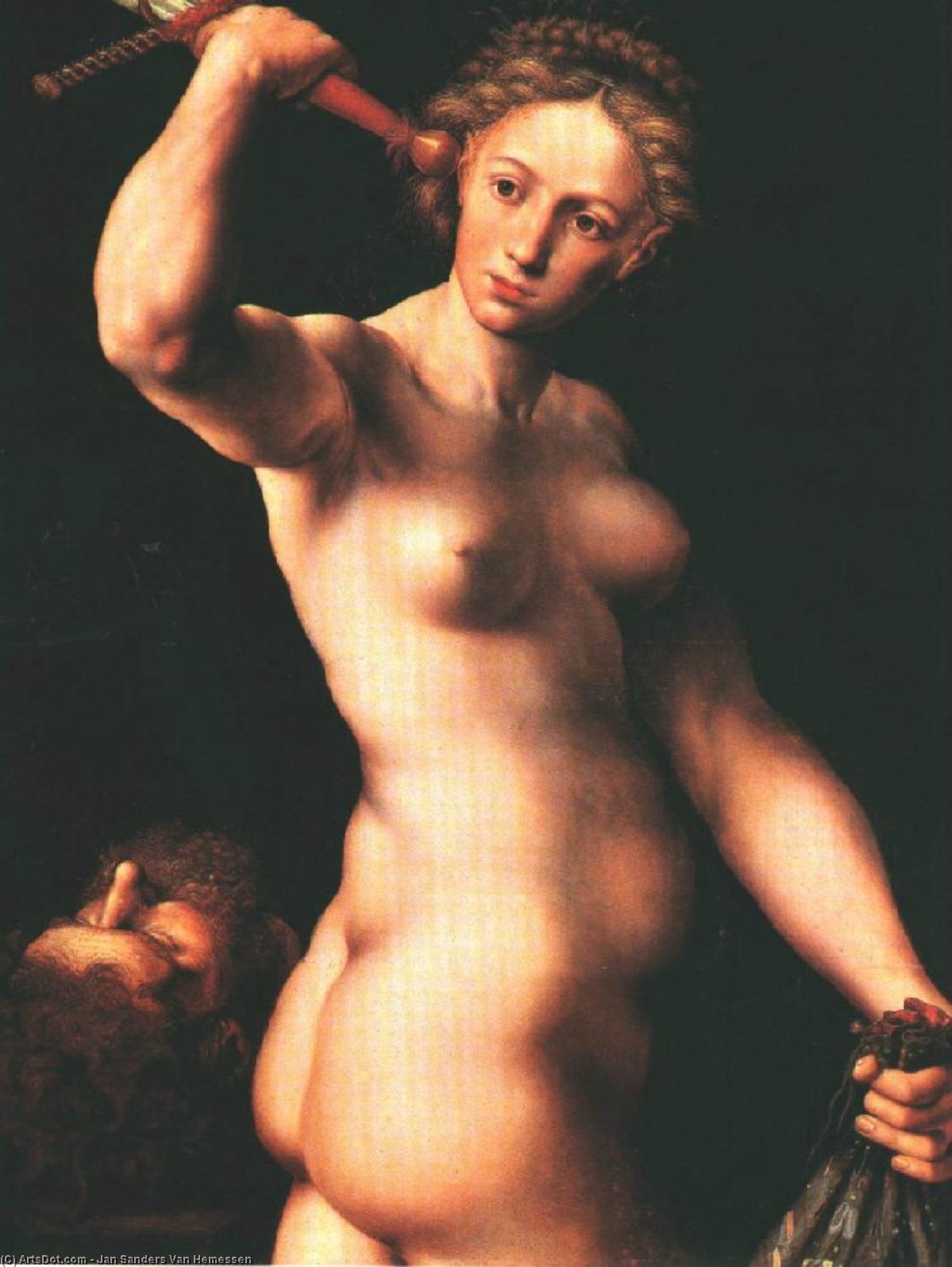
Jan Sanders van Hemessen's "Judith," painted around 1540, isn’t merely a depiction of a biblical tale; it’s a meticulously crafted moral drama rendered with the vibrant realism and psychological depth characteristic of the Northern Renaissance. This arresting image captures the pivotal moment when Judith, the courageous Jewish widow, delivers the fatal blow to Holofernes, the Assyrian general, thereby saving her besieged city. Van Hemessen, a key figure in the burgeoning Flemish genre painting movement, elevates this ancient story into a compelling meditation on female strength, strategic cunning, and divine justice – all presented with an astonishing level of detail and emotional resonance.
The composition immediately commands attention. Judith is not portrayed as a delicate heroine; instead, she’s depicted as a powerfully muscled figure, her body taut with effort and determination. Her profile, turned towards the viewer, conveys both resolve and a hint of grim satisfaction. The severed head of Holofernes, held aloft in her other hand, isn't presented in a gruesome manner but rather as a stark symbol of vanquished tyranny. Van Hemessen masterfully utilizes chiaroscuro – the dramatic interplay of light and shadow – to sculpt Judith’s form and emphasize the weight of her action. The dark background serves not as mere backdrop but as a stage upon which this decisive moment unfolds, drawing all focus onto the central figures.
Van Hemessen's style is deeply rooted in the artistic traditions of Italy, particularly the work of Michelangelo and Raphael. He absorbed their emphasis on idealized human forms, dynamic poses, and a profound understanding of anatomy. However, he skillfully adapted these influences to create a distinctly Northern Renaissance aesthetic. The painting’s realism is remarkable; from the intricate folds of Judith's dress to the texture of Holofernes’s beard and the glistening blood staining his face, every detail is rendered with painstaking precision. Van Hemessen was renowned for his ability to capture the nuances of human expression, evident in Judith’s focused gaze and the subtle hint of triumph in her posture.
The painting's technique showcases van Hemessen’s mastery of oil paint. He employed a layering approach, building up color gradually to achieve rich, luminous effects. The use of impasto – applying thick layers of paint directly onto the canvas – adds texture and depth to the figures and background. This meticulous attention to detail is further enhanced by his skillful handling of light and shadow, creating a sense of three-dimensionality that brings the scene vividly to life.
Beyond its visual beauty, “Judith” is laden with symbolic meaning. The story itself carries significant weight within Jewish tradition, representing themes of courage, faith, and resistance against oppression. Judith’s actions are not simply a violent act but an embodiment of strategic intelligence and righteous defiance. The depiction of Judith as a physically strong woman challenging a powerful male figure speaks to the Renaissance fascination with female agency – a theme that was increasingly explored in art during this period.
Furthermore, the painting can be interpreted as a broader allegory for the triumph of good over evil. Holofernes represents the forces of tyranny and corruption, while Judith embodies virtue and justice. The act of decapitation symbolizes the ultimate defeat of these forces, suggesting that moral strength and strategic action can overcome even the most formidable adversaries. The inclusion of the severed head is not intended to glorify violence but rather to underscore the consequences of injustice and the necessity of resistance.
“Judith” stands as a prime example of the moralizing art that flourished in the Netherlands during the 16th century. Artists like van Hemessen sought to create works that not only depicted biblical stories but also conveyed important ethical and religious lessons. This painting, with its compelling narrative, masterful technique, and profound symbolism, continues to resonate with viewers today – a testament to the enduring power of art to illuminate human experience and inspire reflection.


1500 - 1566 , Belgia


Bądź na bieżąco z najnowszymi wiadomościami ze świata sztuki, ekskluzywnymi ofertami i inspiracjami dekoratorskimi.
Opowiedz nam o swoim projekcie, a nasi eksperci przygotują dla Ciebie 3 spersonalizowane propozycje dzieł sztuki.
Przygotujemy dla Ciebie 3 propozycje zupełnie za darmo!


 Podgląd w skali
 Wyślij jako kartkę
 Udostępnij
 Szczegóły dzieła

 Pobierz
 Podobne obiekty
 RTG
RTG Pokaz slajdów


 Rozwiń treść


