


x

 Obraz olejny na płycieEarly Netherlandish Painting
 1432Renesans
 12.0 x 19.0 cm
Kup wysokiej rozdzielczości, ulepszony obraz cyfrowy o znacznie wyższej jakości niż podgląd online.
Każdy plik jest starannie przygotowywany przez naszych specjalistów przy użyciu zaawansowanych narzędzi oraz profesjonalnej, ręcznej retuszy. Dbamy o to, aby każdy obraz cechował się wyjątkową ostrością, precyzyjnym odwzorowaniem kolorów i subtelnymi detalami.
Ostateczny plik dostarczany jest drogą mailową w ciągu 72 godzin, zoptymalizowany do natychmiastowego wykorzystania w profesjonalnych zastosowaniach redakcyjnych i poligraficznych. To ta sama jakość, której ufają czołowe studia projektowe, wydawnictwa oraz galerie sztuki.
Pobierz plik o wysokiej rozdzielczości do osobistego wyświetlania, druku oraz projektów kreatywnych. ( Zamów wydruk Zamów ręcznie malowaną reprodukcję)
Wybierając Most-Famous-Paintings.com, nie otrzymujesz jedynie obrazu – otrzymujesz profesjonalnie udoskonalone cyfrowe dzieło sztuki, stworzone z najwyższą precyzją i objęte gwarancją satysfakcji. Oto wszystko, co automatycznie dołączane jest do Twojego zamówienia:

Plik z obrazem cyfrowym w wysokiej rozdzielczości zostanie przesłany na Twój adres e-mail w ciągu 72 godzin od złożenia zamówienia – gotowy do natychmiastowego użycia.

Twoja grafika została profesjonalnie zoptymalizowana przy użyciu zaawansowanych narzędzi AI oraz ręcznej edycji, co zapewnia maksymalną szczegółowość, klarowność i wierność kolorów.

Przypadkowo usunąłeś lub zgubiłeś swój plik? Bez obaw – prześlemy go Tobie ponownie w dowolnym momencie, bez żadnych opłat.

Ciesz się swoją sztuką natychmiast, bez żadnych opłat celnych, należności ani kosztów dostawy – pliki cyfrowe są zawsze wolne od podatku.

Dzięki zastosowaniu profesjonalnych narzędzi i procesów zarządzania barwą zapewniamy, że Twoje cyfrowe zdjęcie odzwierciedla oryginalne kolory tak wiernie, jak to tylko możliwe.

Jeśli nie będziesz zadowolony ze swojego cyfrowego obrazu, dokonamy jego poprawki lub zwrócimy 100% kosztów w ciągu 60 dni – bez żadnych pytań.

Nie jesteś zadowolony? Otrzymaj pełny zwrot kosztów w ciągu 60 dni od otrzymania pliku cyfrowego – bez zbędnych pytań.

Kup 3 obrazy, oszczędź 10% - Kup 5, oszczędź 15% - Kup 10+, oszczędź 20%. Idealne do projektów kreatywnych, galerii i agencji.
Jan van Eyck’s St. Jerome in His Study, a remarkably intimate oil painting from 1432, isn't merely a depiction of a saint; it’s a meticulously crafted window into the mind and world of a Renaissance scholar. Measuring just over 12 by 19 centimeters, this diminutive panel commands attention not through its size, but through the sheer density of detail and the profound sense of quiet contemplation it evokes. The scene unfolds within a warmly lit study, dominated by the figure of St. Jerome himself – a man deeply absorbed in his work, surrounded by the tools and trappings of intellectual life. It’s a space both familiar and utterly captivating, inviting us to share in his solitary pursuit of knowledge.
Van Eyck's genius lies not just in his technical prowess—the astonishing realism achieved through his revolutionary use of oil paint—but also in his ability to imbue the scene with layers of symbolic meaning. The composition is carefully balanced, drawing our eye from the saint’s focused expression to the meticulously rendered objects that populate his study. Each element contributes to a narrative of faith, learning, and the quiet dignity of intellectual labor.
To truly appreciate St. Jerome in His Study, one must acknowledge the groundbreaking techniques employed by Van Eyck. He was a pioneer in the application of oil paint on panel, a medium that allowed for unprecedented levels of detail, luminosity, and textural richness. Unlike tempera paints which dry quickly and create a matte finish, oils could be manipulated slowly, building up layers of color and creating subtle gradations of tone. This painstaking process is evident in every brushstroke—the delicate rendering of the folds in Jerome’s robes, the intricate details of the books and instruments on his desk, and the soft glow of light illuminating the scene.
Van Eyck's mastery extends to his use of *sfumato*, a technique borrowed from the East, which creates an atmospheric haze around objects, softening edges and lending a sense of depth. This is particularly noticeable in the background, where the study appears slightly blurred, drawing our attention to the central figure and his immediate surroundings. The painting’s colors are rich and vibrant—deep reds, blues, and greens—but applied with remarkable restraint, creating a harmonious and balanced palette.
Beyond its technical brilliance, St. Jerome in His Study is a treasure trove of symbolism. The lion at the saint’s feet, a recurring motif in his legend, represents his triumph over wild beasts—both literal and metaphorical, symbolizing his ability to subdue temptation and maintain faith. The open books suggest his dedication to biblical scholarship, while the astrolabe and other instruments reflect his interest in astronomy and mathematics – subjects closely linked to theology during the Renaissance.
The hourglass, a potent symbol of mortality, reminds us of the fleeting nature of time and the importance of dedicating one’s life to virtuous pursuits. Even the simple gesture of Jerome's hand—holding a quill pen poised above his work— speaks volumes about his commitment to intellectual labor. The inclusion of a small jar labeled “TYRIRICA,” an antidote to snakebite, hints at the saint’s struggles against temptation and his reliance on divine grace.
St. Jerome in His Study stands as a pivotal work in the history of art, marking a crucial transition from the Gothic to the Renaissance style. Van Eyck's innovations with oil paint profoundly influenced subsequent generations of artists, paving the way for the development of Northern European painting and shaping the course of Western art. Alongside works like *The Ghent Altarpiece* and *Isabella Borluut*, this intimate portrait offers a profound insight into the mind of a master craftsman and a testament to the enduring power of symbolism in visual storytelling.

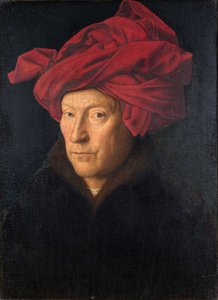
1390 - 1441 , Holandia


Bądź na bieżąco z najnowszymi wiadomościami ze świata sztuki, ekskluzywnymi ofertami i inspiracjami dekoratorskimi.
Opowiedz nam o swoim projekcie, a nasi eksperci przygotują dla Ciebie 3 spersonalizowane propozycje dzieł sztuki.
Przygotujemy dla Ciebie 3 propozycje zupełnie za darmo!


 Podgląd w skali
 Wyślij jako kartkę
 Udostępnij
 Szczegóły dzieła

 Pobierz
 Podobne obiekty
 RTG
RTG Pokaz slajdów
 Rozwiń treść


