Sprzedawaj swoją sztukę
Lista życzeń Koszyk zakupowy Cart
Podgląd w skaliPodgląd w skali Podgląd ARPodgląd AR Zamów wydruk Zamów wydrukZamów ręcznie malowaną reprodukcję Zamów ręcznie malowaną reprodukcję Wyślij jako kartkęWyślij jako kartkę
Szczegóły dziełaSzczegóły dzieła Dodaj do ulubionych Dodaj do ulubionych PobierzPobierz Podobne obiektyPodobne obiekty RTGRTG Pokaz slajdówPokaz slajdów

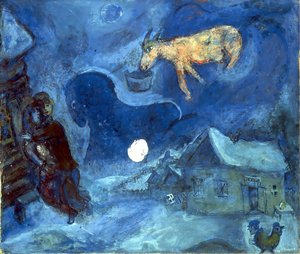
In the night

Delve into Marc Chagall's dreamy Naïve Art masterpiece, 'In the Night,' capturing a poignant embrace beneath moonlight—a testament to love and memory rendered in striking black and white.

Poznaj fascynujący świat Marc Chagalla (1887-1985), rosyjskiego i francuskiego mistrza sztuki, znanego z obrazów pełnych snu i folklorystycznych motywów oraz pięknych witraży. Odkryj jego dziedzictwo!

Kup wysokiej rozdzielczości, ulepszony obraz cyfrowy o znacznie wyższej jakości niż podgląd online.

Każdy plik jest starannie przygotowywany przez naszych specjalistów przy użyciu zaawansowanych narzędzi oraz profesjonalnej, ręcznej retuszy. Dbamy o to, aby każdy obraz cechował się wyjątkową ostrością, precyzyjnym odwzorowaniem kolorów i subtelnymi detalami.

Ostateczny plik dostarczany jest drogą mailową w ciągu 72 godzin, zoptymalizowany do natychmiastowego wykorzystania w profesjonalnych zastosowaniach redakcyjnych i poligraficznych. To ta sama jakość, której ufają czołowe studia projektowe, wydawnictwa oraz galerie sztuki.

Obraz cyfrowy

Pobierz plik o wysokiej rozdzielczości do osobistego wyświetlania, druku oraz projektów kreatywnych. (Zamów wydruk Zamów wydrukZamów ręcznie malowaną reprodukcję Zamów ręcznie malowaną reprodukcję)

Suma do zapłaty

$ 24,90

W każdym zamówieniu na obraz cyfrowy znajduje się

Profesjonalna dostawa cyfrowa z gwarancją

Wybierając Most-Famous-Paintings.com, nie otrzymujesz jedynie obrazu – otrzymujesz profesjonalnie udoskonalone cyfrowe dzieło sztuki, stworzone z najwyższą precyzją i objęte gwarancją satysfakcji. Oto wszystko, co automatycznie dołączane jest do Twojego zamówienia:

shipping_icon
Błyskawiczna wysyłka e-mailowa

Plik z obrazem cyfrowym w wysokiej rozdzielczości zostanie przesłany na Twój adres e-mail w ciągu 72 godzin od złożenia zamówienia – gotowy do natychmiastowego użycia.

canvas_icon
Plik cyfrowy wzbogacony przez AI

Twoja grafika została profesjonalnie zoptymalizowana przy użyciu zaawansowanych narzędzi AI oraz ręcznej edycji, co zapewnia maksymalną szczegółowość, klarowność i wierność kolorów.

insurance_icon
Dożywotnia darmowa ponowna dostawa

Przypadkowo usunąłeś lub zgubiłeś swój plik? Bez obaw – prześlemy go Tobie ponownie w dowolnym momencie, bez żadnych opłat.

tax_icon
Bez opłat importowych – zawsze

Ciesz się swoją sztuką natychmiast, bez żadnych opłat celnych, należności ani kosztów dostawy – pliki cyfrowe są zawsze wolne od podatku.

color_icon
Gwarancja wierności kolorów

Dzięki zastosowaniu profesjonalnych narzędzi i procesów zarządzania barwą zapewniamy, że Twoje cyfrowe zdjęcie odzwierciedla oryginalne kolory tak wiernie, jak to tylko możliwe.

return_icon
60-dniowa gwarancja satysfakcji

Jeśli nie będziesz zadowolony ze swojego cyfrowego obrazu, dokonamy jego poprawki lub zwrócimy 100% kosztów w ciągu 60 dni – bez żadnych pytań.

guarantee_icon
100% Gwarancja zwrotu pieniędzy

Nie jesteś zadowolony? Otrzymaj pełny zwrot kosztów w ciągu 60 dni od otrzymania pliku cyfrowego – bez zbędnych pytań.

discount_icon
Rabaty przy zamówieniach hurtowych

Kup 3 obrazy, oszczędź 10% - Kup 5, oszczędź 15% - Kup 10+, oszczędź 20%. Idealne do projektów kreatywnych, galerii i agencji.

Szybki podgląd

  • Artistic style: Symbolic Expressionism
  • Movement: Naive Art (Primitivism)
  • Subject or theme: Romantic Embrace; Nocturne
  • Influences:
    • Cubism
    • Surrealism
  • Notable elements or techniques: Dreamlike Composition; Visible Brushstrokes
  • Medium: Oil on Canvas
  • Artist: Marc Chagall

Quiz o sztuce

Do każdego pytania dotyczy tylko jedna poprawna odpowiedź.

Pytanie 1:
What artistic movement is Marc Chagall’s ‘In the Night’ primarily associated with?
Pytanie 2:
The painting depicts a scene featuring two figures embracing under what type of illumination?
Pytanie 3:
What is characteristic of Chagall’s style as exemplified in ‘In the Night’?
Pytanie 4:
The painting utilizes a predominantly black and white color palette. What effect does this contribute to?
Pytanie 5:
What symbolic element is represented by the crescent moon in ‘In the Night’?

Opis kolekcjonerski

A Nocturnal Embrace in Monochrome

In the quietude of 1943, amidst a world gripped by the shadows of global conflict, Marc Chagall captured a moment of profound intimacy that transcends time. In the night is not merely a depiction of a snowy village; it is a poetic fragment of a dream, rendered with the soulful simplicity of the Naive Art movement. The painting invites the viewer into a monochromatic sanctuary where the biting cold of a winter night is neutralized by the warmth of human connection. As we gaze upon the scene, we find ourselves standing in the soft snow alongside a couple lost in an embrace, illuminated by the singular, guiding glow of a street lamp. This stark, black and white composition strips away the distractions of color to reveal the raw, emotional skeleton of the moment, making it a captivating centerpiece for any collection that values depth and narrative tenderness.

The artistry of Chagall in this piece exemplifies the charm of Primitivism, where the lack of formal, rigid perspective serves to heighten the emotional truth of the subject. The composition is masterfully centered around the light source, which acts as both a physical beacon and a symbolic heart for the work. Buildings rendered in simplified, geometric shapes line the background, their forms softened by the nocturnal atmosphere and the dusting of snow. A delicate crescent moon hangs in the upper corner, watching over the silent village like a celestial witness. This flattened perspective creates a sense of closeness, as if the viewer is not an outsider looking in, but a quiet participant in this private, frozen moment of peace.

Symbolism and the Language of Light

Beyond its visual beauty, In the night functions as a profound meditation on hope and resilience. The street lamp, standing tall and bright against the dark sky, serves as a powerful symbol of guidance and clarity amidst the surrounding darkness—a metaphor that would have resonated deeply during the era of its creation. The embrace of the two figures represents the enduring strength of love and the human need for connection even in the most desolate environments. There is a certain magic in how Chagall uses light to sculpt the scene; the way the glow touches the snow and the silhouettes of the lovers creates a dramatic contrast that breathes life into the stillness.

For the discerning collector or interior designer, this artwork offers a unique versatility. Its muted palette of blacks, whites, and subtle greys allows it to integrate seamlessly into modern, minimalist, or classic decor, providing a sophisticated focal point that does not overwhelm a room but rather invites contemplation. The visible, textured brushstrokes—particularly in the suggestion of the snow—add a tactile quality that celebrates the handmade essence of oil on canvas. To possess a reproduction of this masterpiece is to bring a piece of Chagall’s legendary dreamscape into one's own space, offering a permanent window into a world where love remains unextinguished by the night.

Biografia artysty

A Life Painted in Dreams: The World of Marc Chagall

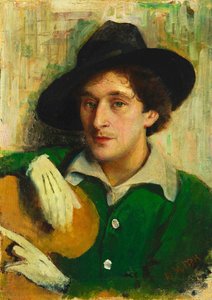
Marc Chagall, born Moishe Shagal in 1887 in the small Belarussian town of Liozna near Vitebsk, wasn’t merely a painter; he was a poet of color, a weaver of dreams, and a chronicler of memory. His life, spanning nearly a century, mirrored the tumultuous currents of the 20th century, yet his art remained steadfastly rooted in a deeply personal vision—one infused with the folklore of his Hasidic Jewish upbringing and an unwavering belief in the power of imagination. Vitebsk itself was more than just a birthplace; it became the emotional core of his artistic universe, a recurring motif populated by flying figures, whimsical animals, and the vibrant hues of remembered landscapes. The town’s unique blend of cultures—Russian Orthodox churches alongside bustling Jewish marketplaces—forged an aesthetic sensibility that would defy easy categorization throughout his long career. Though he sought formal training first with a local sign painter and later in St. Petersburg under Léon Bakst, and then in Paris at the Académie de la Grande Chaumière, Chagall never fully embraced any single artistic movement. He absorbed elements of Cubism, Symbolism, and Fauvism, but always filtered them through his own intensely personal lens, creating a style that was uniquely, unmistakably Chagall.

Early Years and Artistic Beginnings

Chagall’s formative years were marked by hardship and displacement. Born into a family of impoverished Jewish artisans, he experienced the trauma of pogroms—violent attacks against Jews—which instilled in him a profound awareness of persecution and loss. Despite these challenges, he pursued his artistic ambitions with unwavering determination, initially studying sign painting before enrolling at St. Petersburg’s Imperial Art Academy under Léon Bakst, where he honed his skills in theatrical design. However, Bakst's insistence on adhering to academic conventions clashed with Chagall’s innate inclination toward expressive abstraction, prompting him to forge his own path—a path that would ultimately lead him away from formal training and towards a radically original artistic vision. His early paintings, such as I and the Village (1911), already demonstrated his distinctive approach: he eschewed realistic representation in favor of fragmented imagery imbued with symbolic meaning. The village wasn’t rendered realistically but as a collection of recollections, bathed in luminous colors—a technique that would become central to his oeuvre. This ability to transmute personal experience into universal themes became a hallmark of his art and foreshadowed the stylistic innovations that would characterize his subsequent work.

The Symbolist Influence and Vitebsk’s Vision

Chagall's artistic development was profoundly shaped by Symbolism, particularly by artists like Gustave Moreau and Edvard Munch. He embraced the Symbolists’ preoccupation with emotion and psychological depth, rejecting the objective depiction of reality in favor of subjective expression. The influence of folklore—particularly Jewish folklore—was equally significant. Chagall drew inspiration from biblical stories, folktales, and Jewish traditions, incorporating fantastical elements into his paintings that evoked a sense of wonder and enchantment. Vitebsk remained an enduring presence in Chagall’s artistic imagination. He depicted the town repeatedly throughout his career, capturing its distinctive atmosphere—the juxtaposition of Orthodox churches and Jewish marketplaces—with vibrant colors and dreamlike distortions. These images weren't merely topographical representations; they were expressions of nostalgia for a lost homeland and reflections on themes of identity and belonging.

Cubism and Beyond: Experimentation and Innovation

While Chagall absorbed elements of Cubism, pioneered by Pablo Picasso and Georges Braque, he never fully embraced its geometric rigor. Instead, he adapted Cubist principles—such as fragmentation and multiple perspectives—to his own expressive style, creating canvases that defied conventional spatial conventions. He experimented with collage techniques, incorporating newspaper clippings and other found objects into his paintings—a practice that reflected his engagement with the cultural landscape of his time. His palette became increasingly bold and chromatic, employing colors that seemed to defy natural laws—colors that pulsed with emotion and conveyed a sense of otherworldly beauty. This willingness to push boundaries—to challenge artistic conventions—was driven by an unwavering belief in the transformative power of art.

Mature Works and Legacy

Chagall’s mature oeuvre encompasses a vast range of subjects—biblical narratives, portraits, landscapes, still lifes—each rendered with unparalleled sensitivity and imagination. Paintings like White Crucifixion (1937) are emotionally charged meditations on suffering and redemption, reflecting the anxieties of the era while simultaneously reaffirming Chagall’s humanist values. His stained glass windows for the Hadassah Hebrew University Medical Center synagogue in Jerusalem—a monumental undertaking that cemented his reputation as a visionary artist—represent a culmination of his artistic explorations. These works stand as testament to his enduring influence on subsequent generations of artists, who continue to draw inspiration from his lyrical style and his profound engagement with universal themes. Marc Chagall’s legacy extends beyond his paintings; it resides in the indelible mark he left on the history of art—a mark characterized by beauty, imagination, and an unwavering commitment to expressing the deepest recesses of human experience. He died March 28, 1985, leaving behind a body of work that continues to captivate audiences worldwide.
Marc Chagall

Marc Chagall

1887 - 1985 , Білорусь

Krótka nota

  • Artistic Movement Or Style: Modernizm, Kubizm
  • Artists Or Movements Influenced By This Artist:
    • Surrealizm
    • Artyści nowoczesni
  • Artists Who Influenced This Artist:
    • Bakst
    • Delaunay
    • Borowikowy
  • Date Of Birth: 7 lipca 1887
  • Date Of Death: 28 marca 1985
  • Full Name: Marc Chagall
  • Nationality: Rosjanin-Francuz
  • Notable Artworks:
    • I i Wieś
    • Nad Vitebskiem
    • Białe Ukrzyżowanie
  • Place Of Birth: Liozna, Białoruś