x

 Oil On CanvasWallArtEarly Netherlandish Painting
 1508
1508 73.0 x 53.0 cm
 Muzeum Sztuki w Bazylei
Druk giclée lub płótno o jakości muzealnej, szybka realizacja i szeroki wybór opcji wykończenia. ( Zamów ręcznie malowaną reprodukcję Kup obraz wysokiej rozdzielczości)





























Wybierz spośród naszych standardowych rozmiarów, które zachowują oryginalne proporcje dzieła sztuki.

Możesz wprowadzić własne wymiary, aby dopasować dzieło do konkretnej ramy lub przestrzeni. Jeśli wybrany rozmiar nie będzie odpowiadał proporcjom oryginalnego obrazu, przytniecie dzieło lub rozszerzymy obraz za pomocą odbicia lustrzanego lub jednolitego wypełnienia krawędzi. Przed rozpoczęciem produkcji prześlemy cyfrową wizualizację do Twojej akceptacji.
Prosimy pamiętać, że podgląd na ekranie nie odzwierciedla faktycznego przycinania ani rozszerzania. Tylko wizualizacja dokładnie pokaże końcową kompozycję.
Mimo dostępności niestandardowych rozmiarów, zalecamy wybór wymiaru z listy zdefiniowanej, aby zachować oryginalne proporcje.
Dostawa na cały świat () w ciągu 2 tygodni zamiast standardowych 4/5 tygodni. (20 Sierpień)


Calvary
Wymiary reprodukcji
Matthias Grünewald's “Calvary,” painted in 1508, isn’t merely a depiction of the crucifixion; it’s a visceral plunge into the heart of human suffering and spiritual torment. Born in Würzburg around 1470, Grünewald stood as a pivotal figure bridging the late medieval artistic traditions of Northern Europe with the nascent fervor of the Renaissance. Unlike his Italian counterparts who embraced humanist ideals, Grünewald remained deeply rooted in the emotional intensity and meticulous observation characteristic of his region, creating an artwork profoundly shaped by religious devotion rather than secular concerns. This painting, now housed at the Kunstmuseum Basel, is a testament to this unique approach – a raw, unflinching portrayal of Christ’s sacrifice that continues to resonate with viewers centuries later.
The composition itself immediately commands attention. Grünewald employs a pyramidal structure, anchoring the scene around the central figure of Christ on the cross. His body, rendered with an almost brutal realism, is contorted in agony, muscles straining under the weight of his torment. The figures surrounding him – Mary weeping, John the Evangelist recoiling in horror, and onlookers expressing disbelief – are not idealized representations but rather embodiments of human emotion: grief, despair, and confusion. The tight arrangement within the frame creates a claustrophobic atmosphere, intensifying the sense of tragedy and drawing the viewer directly into the scene’s unbearable weight.
Grünewald's masterful technique is immediately apparent in the painting’s rich textures and dramatic use of color. He eschewed the smooth, polished surfaces favored by some Renaissance artists, opting instead for a deliberately rough and uneven application of oil paint. This creates a tactile quality, inviting viewers to almost feel the grit beneath their fingertips. The palette is dominated by muted browns, ochres, and deep reds – colors that evoke both the earthiness of the landscape and the blood spilled on Christ’s body. Highlights of white accentuate Christ's flesh, drawing attention to his suffering while simultaneously emphasizing the stark contrast between life and death.
The artist’s layering technique is particularly noteworthy. Grünewald built up form through multiple thin layers of paint, creating a sense of depth and volume that belies the painting’s relatively small scale. The use of linear perspective, though somewhat flattened compared to later Renaissance works, effectively guides the viewer's eye towards Christ at the apex of the composition. The careful rendering of drapery – the heavy folds of Christ’s tunic and the flowing garments of the onlookers – adds another layer of visual complexity, demonstrating Grünewald’s exceptional skill in capturing the nuances of fabric.
“Calvary” is laden with symbolic meaning. The stark landscape, devoid of any comforting details, represents the desolate reality of Christ's abandonment. The instruments of torture – the nails, the beam, the rope – are not merely props but potent symbols of human cruelty and divine suffering. The expressions on the faces of the onlookers range from sorrow to disbelief, reflecting the profound theological implications of Christ’s sacrifice: a rejection of worldly power and an affirmation of faith in the face of unimaginable pain.
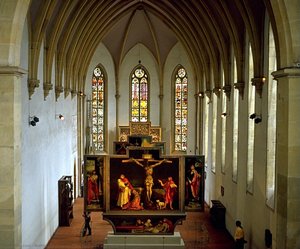
Furthermore, the painting's placement within the Isenheim Altarpiece—a larger work featuring multiple scenes from the life of Christ—contributes to its overall significance. “Calvary” serves as a pivotal moment within this complex narrative, embodying both the physical agony and the spiritual redemption offered by Christ’s death. The altarpiece as a whole was designed to be viewed in different configurations, offering viewers a multifaceted experience of faith and suffering.
Matthias Grünewald's “Calvary” stands as a landmark achievement in Northern Renaissance art. His willingness to embrace emotional intensity and unflinching realism set him apart from his contemporaries, forging a unique artistic voice that continues to captivate viewers today. The painting’s enduring power lies not only in its technical brilliance but also in its profound exploration of human suffering and spiritual longing. It is a work that demands contemplation, inviting us to confront the uncomfortable truths about mortality, faith, and the nature of sacrifice – a timeless masterpiece that transcends its historical context.

Matthias Grünewald, urodzony jako Mathis Gothart Neithardt około lat 1470–1475 w Würzburgu w Niemczech, był postacią kluczową dla niemieckiego renesansu. Choć żył w epoce coraz silniej podlegającej wpływom włoskich ideałów odrodzenia, Grünewald pozostał głęboko zakorzeniony w artystycznych tradycjach późnośredniowiecznej Europy Środkowej. Szczegóły dotyczące jego wczesnego życia są nieliczne, jednak wiadomo, że kształcił się jako artysta, prawdopodobnie w lokalnych warsztatach.
Artystyczna droga Grünewalda została ukształtowana przez dominujące w północnej Europie tradycje realizmu, emocjonalnej intensywności oraz drobiazgowej obserwacji świata. W jego dziełach dostrzec można wpływy takich mistrzów jak Albrecht Dürer czy Martin Schongauer, jednak artysta wytyczył własną, unikalną ścieżkę, którą charakteryzuje dramatyczna ekspresja i żywa kolorystyka. Nie brał on bezpośredniego udziału w kręgach humanistycznych tak powszechnych we Włoszech; zamiast tego jego sztuka służyła przede wszystkim celom religijnym, stając się lustrem duchowych niepokojów jego czasów.
Styl Grünewalda wyróżnia się przede wszystkim:
Twórczość Grünewalda stanowi świadectwo trwałej siły średniowiecznych tradycji artystycznych w Niemczech podczas epoki renesansu. Artysta ten stał się pomostem między stylem późnogotyckim a rodzącym się renesansem, tworząc unikalny język wizualny, który silnie oddziaływał na współczesnych mu ludzi. Jego wpływ można dostrzec w późniejszych dziełach niemieckich artystów, którzy kontynuowali eksplorację tematów religijnego żaru i emocjonalnej intensywności. Choć po śmierci w 1528 roku został w dużej mierze zapomniany na całe stulecia, Grünewald przeżył renesans w XIX wieku. Dziś jest uznawany za jednego z najważniejszych malarzy niemieckiego renesansu, a jego sztuka nieustannie zachwyca widzów surową emocją, technicznym kunsztem i głębokim wymiarem duchowym.
Odkryj więcej o życiu i twórczości Matthias Grünewalda na stronie: Most-Famous-Paintings

1480 - 1528 , Niemcy

Explore the profound beauty of the Early Netherlandish Renaissance. Discover how masters like Jan van Eyck revolutionized art through oil painting, light, and symbolism. A definitive guide for history lovers and collectors seeking to understand the Northern Renaissance.

Explore the luminous mastery of Early Netherlandish painting. Discover how Jan van Eyck and the Flemish masters revolutionized art through oil innovation, hyper-realism, and profound symbolism in this expert guide to the Northern Renaissance.


Bądź na bieżąco z najnowszymi wiadomościami ze świata sztuki, ekskluzywnymi ofertami i inspiracjami dekoratorskimi.
Opowiedz nam o swoim projekcie, a nasi eksperci przygotują dla Ciebie 3 spersonalizowane propozycje dzieł sztuki.
Przygotujemy dla Ciebie 3 propozycje zupełnie za darmo!


 Podgląd w skali
 Wyślij jako kartkę
 Udostępnij
 Szczegóły dzieła

 Pobierz
 Podobne obiekty
 RTG
RTG Pokaz slajdów
 Rozwiń treść







 Opcja ze szkłem jest dostępna wyłącznie w rozmiarach poniżej 110 cm