Sprzedawaj swoją sztukę
Lista życzeń Koszyk zakupowy Cart
Podgląd w skaliPodgląd w skali Podgląd ARPodgląd AR Zamów ręcznie malowaną reprodukcję Zamów ręcznie malowaną reprodukcjęKup obraz wysokiej rozdzielczości Kup obraz wysokiej rozdzielczości Wyślij jako kartkęWyślij jako kartkę
Szczegóły dziełaSzczegóły dzieła Dodaj do ulubionych Dodaj do ulubionych PobierzPobierz Podobne obiektyPodobne obiekty RTGRTG Pokaz slajdówPokaz slajdów

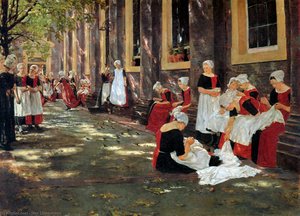
The Parrot Man

Discover Max Liebermann’s ‘The Parrot Man,’ a vibrant Impressionist oil painting capturing urban life & exotic beauty. Explore rich textures & expressive lines in this unique 19th-century artwork.

Max Liebermann (1847-1935): Pionier niemieckiego impresjonizmu, znany z obrazów z życia codziennego, portretów i idyllicznych krajobrazów. Jego twórczość inspiruje do wolności artystycznej.

Giclée / Wydruk artystyczny

Druk giclée lub płótno o jakości muzealnej, szybka realizacja i szeroki wybór opcji wykończenia. (Zamów ręcznie malowaną reprodukcję Zamów ręcznie malowaną reprodukcjęKup obraz wysokiej rozdzielczości Kup obraz wysokiej rozdzielczości)

P118B $10
P118H $10
P118W $10
P438Z $10
P508JH $12
P508YH $12
P805H $10
P805Z $10
P919BZ $10
P919G $10
P919XJ $10
P959ZH $10
P968JZ $12
W106C $8
W218G $10
W218JH $8
W218Y $10
W307PJ $10
W316G $10
W316PJ $8
W316Y $10
W398PJ $8
W4111J $10
W500HY $15
W500JH $15
W692G $12
W849H $8
W940BG $15
W953PJ $8

Standard
custom
CM
INCH

Wybierz spośród naszych standardowych rozmiarów, które zachowują oryginalne proporcje dzieła sztuki.

szerokość
wysokość

Możesz wprowadzić własne wymiary, aby dopasować dzieło do konkretnej ramy lub przestrzeni. Jeśli wybrany rozmiar nie będzie odpowiadał proporcjom oryginalnego obrazu, przytniecie dzieło lub rozszerzymy obraz za pomocą odbicia lustrzanego lub jednolitego wypełnienia krawędzi. Przed rozpoczęciem produkcji prześlemy cyfrową wizualizację do Twojej akceptacji.
Prosimy pamiętać, że podgląd na ekranie nie odzwierciedla faktycznego przycinania ani rozszerzania. Tylko wizualizacja dokładnie pokaże końcową kompozycję.
Mimo dostępności niestandardowych rozmiarów, zalecamy wybór wymiaru z listy zdefiniowanej, aby zachować oryginalne proporcje.

Dostawa na cały świat () w ciągu 2 tygodni zamiast standardowych 4/5 tygodni. (13 Sierpień)

why_choose_icon
Bezpłatna ekspresowa wysyłka na cały świat
why_choose_icon
Wysokiej jakości płótno lniane
why_choose_icon
Pełne ubezpieczenie przesyłki
why_choose_icon
Gwarancja zwrotu należności celnych i podatków importowych
why_choose_icon
Gwarancja wiernego odwzorowania kolorów
why_choose_icon
Polityka 60-dniowego zwrotu (tylko w przypadku wad)
why_choose_icon
Gwarancja 100% zwrotu kosztów
why_choose_icon
Zniżka przy zamówieniu wielu produktów

Suma całkowita

$ 68

reproduction

The Parrot Man

Giclée / Wydruk artystyczny

Wymiary reprodukcji

-

Cena całkowita

$ 68

Szybki podgląd

  • Subject or theme: Urban life/Parrots
  • Notable elements: Loose brushwork
  • Artist: Max Liebermann
  • Year: 1902
  • Medium: Oil on canvas
  • Title: The Parrot Man
  • Movement: Impressionism

Quiz o sztuce

Do każdego pytania dotyczy tylko jedna poprawna odpowiedź.

Pytanie 1:
What is the primary style of Max Liebermann’s ‘The Parrot Man’?
Pytanie 2:
Which of the following best describes the scene depicted in ‘The Parrot Man’?
Pytanie 3:
The loose brushstrokes and emphasis on light in ‘The Parrot Man’ are characteristic of which art movement?
Pytanie 4:
What is a notable feature of the composition in ‘The Parrot Man’?
Pytanie 5:
Max Liebermann’s work ‘The Parrot Man’ reflects his interest in depicting which aspect of modern life?

Opis kolekcjonerski

A Vibrant Snapshot of Urban Life

Max Liebermann's “The Parrot Man,” painted in 1902, isn’t merely a depiction of a street vendor; it’s a carefully constructed tableau brimming with the energy and complexities of early 20th-century Berlin. The painting captures a scene unfolding on what appears to be a bustling promenade or park – a vibrant hub of commerce and casual encounters. Liebermann masterfully uses loose, impressionistic brushstrokes to convey not just the visual appearance but also the atmosphere of the moment: a sense of lively movement, dappled light, and the slightly chaotic beauty of everyday life. The composition is dominated by the central figure of the vendor, his posture radiating confidence as he displays his exotic wares – a collection of brilliantly colored parrots perched on his arms. The blurred background figures, rendered with quick, expressive lines, suggest a continuous flow of activity, drawing the viewer into this intimate slice of urban existence.

Impressionistic Technique and Layered Texture

Liebermann’s technique is a fascinating blend of realism and impressionism. He meticulously observes the details – the folds in the vendor's clothing, the texture of the pavement, the iridescent sheen of the parrot feathers – yet he deliberately avoids photographic precision. Instead, he employs thick impasto brushwork, particularly noticeable on the birds themselves, creating a rich, tactile surface that invites close inspection. The use of color is equally deliberate; blues and greens dominate, reflecting the natural environment, while bursts of red from the parrots inject energy and visual interest. The flattened perspective, characteristic of Impressionism, contributes to the painting’s immediacy, pulling the viewer directly into the scene. Liebermann's skillful manipulation of light and shadow adds depth and a sense of realism despite the overall loose style.

Symbolic Layers: Commerce, Exoticism, and Berlin Identity

“The Parrot Man” is more than just a charming street scene; it’s laden with symbolic meaning. The vendor himself represents commerce and the entrepreneurial spirit of Berlin at the turn of the century – a city rapidly modernizing and embracing new economic opportunities. The parrots, imported from distant lands, embody exoticism and the allure of the “new world,” reflecting Berlin's position as a gateway to Europe and beyond. However, there’s also an element of melancholy in the scene. The vendor’s focused gaze suggests a solitary profession, hinting at the isolation that can accompany commerce. Furthermore, the painting subtly captures the spirit of Berlin itself – a city teeming with life, diversity, and a unique blend of tradition and modernity.

A Legacy of Observation: Liebermann's Artistic Vision

Max Liebermann’s “The Parrot Man” exemplifies his distinctive approach to art. Born in 1847, he initially pursued a more conventional path but ultimately found his true calling in painting. Influenced by Impressionism and Realism, Liebermann developed a unique style characterized by keen observation, masterful technique, and a deep understanding of human psychology. His ability to capture fleeting moments of beauty and emotion resonated with audiences and cemented his place as one of Germany’s most important artists. Reproductions of “The Parrot Man” offer a captivating glimpse into this world, allowing viewers to appreciate Liebermann's artistic vision and the vibrant spirit of early 20th-century Berlin.


O artyście

A Life Immersed in Light: The World of Max Liebermann

Max Liebermann, a name synonymous with the vibrant and nuanced development of Impressionism in Germany, was born on July 20, 1847, in Berlin. His early life, steeped in the comforts of a prosperous Jewish family – his father a successful textile manufacturer – seemed destined for a path far removed from the artistic realm. However, a deliberate shift towards intellectual pursuits at the University of Berlin, followed by studies in Weimar, Paris, and the Netherlands, ignited a passion that would forever transform his life and legacy. Liebermann’s journey wasn't simply about acquiring technical skills; it was a profound engagement with the world around him, a desire to capture not just what he saw, but the very essence of experience itself. This inherent sensitivity to light, color, and atmosphere became the hallmark of his distinctive style – an Impressionism uniquely German in its sensibility.

Embracing Impressionism: A Dialogue with Paris

Liebermann’s artistic evolution was inextricably linked to his exposure to the revolutionary currents sweeping through France. The boldness of Édouard Manet, his rejection of rigid academic conventions, and his focus on depicting contemporary life resonated deeply within Liebermann's soul. He wasn’t merely a passive observer; he actively engaged with these new ideas, adapting them to his own artistic vision. While he admired the Parisian Impressionists – Monet, Renoir, Degas – he didn’t simply replicate their techniques. Instead, he infused his work with a distinctly German perspective, characterized by a brighter palette, looser brushstrokes, and a focus on scenes of bourgeois leisure and the tranquil beauty of his beloved garden near Lake Wannsee. This garden, a sanctuary from the turbulent world outside, became a recurring motif, a space where light danced upon foliage, and the simple pleasures of summer were immortalized on canvas. Liebermann’s early paintings often depicted scenes of everyday life – working-class laborers, bustling marketplaces, and intimate domestic moments – rendered with an honesty and respect that challenged the prevailing romanticized aesthetic of the time. These weren't intended as social commentaries, but rather as genuine portrayals of human existence, imbued with dignity and a profound appreciation for the beauty of ordinary life.

The Berlin Secession: A Catalyst for Change

Recognizing the stifling constraints imposed by the traditional art establishment in Germany – particularly the rigid control exerted by the Prussian Academy of Arts – Liebermann became a pivotal figure in the formation of the Berlin Secession in 1898. This avant-garde movement, alongside artists like Kirchner and Nolde, represented a radical departure from established norms, providing a platform for artistic innovation and independent expression. Liebermann’s leadership of the Secession for over a decade was instrumental in challenging conventional notions of art and paving the way for modern German art. The Secession wasn't merely a group of artists; it was a declaration – a bold assertion of artistic freedom and a commitment to exploring new possibilities beyond the confines of academic tradition. This spirit of rebellion extended far beyond the realm of painting, influencing other areas of culture and contributing to a broader shift in societal attitudes towards art and creativity.

A Master of Portraiture and Beyond

While his landscapes and scenes of everyday life are undoubtedly celebrated, Liebermann’s contribution to the art world extends significantly through his masterful portraiture. Over two hundred commissioned portraits attest to his skill and insight – works that capture not just likenesses, but the very essence of his subjects' personalities. Portraits of Albert Einstein, Paul von Hindenburg, and numerous other prominent figures demonstrate Liebermann’s ability to delve beneath the surface, revealing the inner lives of those he depicted through subtle gestures, expressions, and carefully observed details. Beyond portraiture, Liebermann also produced a significant body of prints, further showcasing his technical skill and artistic vision. His work spanned a wide range of subjects – from religious scenes to depictions of rural life – reflecting his diverse interests and evolving style.

Legacy and Historical Context

Max Liebermann’s legacy is complex and layered, inextricably intertwined with the tumultuous events of 20th-century Germany. Following the rise of Nazism, he bravely resigned from the Prussian Academy of Arts in 1933, a courageous act of defiance against a regime that increasingly threatened artistic freedom and Jewish identity. Despite facing persecution and discrimination, Liebermann continued to paint, finding solace and purpose in his art until his death on February 8, 1935, in Berlin. Tragically, his wife, Martha, took her own life in 1943 to avoid deportation, a heartbreaking testament to the horrors of the Holocaust. For many years after World War II, Liebermann’s work was somewhat overlooked, overshadowed by the darker chapters of German history. However, in recent decades, there has been a renewed appreciation for his contributions to German Impressionism and modern art – recognizing him not only as a brilliant painter but also as a courageous advocate for artistic expression and a symbol of resistance against tyranny. His paintings continue to captivate viewers with their luminous beauty, insightful observations, and enduring humanity.

Key Achievements & Lasting Influence

  • “The Twelve-Year-Old Jesus in the Temple”: This early work sparked considerable debate due to its unconventional depiction of a Semitic-looking Jesus, challenging traditional religious iconography.
  • Leadership of the Berlin Secession: His pivotal role in leading this avant-garde movement challenged artistic norms and paved the way for modern art in Germany.
  • Presidency of the Prussian Academy of Arts: A significant recognition of his artistic merit, though ultimately compromised by the rise of Nazism.
  • Masterful Portraiture: His ability to capture the essence of his subjects in over 200 commissioned portraits cemented his reputation as a leading portrait painter.
  • Influence on German Impressionism: Liebermann successfully translated the principles of Impressionism into a uniquely German context, inspiring generations of artists.
Max Liebermann

Max Liebermann

1847 - 1935 , Niemcy

Krótka nota

  • Artistic Movement Or Style: Impressionizm
  • Artists Or Movements Influenced By This Artist: ['Secesja Berlin']
  • Artists Who Influenced This Artist:
    • Manet
    • Millet
  • Date Of Birth: 20 lipca 1847
  • Date Of Death: 8 lutego 1935
  • Full Name: Max Liebermann
  • Nationality: Niemiec
  • Notable Artworks:
    • Dziecko w kapeluszu
    • Kąpiący się chłop
    • Dom starców
  • Place Of Birth: Berlin, Niemcy
Odkryj dzieła sztuki uporządkowane według tematów, stylów i cech charakterystycznych.