Sprzedawaj swoją sztukę
Lista życzeń Koszyk zakupowy Cart
Podgląd w skaliPodgląd w skali Podgląd ARPodgląd AR Zamów ręcznie malowaną reprodukcję Zamów ręcznie malowaną reprodukcjęKup obraz wysokiej rozdzielczości Kup obraz wysokiej rozdzielczości Wyślij jako kartkęWyślij jako kartkę
Szczegóły dziełaSzczegóły dzieła Dodaj do ulubionych Dodaj do ulubionych PobierzPobierz Podobne obiektyPodobne obiekty RTGRTG Pokaz slajdówPokaz slajdów

Marriage

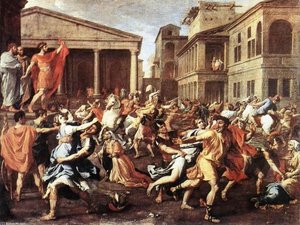
A vibrant celebration of the biblical wedding feast at Cana unfolds in this masterful 1638 Classicist oil painting by Nicolas Poussin, inviting you to explore the profound beauty and harmony of his sacred series.

Klasyczne obraz Rousseau „Pythagoras wychodzący z podziemia” prezentuje umiejętności Poussina i jego fascynację klasyczną estetyką. Znajdź więcej dzieł tego mistrza sztuki na WikiArt!

Giclée / Wydruk artystyczny

Druk giclée lub płótno o jakości muzealnej, szybka realizacja i szeroki wybór opcji wykończenia. (Zamów ręcznie malowaną reprodukcję Zamów ręcznie malowaną reprodukcjęKup obraz wysokiej rozdzielczości Kup obraz wysokiej rozdzielczości)

P118B $10
P118H $10
P118W $10
P438Z $10
P508JH $12
P508YH $12
P805H $10
P805Z $10
P919BZ $10
P919G $10
P919XJ $10
P959ZH $10
P968JZ $12
W106C $8
W218G $10
W218JH $8
W218Y $10
W307PJ $10
W316G $10
W316PJ $8
W316Y $10
W398PJ $8
W4111J $10
W500HY $15
W500JH $15
W692G $12
W849H $8
W940BG $15
W953PJ $8

Standard
custom
CM
INCH

Wybierz spośród naszych standardowych rozmiarów, które zachowują oryginalne proporcje dzieła sztuki.

szerokość
wysokość

Możesz wprowadzić własne wymiary, aby dopasować dzieło do konkretnej ramy lub przestrzeni. Jeśli wybrany rozmiar nie będzie odpowiadał proporcjom oryginalnego obrazu, przytniecie dzieło lub rozszerzymy obraz za pomocą odbicia lustrzanego lub jednolitego wypełnienia krawędzi. Przed rozpoczęciem produkcji prześlemy cyfrową wizualizację do Twojej akceptacji.
Prosimy pamiętać, że podgląd na ekranie nie odzwierciedla faktycznego przycinania ani rozszerzania. Tylko wizualizacja dokładnie pokaże końcową kompozycję.
Mimo dostępności niestandardowych rozmiarów, zalecamy wybór wymiaru z listy zdefiniowanej, aby zachować oryginalne proporcje.

Dostawa na cały świat () w ciągu 2 tygodni zamiast standardowych 4/5 tygodni. (15 Sierpień)

why_choose_icon
Bezpłatna ekspresowa wysyłka na cały świat
why_choose_icon
Wysokiej jakości płótno lniane
why_choose_icon
Pełne ubezpieczenie przesyłki
why_choose_icon
Gwarancja zwrotu należności celnych i podatków importowych
why_choose_icon
Gwarancja wiernego odwzorowania kolorów
why_choose_icon
Polityka 60-dniowego zwrotu (tylko w przypadku wad)
why_choose_icon
Gwarancja 100% zwrotu kosztów
why_choose_icon
Zniżka przy zamówieniu wielu produktów

Suma całkowita

$ 68

reproduction

Marriage

Giclée / Wydruk artystyczny

Wymiary reprodukcji

-

Cena całkowita

$ 68

Szybki podgląd

  • Year: 1638
  • Title: Marriage
  • Medium: Oil on Canvas
  • Influences: Italian Renaissance
  • Artist: Nicolas Poussin
  • Movement: Baroque
  • Dimensions: 117 x 178 cm

Quiz o sztuce

Do każdego pytania dotyczy tylko jedna poprawna odpowiedź.

Pytanie 1:
What biblical event does the painting 'Marriage' depict?
Pytanie 2:
Which artistic style is characterized by the balanced proportions and precise lines seen in this work?
Pytanie 3:
To which series of paintings does 'Marriage' belong?
Pytanie 4:
What is the symbolic significance of the abundance of wine glasses in this painting?
Pytanie 5:
In which museum can 'Marriage' by Nicolas Poussin be found today?

Opis kolekcjonerski

A Sacred Celebration of Unity

In the heart of Nicolas Poussin’s 1638 masterpiece, Marriage, we are invited to witness a moment where the divine intersects with the human. As a cornerstone of his profound series, The Seven Sacraments, this painting captures the jubilant essence of the biblical wedding feast at Cana. The scene is one of profound conviviality; a large, harmonious gathering of figures surrounds a table laden with the bounties of a festive feast. Through Poussin's lens, marriage is presented not merely as a social contract but as a spiritual celebration, where the abundance of wine and the shared engagement of the guests serve as powerful symbols of joy, community, and the miraculous presence of the sacred within our earthly celebrations. There is an unmistakable warmth in the way the figures interact, creating an atmosphere that feels both monumental and intimately human.

The Architecture of Classical Order

Poussin’s technical execution in Marriage is a definitive testament to his role as a pioneer of French Classicism. The composition is a marvel of balance and structural integrity, utilizing linear perspective to draw the viewer into an elegantly architectural space. Columns and arches frame the scene, providing a sense of permanence and dignity that mirrors the solemnity of the sacrament being depicted.

The artist employs a meticulous technique characterized by:
  • Precise lines that define both the rigid architectural boundaries and the fluid, graceful drapery of the figures' clothing.
  • Harmonious colors—a sophisticated palette of earthy ochres, creams, and subtle reds—that create a sense of visual tranquility and cohesion.
  • Controlled lighting that filters through the interior, casting soft shadows that lend three-dimensional depth and a lifelike quality to each character.
This disciplined approach ensures that despite the crowded nature of the feast, there is never a sense of chaos, but rather an orchestrated dance of form, light, and shadow.

An Eternal Presence for the Discerning Collector

For the art lover, the collector, or the interior designer seeking to infuse a space with historical weight and quiet elegance, Marriage offers unparalleled inspiration. The painting’s muted, sophisticated color palette allows it to integrate seamlessly into diverse decor styles, from the grandeur of traditional manor aesthetics to the clean lines of contemporary minimalist settings. It possesses a rare ability to act as a focal point that commands attention through its understated grandeur rather than through jarring contrasts.

To display a high-quality reproduction of this work is to bring a piece of the 17th-century French Baroque tradition into the modern environment—a window into an era of intellectual rigor, spiritual depth, and timeless beauty that continues to resonate with the modern soul.

O artyście

Nicolas Poussin - A Life Steeped in Classical Reverie

Nicolas Poussin, a name synonymous with the grandeur of French Baroque painting, was nonetheless a soul deeply rooted in Italian soil for much of his artistic life. Born in Les Andelys, Normandy, in June 1594, his early years remain somewhat veiled in mystery, yet they undoubtedly laid the foundation for a career that would become pivotal in shaping the classical tradition within French art. Though he briefly studied in Paris during the early 1610s, absorbing influences from lesser-known artists of the time—primarily Jean Baptiste Oudry and Nicolas Tourigny—it was his journey to Rome in 1624 that truly ignited his artistic destiny. This wasn’t merely a geographical relocation; it was an immersion into the heart of antiquity, a pilgrimage to the very source of inspiration that would define his aesthetic vision. Poussin's initial forays into painting were marked by a sensuous quality reminiscent of Venetian masters like Titian—particularly in his early landscapes—yet even in these works, a nascent sense of order and intellectual rigor began to emerge—a foreshadowing of the style he would so masterfully refine. He experimented with color palettes inspired by Venetian painters, capturing atmospheric effects with remarkable subtlety.

The Roman Years: Forging a Classical Ideal

Rome proved to be more than just a studio for Poussin; it became his intellectual crucible. He found himself amidst a vibrant circle of scholars, archaeologists, and fellow artists, notably Cassiano dal Pozzo, whose profound understanding of classical antiquity profoundly influenced the artist’s approach. Dal Pozzo's dedication to meticulously documenting ancient remains instilled in Poussin a deep respect for historical accuracy and a desire to imbue his paintings with a sense of timelessness. This period saw Poussin move away from the flamboyant exuberance of some of his contemporaries, instead embracing a style characterized by clarity, balance, and a deliberate emphasis on linear composition. He meticulously studied Raphael’s works—particularly *The School of Athens*—absorbing their harmonious arrangements and graceful forms, while simultaneously drawing inspiration from ancient sculptures and literary sources like Ovid's *Metamorphoses*. His paintings began to populate with figures drawn from classical history and mythology, rendered not as mere decorative elements but as embodiments of moral virtues and philosophical ideals. He sought to emulate Raphael’s masterful use of perspective and idealized forms, striving for a visual elegance that transcended the conventions of his time.

Influences and Artistic Development

Poussin's artistic development was shaped by several key influences. Initially drawn to Venetian painting—particularly Titian’s luminous color palettes—he quickly recognized the superiority of Raphael’s classical style as a model for achieving artistic excellence. He absorbed the principles of linear perspective, mastering techniques that allowed him to create illusionistic depth and convey a sense of grandeur. Furthermore, his engagement with humanist scholarship fostered an appreciation for moral philosophy and informed his thematic choices. The rediscovery of classical sculpture—particularly Michelangelo’s Pietà—provided him with visual references that would resonate throughout his oeuvre. He diligently studied the works of Agrippa Vespasiani and Andrea Palladio, incorporating architectural elements into his landscapes to heighten their sense of scale and harmony.

Major Achievements: Mythological Narratives and Landscape Visions

Poussin’s artistic output was remarkably diverse, yet consistently united by his commitment to these core principles. He achieved international renown for his monumental mythological paintings—particularly *Et in Arcadia ego*, which became a symbol of humanist contemplation on mortality and the enduring power of memory. This masterpiece exemplifies his mastery of classical composition and his ability to convey profound philosophical ideas through visual imagery. Beyond mythology, he produced stunning landscapes that captured the beauty and sublimity of nature with unparalleled sensitivity. His series depicting the Seasons—a testament to his artistic virtuosity—demonstrated his command of color and light, creating vistas that evoked a sense of serenity and timelessness. He skillfully blended realism with idealized forms, elevating landscape painting to new heights of aesthetic achievement.

A Lasting Legacy: Shaping French Art

Despite spending the majority of his career abroad—primarily in Rome—Poussin’s influence on French art was immense. He briefly returned to Paris in 1640 at the behest of Cardinal Richelieu, appointed as First Painter to the King—a position he held until his death in 1665—but found himself stifled by the demands and intrigues of court life. He soon returned to Rome, where he continued to paint until his final days, refining his style and exploring new artistic horizons. His dedication to classical principles helped establish a standard for artistic training and practice within France, influencing generations of artists who followed. Artists like Jacques-Louis David and Paul Cézanne openly acknowledged their debt to Poussin’s rigorous approach and intellectual depth—a testament to an artist who sought not simply to depict the world but to elevate it through the lens of reason and beauty. He became a cornerstone of French Classicism, securing his place as one of the most celebrated painters of his era.
  • Notable Works: *The Death of Germanicus*, *The Seven Sacraments Series*, *A Roman Road*, *Orion Blinded Searching for the Sun*, *The Seasons*.
  • Key Characteristics: Classical Composition, Linearity, Historical and Mythological Themes, Serene Landscapes.
Nikola Poussin

Nikola Poussin

1594 - 1665 , Francja

Krótka nota

  • Artistic Movement Or Style: Barok Klasyczny
  • Artists Or Movements Influenced By This Artist:
    • Jacques-Louis David
    • Paul Cézanne
  • Artists Who Influenced This Artist:
    • Raphael
    • Titian
  • Date Of Birth: 1594
  • Date Of Death: 1665
  • Full Name: Nicolas Poussin
  • Nationality: Francuzi
  • Notable Artworks:
    • Święcenia
    • Wenus prezentująca uzbrojenie dla Eneusza
    • Zimowa Rozkosz
  • Place Of Birth: Les Andelys, Francja
Odkryj dzieła sztuki uporządkowane według tematów, stylów i cech charakterystycznych.