x

 Zamów reprodukcję Kup cyfrowy obraz
 Udostępnij
 Szczegóły dzieła
 Dodaj do ulubionych
 Pobierz
 Podobne obiekty
 RTG
RTG
 Pokaz slajdów
 Akryl na płótnieSztuka ściennaBaroque
 1625Renesans
 80.0 x 107.0 cm
 Galeria Dulwich
Druk giclée lub płótno o jakości muzealnej z szybką realizacją i szerokim wyborem opcji wykończenia.





























Wybierz spośród naszych predefiniowanych rozmiarów, które zachowują oryginalne proporcje dzieła sztuki.

Możesz wprowadzić własne wymiary, aby dopasować dzieło do konkretnej ramy lub przestrzeni. Jeśli wybrany rozmiar nie będzie odpowiadał proporcjom oryginalnego obrazu, przytniecie dzieło lub rozszerzymy obraz za pomocą odbicia lustrzanego lub jednolitego wypełnienia krawędzi. Przed rozpoczęciem produkcji prześlemy cyfrową wizualizację do Twojej akceptacji.
Prosimy pamiętać, że podgląd na ekranie nie odzwierciedla faktycznego przycinania ani rozszerzania. Tylko wizualizacja dokładnie pokaże końcową kompozycję.
Mimo dostępności niestandardowych rozmiarów, zalecamy wybór wymiaru z listy zdefiniowanej, aby zachować oryginalne proporcje.
Dostawa na cały świat () w ciągu 2 tygodni zamiast standardowych 4/5 tygodni. (22 Lipiec)


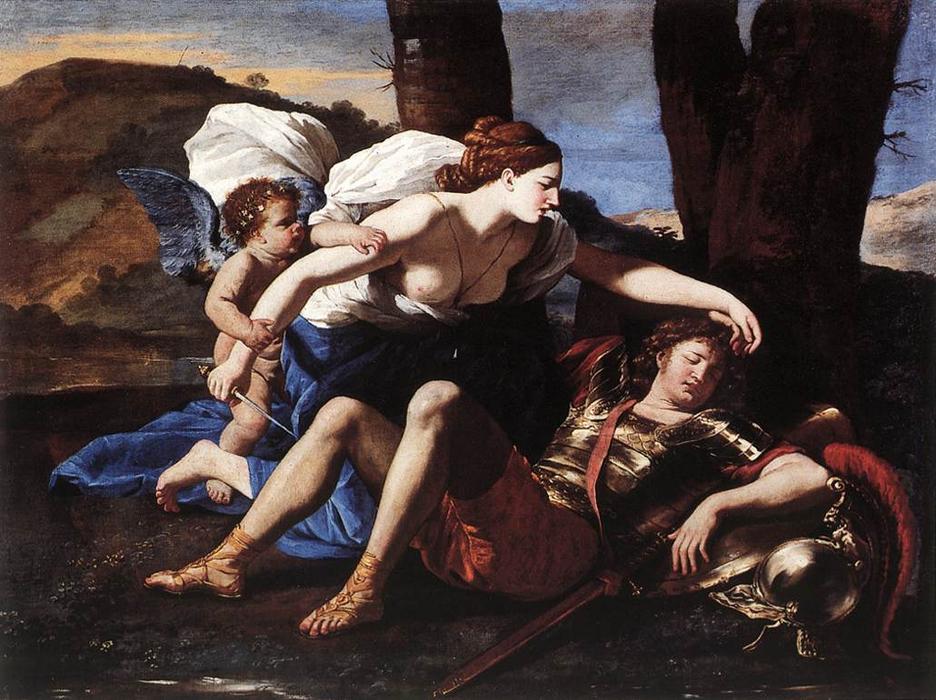
Rinaldo and Armida
Wymiary reprodukcji
Nicolas Poussin’s Rinaldo and Armida stands as a cornerstone of Baroque art, embodying the movement's fascination with classical ideals and dramatic storytelling. Painted in 1625, this monumental oil on canvas resides at the Dulwich Picture Gallery in London, serving as a testament to Poussin’s meticulous attention to detail and masterful composition.
The scene depicts Rinaldo, a valiant knight from Torquato Tasso's epic poem “Jerusalem Delivered,” lying down while Armida, a formidable enchantress captivated by his beauty, stands over him. This portrayal captures the tension inherent in their relationship—a battle between desire and duty—expressed through Poussin’s signature use of chiaroscuro. Light dramatically illuminates Rinaldo’s figure, highlighting his vulnerability against the backdrop of Armida's imposing presence.
Symbolism permeates every element of Rinaldo and Armida. The sword symbolizes Rinaldo’s martial prowess and the potential for conflict, juxtaposed with the child—representing innocence and divine grace—held by Armida. Furthermore, the stylized landscape serves as a conduit for conveying moral themes: the serene expanse of the garden contrasts sharply with the turbulent emotions simmering beneath the surface.
Poussin’s technique is characterized by painstaking realism blended seamlessly with idealized forms. He meticulously rendered textures and drapery, achieving an unparalleled sense of depth and atmosphere. The artist skillfully employs linear perspective to create a convincing illusion of space, guiding the viewer's gaze towards the central figures and reinforcing the narrative’s dramatic impact.
Beyond its aesthetic beauty, Rinaldo and Armida holds profound significance within the history of Baroque painting. It exemplifies Poussin’s ability to translate literary themes into visual representations—a skill that cemented his reputation as one of the era's most influential artists. Its enduring appeal lies in its exploration of universal human emotions: love, fear, and faith—themes that continue to resonate with audiences today.
Considered alongside other masterpieces by Poussin, such as The Triumph of David [detail] and The Nurture of Jupiter, housed at the Dulwich Picture Gallery, Nicolas Poussin: Rinaldo and Armida offers a captivating glimpse into the artistic sensibilities of its time—a legacy that continues to inspire artists and collectors alike.
For those seeking inspiration or desiring a stunning reproduction, exploring Sir John Soane's Museum provides a unique opportunity to immerse oneself in the artistic heritage of London.


1594 - 1665 , Francja

Odkryj 25 arcydzieł Metropolitańskiego Muzeum Sztuki! Van Gogh, Monet, Renoir i inni – historie artystów, techniki i inspiracje dla Twojego wnętrza. Reprodukcje najwyższej jakości na Most-Famous-Paintings.com. Eksploruj kolekcję online!
Odkryj 25 arcydzieł Galerii Narodowej w Waszyngtonie! Poznaj historie Cézanne'a, Matisse'a i Picassa. Inspiracje wnętrzarskie, reprodukcje obrazów najwyższej jakości na Most-Famous-Paintings.com – sztuka dla Twojego domu.
Odkryj 25 arcydzieł Henri Matisse’a – od żywych kolorów fauwizmu po ikoniczne kompozycje. Poznaj historię, technikę i inspiracje malarstwa francuskiego. Reprodukcje obrazów najwyższej jakości na Most-Famous-Paintings.com! Eksploruj kolekcję online.
Odkryj 25 arcydzieł Jamesa Abbotta McNeilla Whistler'a! Poznaj historię impresjonistycznych pejzaży, portretów i słynnych 'Nokturnów'. Reprodukcje obrazów najwyższej jakości na Most-Famous-Paintings.com – inspiracje dla Twojego wnętrza.

Odkryj 10 klasycznych arcydzieł malarstwa, od Rembrandta po Van Gogha! Poznaj historie artystów i techniki tworzenia ponadczasowych obrazów. Inspiracje do wnętrz z Most-Famous-Paintings.com – reprodukcje najwyższej jakości.


Bądź na bieżąco z najnowszymi wiadomościami ze świata sztuki, ekskluzywnymi ofertami i inspiracjami dekoratorskimi.
Opowiedz nam o swoim projekcie, a nasi eksperci od sztuki przygotują dla Ciebie 3 spersonalizowane propozycje dzieł sztuki.
Pozwól nam przygotować 3 propozycje specjalnie dla Ciebie – za darmo!


 Udostępnij

 Rozwiń treść







 Opcja szkła jest dostępna wyłącznie w rozmiarach poniżej 110 cm