x

 Olej na płótnieSztuka ściennaPost-Impressionism
 1885Nowoczesność
 Muzeum Sztuki Nowoczesnej (MoMA)
Druk giclée lub płótno o jakości muzealnej, szybka realizacja i szeroki wybór opcji wykończenia. ( Zamów ręcznie malowaną reprodukcję Kup obraz wysokiej rozdzielczości)





























Wybierz spośród naszych standardowych rozmiarów, które zachowują oryginalne proporcje dzieła sztuki.

Możesz wprowadzić własne wymiary, aby dopasować dzieło do konkretnej ramy lub przestrzeni. Jeśli wybrany rozmiar nie będzie odpowiadał proporcjom oryginalnego obrazu, przytniecie dzieło lub rozszerzymy obraz za pomocą odbicia lustrzanego lub jednolitego wypełnienia krawędzi. Przed rozpoczęciem produkcji prześlemy cyfrową wizualizację do Twojej akceptacji.
Prosimy pamiętać, że podgląd na ekranie nie odzwierciedla faktycznego przycinania ani rozszerzania. Tylko wizualizacja dokładnie pokaże końcową kompozycję.
Mimo dostępności niestandardowych rozmiarów, zalecamy wybór wymiaru z listy zdefiniowanej, aby zachować oryginalne proporcje.
Dostawa na cały świat () w ciągu 2 tygodni zamiast standardowych 4/5 tygodni. (20 Sierpień)


Duży kąpielista
Wymiary reprodukcji
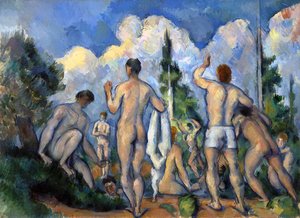
Paul Cézanne’s “The Large Bather” (c. 1885) isn't merely a depiction of a figure immersed in water; it’s an invitation to contemplate the very essence of perception, a pivotal work that bridges the gap between Impressionism and the nascent movements of modern art. This monumental canvas, currently residing within the hallowed halls of the Museum of Modern Art in New York City, possesses a captivating power – a quiet intensity born from Cézanne’s deliberate fracturing of traditional artistic conventions.
The painting immediately draws the eye with its masterful orchestration of color and form. The bather, a solitary male figure rendered in muted blues, ochres, and greens, appears to emerge organically from the landscape surrounding him. He isn't presented as a heroic or idealized subject; instead, he’s depicted in a state of contemplative repose, his posture relaxed yet imbued with an underlying sense of stillness. The artist skillfully employs broken brushstrokes – a hallmark of Cézanne’s late style – to create a shimmering surface that seems to vibrate with light and movement. Notice how the colors bleed into one another, dissolving the boundaries between figure and environment, suggesting a profound connection between man and nature.
Cézanne’s genius lies not in replicating reality with photographic precision, but in distilling it to its fundamental elements – line, shape, color, and texture. He deliberately disrupts the established rules of perspective, flattening the space and challenging the viewer's expectations. The figure isn’t anchored to a specific location; he seems to float within an ambiguous landscape, his form echoing the contours of the surrounding trees and water. This technique, revolutionary for its time, anticipates the principles of Cubism, where objects are broken down into geometric shapes and reassembled from multiple viewpoints.
The painting’s composition is remarkably asymmetrical. The figure's weight is subtly shifted to one side, creating a dynamic tension that draws the eye across the canvas. Observe how Cézanne uses overlapping planes of color to create depth – not through traditional shading, but by layering and juxtaposing hues. This technique generates an illusion of volume and form, transforming a relatively simple scene into a complex and visually arresting composition.
Beyond its formal innovations, “The Large Bather” is rich in symbolic meaning. The bather’s downcast gaze suggests introspection and contemplation – a retreat from the external world into the realm of the inner self. Some art historians believe that the figure represents Cézanne himself, grappling with his own artistic identity and searching for a new way to express his vision. The painting was created during a period of intense personal and artistic experimentation for Cézanne, as he moved away from the fleeting impressions of Impressionism towards a more structured and enduring style.
Furthermore, the photograph that served as inspiration for this work – a standing male model – adds another layer of complexity. Cézanne’s transformation of the photographic image into a painted portrait reveals his desire to transcend mere representation and capture something deeper—a sense of mood, emotion, and psychological state. The inclusion of the photograph within the painting highlights the artist's engagement with modern technology and its impact on artistic practice.
For those unable to experience this masterpiece firsthand, Most-Famous-Paintings offers exquisite reproductions of “The Large Bather”. Choose from stunning canvas prints or meticulously hand-painted oil-painted replicas that capture the essence of Cézanne’s original work with unparalleled fidelity. Our expert artisans painstakingly recreate each detail – the shimmering brushstrokes, the subtle nuances of color, and the profound sense of atmosphere – ensuring a faithful reproduction worthy of any art lover’s collection.
With Most-Famous-Paintings, transform your living space into a gallery with our exquisite reproductions. Our commitment to quality and craftsmanship ensures that each piece is a true masterpiece.


1839 - 1906 , Francja

Explore the profound evolution of Post-Impressionist landscapes. From Van Gogh's emotional brushwork to Cézanne's structural mastery, discover how these visionaries redefined art history through color and form in this expert guide for fine art enthusiasts.


Bądź na bieżąco z najnowszymi wiadomościami ze świata sztuki, ekskluzywnymi ofertami i inspiracjami dekoratorskimi.
Opowiedz nam o swoim projekcie, a nasi eksperci przygotują dla Ciebie 3 spersonalizowane propozycje dzieł sztuki.
Przygotujemy dla Ciebie 3 propozycje zupełnie za darmo!


 Podgląd w skali
 Wyślij jako kartkę
 Udostępnij
 Szczegóły dzieła

 Pobierz
 Podobne obiekty
 RTG
RTG Pokaz slajdów
 Rozwiń treść







 Opcja ze szkłem jest dostępna wyłącznie w rozmiarach poniżej 110 cm