x

 Acrylic On CanvasWallArtAbstract Expressionism
 1941Modern
 42.0 x 48.0 cm
Ręcznie malowany obraz olejny na płótnie, wykonany na zamówienie przez naszych artystów w wybranym przez Ciebie wymiarze i oprawie. ( Zamów wydruk Kup obraz wysokiej rozdzielczości)





























Wybierz spośród naszych standardowych rozmiarów, które zachowują oryginalne proporcje dzieła sztuki.

Możesz wprowadzić własne wymiary, aby dopasować obraz do konkretnej ramy lub przestrzeni. Jeśli wybrany rozmiar nie będzie odpowiadał proporcjom oryginału, przytniecie dzieło sztuki lub rozszerzymy je o dodatkowe elementy, ręcznie domalowane przez artystę. Przed rozpoczęciem produkcji wyślemy projekt cyfrowy do Twojej akceptacji.
Należy pamiętać, że podgląd na ekranie nie odzwierciedla rzeczywistego przycinania ani rozszerzania obrazu. Tylko projekt dokładnie pokaże ostateczną kompozycję.
Choć oferujemy możliwość zamówienia niestandardowych rozmiarów, zalecamy wybór wymiaru z gotowej listy, aby zachować oryginalne proporcje dzieła.
Dostawa na całym świecie () w ciągu 3–4 tygodni zamiast standardowych 5 tygodni. (15 Sierpień). Bez kompromisów w kwestii jakości.


Mask
Wymiary reprodukcji
Paul Jackson Pollock's “Mask,” painted in 1941, is more than just a depiction of two faces; it’s a potent exploration of duality and the subconscious rendered with the artist’s signature drip technique. Measuring 42 x 48 cm, this monochrome canvas immediately commands attention with its stark contrast – the assertive presence of one face against the delicate suggestion of another. The painting's genesis lies in Pollock’s formative years spent traversing the American West, an experience profoundly shaped by encounters with Native American art and culture. These early exposures, though not directly replicated, instilled a deep appreciation for raw energy and spiritual resonance that would subtly inform his artistic vocabulary throughout his career.
The prominence of one face, characterized by a large nose and mouth, suggests a forceful, perhaps even aggressive, presence – a primal expression of instinct and raw emotion. Conversely, the smaller, more delicate face, interpreted as feminine, introduces an element of vulnerability and introspection. The merging of these two distinct forms creates a visual tension, inviting contemplation on themes of masculinity versus femininity, strength versus fragility, or perhaps even the duality within the human psyche itself. The blue sky backdrop isn’t merely decorative; it acts as a void, amplifying the emotional weight of the faces and suggesting an infinite space for interpretation.
"Mask" was created during a pivotal moment in art history – the burgeoning years of Abstract Expressionism. Emerging in post-World War II America, this movement sought to liberate art from representational constraints and explore the depths of human emotion through non-objective forms. Pollock, along with Jackson Pollock, Willem de Kooning, and Mark Rothko, were at the forefront of this revolution, challenging conventional notions of beauty and artistic skill. The painting’s monochrome palette further aligns it with the austerity and emotional intensity characteristic of Abstract Expressionism, a reaction against the perceived superficiality of earlier modern art movements.
“Mask” possesses a haunting power that transcends its simple subject matter. The deliberate ambiguity invites viewers to project their own emotions and interpretations onto the canvas, fostering a deeply personal connection with the artwork. As a significant work from one of America’s most influential artists, this reproduction offers an exceptional opportunity to acquire a piece of art history – a tangible link to the revolutionary spirit of Abstract Expressionism. Its size (42 x 48 cm) makes it suitable for a variety of interior design settings, from modern minimalist spaces to more traditional rooms seeking a touch of dramatic flair. This hand-painted reproduction captures not just an image but the very essence of Pollock’s artistic vision.

Paul Jackson Pollock, born in Cody, Wyoming, in 1912, was a restless spirit from the outset. His early life was marked by frequent relocation as his father pursued work as a land surveyor across the vast landscapes of the American West. This itinerant existence instilled in young Pollock a deep connection to the natural world and an exposure to diverse cultures, particularly through encounters with Native American art during those surveying trips – impressions that would subtly permeate his artistic vision later in life. Though he never explicitly imitated Indigenous styles, the raw energy and spiritual resonance of these early experiences undoubtedly left their mark.
Pollock’s formal artistic training began at the Manual Arts High School in Los Angeles, followed by studies at the Art Students League of New York under the tutelage of Thomas Hart Benton. Benton, a prominent figure in the Regionalist movement, emphasized rhythmic composition and narrative themes rooted in American life. While Pollock initially absorbed these lessons, his inherent inclination leaned toward more abstract explorations. He was also profoundly impacted by Mexican muralists like José Clemente Orozco, whose powerful depictions of social struggle resonated deeply with him. These early influences laid a foundation, but it was the burgeoning world of Surrealism that truly unlocked Pollock’s artistic potential.
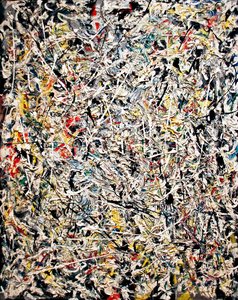
The 1930s saw Pollock experimenting with various techniques, seeking alternatives to traditional brushwork. He began pouring paint, exploring its fluidity and unpredictable nature. However, it was around 1947 that his artistic trajectory underwent a radical transformation. Abandoning the easel altogether, Pollock laid canvases directly on the floor, initiating what would become known as his “drip technique.” He then proceeded to drip, splash, and fling paint onto the canvas from above, orchestrating a dynamic dance between artist, medium, and surface.
This wasn’t merely about applying paint; it was about embodying the act of creation itself. Pollock's canvases became arenas for physical expression, capturing the immediacy of his gestures and emotions. The resulting paintings are characterized by their “all-over” composition – a lack of central focus that invites the viewer to explore the entire surface as a unified field of energy. Intricate networks of lines and colors intertwine, creating a visual complexity that is both captivating and challenging. He employed unconventional tools—sticks, knives, even syringes—to manipulate the paint in unpredictable ways, further emphasizing the spontaneous nature of his process.
Pollock’s approach was deeply influenced by Jungian psychology, seeking to tap into universal symbols and primal energies. The paintings became a record of this performance, imbued with the artist's physical presence and emotional intensity. The dynamic energy that emanates from these canvases is palpable, drawing viewers into a world of pure abstraction.
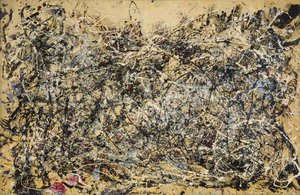
Pollock’s most celebrated works—such as Number 1, 1950 (Lavender Mist), One: Number 31, 1950, Blue Poles: Number 11, 1952, and Convergence—are testaments to his revolutionary technique. These paintings are not simply images; they are records of a performance, imbued with the artist’s physical presence and emotional intensity. The dynamic energy that emanates from these canvases is palpable, drawing viewers into a world of pure abstraction.
His style transcends mere aesthetics; it's an exploration of process over product. Pollock sought to capture the immediacy of his actions and emotions on canvas, rejecting traditional notions of composition and representation. He delved into Jungian psychology, exploring archetypes and the subconscious in his art, seeking to tap into universal symbols and primal energies.
Pollock’s work quickly gained recognition within the burgeoning Abstract Expressionist movement, challenging established artistic norms and paving the way for future generations of artists. His innovative approach influenced a wide range of painters, including Lee Krasner, his wife and collaborator, who played a crucial role in shaping his artistic vision. Despite initial skepticism from some critics, Pollock’s reputation steadily grew throughout the 1950s, culminating in a landmark retrospective exhibition at the Museum of Modern Art in New York City in 1967. This event solidified his place as one of the most important and influential artists of the 20th century.
His legacy extends beyond the art world, impacting popular culture and inspiring countless individuals to embrace creativity and self-expression. Jackson Pollock’s daring experimentation with materials and techniques continues to resonate today, reminding us of the power of art to transcend boundaries and capture the essence of human experience.

1912 - 1956 , Stany Zjednoczone

Odkryj 10 arcydzieł ekspresjonizmu abstrakcyjnego – Pollock, Rothko, de Kooning i inni. Poznaj historie artystów, techniki i inspiracje dla Twojego wnętrza. Reprodukcje najwyższej jakości na Most-Famous-Paintings.com!
Odkryj 25 arcydzieł Wassily Kandinskiego – pioniera abstrakcji i ekspresjonizmu! Poznaj historie, techniki i emocje kryjące się za jego kolorowymi kompozycjami. Reprodukcje obrazów najwyższej jakości na Most-Famous-Paintings.com. Eksploruj pełną kolekcję online!

Odkryj 10 słynnych obrazów, w których czerń króluje! Poznaj historie artystów, ekspresjonizm i mroczną paletę barw. Reprodukcje dzieł sztuki najwyższej jakości na Most-Famous-Paintings.com – inspiracje do wnętrz i kolekcjonerstwo.
Odkryj 10 arcydzieł abstrakcji geometrycznej! Poznaj historię Mondriana, Kandinskiego i Maleвича. Inspiracje wnętrzarskie z malarstwem abstrakcyjnym – reprodukcje najwyższej jakości na Most-Famous-Paintings.com. Eksploruj kolekcję online!

Odkryj 25 arcydzieł Paula Klee – od abstrakcji po ekspresjonizm. Poznaj historie, techniki i inspiracje malarza. Reprodukcje obrazów najwyższej jakości na Most-Famous-Paintings.com. Eksploruj pełną kolekcję online!


Bądź na bieżąco z najnowszymi wiadomościami ze świata sztuki, ekskluzywnymi ofertami i inspiracjami dekoratorskimi.
Opowiedz nam o swoim projekcie, a nasi eksperci przygotują dla Ciebie 3 spersonalizowane propozycje dzieł sztuki.
Przygotujemy dla Ciebie 3 propozycje zupełnie za darmo!


 Podgląd w skali
 Wyślij jako kartkę
 Udostępnij
 Szczegóły dzieła

 Pobierz
 Podobne obiekty
 RTG
RTG Pokaz slajdów
 Rozwiń treść







 Opcja ze szkłem jest dostępna wyłącznie w rozmiarach poniżej 110 cm