


x

Druk giclée lub płótno o jakości muzealnej, szybka realizacja i szeroki wybór opcji wykończenia. ( Zamów ręcznie malowaną reprodukcję Kup obraz wysokiej rozdzielczości)





























Wybierz spośród naszych standardowych rozmiarów, które zachowują oryginalne proporcje dzieła sztuki.

Możesz wprowadzić własne wymiary, aby dopasować dzieło do konkretnej ramy lub przestrzeni. Jeśli wybrany rozmiar nie będzie odpowiadał proporcjom oryginalnego obrazu, przytniecie dzieło lub rozszerzymy obraz za pomocą odbicia lustrzanego lub jednolitego wypełnienia krawędzi. Przed rozpoczęciem produkcji prześlemy cyfrową wizualizację do Twojej akceptacji.
Prosimy pamiętać, że podgląd na ekranie nie odzwierciedla faktycznego przycinania ani rozszerzania. Tylko wizualizacja dokładnie pokaże końcową kompozycję.
Mimo dostępności niestandardowych rozmiarów, zalecamy wybór wymiaru z listy zdefiniowanej, aby zachować oryginalne proporcje.
Dostawa na cały świat () w ciągu 2 tygodni zamiast standardowych 4/5 tygodni. (22 Sierpień)


The Masquerade Dress
Wymiary reprodukcji
Robert Henri's "The Masquerade Dress," painted in 1911, isn’t merely a portrait; it’s a carefully constructed tableau vivant—a frozen moment of intrigue and veiled identity. This captivating work, currently residing within the Metropolitan Museum of Art, offers a rare window into the vibrant, often turbulent, world of early twentieth-century New York City, specifically the artistic circles surrounding Henri himself. The painting immediately draws the viewer in with its dramatic composition: a woman stands poised on a grand staircase, her presence both alluring and enigmatic, partially obscured by the folds of a magnificent white gown adorned with delicate floral patterns. But it’s the mask—a symbol of concealment and transformation—that truly commands attention, instantly raising questions about her true nature and intentions.
To fully appreciate “The Masquerade Dress,” one must understand its context within the broader artistic movement known as the Ashcan School. Henri, along with artists like George Bellows and John Sloan, rejected the idealized subjects and polished techniques favored by the established art academies. Instead, they sought to capture the gritty reality of urban life—the crowded streets, the poverty, and the unvarnished faces of ordinary people. Henri’s work reflects this commitment to realism, but with a distinctly personal and expressive style. He wasn't simply documenting; he was interpreting, imbuing his subjects with a sense of humanity and emotion. The choice of a masked figure within this context is particularly significant, suggesting a commentary on the hidden identities and social facades prevalent in the rapidly changing city.
Henri’s artistic lineage is deeply rooted in European masters like Velázquez and Hals, artists known for their directness and ability to capture fleeting moments. He studied with Thomas Anshutz at the Pennsylvania Academy of Fine Arts, inheriting a tradition of analyzing nature objectively – a key element that informed his approach to portraiture. The painting’s composition echoes this influence; Henri employs a simplified perspective, focusing intently on his subject while subtly hinting at the surrounding environment through carefully rendered details like the staircase and the suggestion of a darkened room beyond.
The mask itself is laden with symbolic weight. In the early 20th century, masquerade balls were popular social events, offering an escape into fantasy and anonymity. Wearing a mask allowed individuals to shed their everyday identities and embrace a different persona—a concept powerfully explored in Henri’s painting. The woman's gaze, direct and unwavering, suggests a deliberate choice of concealment, inviting the viewer to speculate on her motivations. Is she seeking adventure? Protecting herself from judgment? Or simply enjoying the thrill of the unknown?
Henri’s use of color further enhances the painting’s evocative quality. The pristine white of the dress contrasts sharply with the darker tones of the background, drawing attention to the figure and emphasizing her elegance. The floral pattern, rendered in delicate brushstrokes, adds a touch of romanticism to the scene, while also subtly hinting at the ephemeral nature of beauty and pleasure. The subtle use of light and shadow creates a sense of depth and atmosphere, inviting the viewer to step into the painting’s world.
“The Masquerade Dress” stands as a testament to Robert Henri's enduring legacy as one of America’s most influential artists. His ability to capture the essence of human experience with honesty and empathy continues to resonate with audiences today. Most-Famous-Paintings offers meticulously crafted, hand-painted reproductions that faithfully recreate the painting’s rich textures, vibrant colors, and captivating atmosphere. Whether you're an art collector, a design enthusiast, or simply someone seeking a piece of timeless beauty, a reproduction of “The Masquerade Dress” is sure to add a touch of sophistication and intrigue to any space.


1865 - 1929 , Stany Zjednoczone
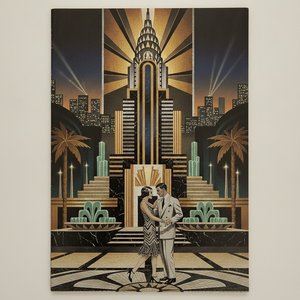
Explore the sophisticated world of Art Deco. Discover the history, geometric precision, and enduring glamour of this iconic 20th-century movement through an expert art-historical lens.


Bądź na bieżąco z najnowszymi wiadomościami ze świata sztuki, ekskluzywnymi ofertami i inspiracjami dekoratorskimi.
Opowiedz nam o swoim projekcie, a nasi eksperci przygotują dla Ciebie 3 spersonalizowane propozycje dzieł sztuki.
Przygotujemy dla Ciebie 3 propozycje zupełnie za darmo!


 Podgląd w skali
 Wyślij jako kartkę
 Udostępnij
 Szczegóły dzieła

 Pobierz
 Podobne obiekty
 RTG
RTG Pokaz slajdów


 Rozwiń treść







 Opcja ze szkłem jest dostępna wyłącznie w rozmiarach poniżej 110 cm


