
Lista życzeń Koszyk zakupowy Cart
Podgląd w skaliPodgląd w skali Podgląd ARPodgląd AR Zamów wydruk Zamów wydrukKup obraz wysokiej rozdzielczości Kup obraz wysokiej rozdzielczości Wyślij jako kartkęWyślij jako kartkę
Szczegóły dziełaSzczegóły dzieła Dodaj do ulubionych Dodaj do ulubionych PobierzPobierz Podobne obiektyPodobne obiekty RTGRTG Pokaz slajdówPokaz slajdów

Virgin and Child

Experience the profound tenderness of Rogier van der Weyden’s Early Netherlandish masterpiece Virgin and Child, a breathtaking display of realistic detail and spiritual devotion that invites you to bring home this icon.

Rogier van der Weyden (c. 1400-1464): Mistrz flamandzkiego malarstwa, znany z emocjonalnych obrazów religijnych i niezwykłej precyzji wykonania. Odkryj 'Lamentację' i więcej!

Ręcznie malowana reprodukcja olejowa

Ręcznie malowany obraz olejny na płótnie, wykonany na zamówienie przez naszych artystów w wybranym przez Ciebie wymiarze i oprawie. (Zamów wydruk Zamów wydrukKup obraz wysokiej rozdzielczości Kup obraz wysokiej rozdzielczości)

P118B $10
P118H $10
P118W $10
P438Z $10
P508JH $12
P508YH $12
P805H $10
P805Z $10
P919BZ $10
P919G $10
P919XJ $10
P959ZH $10
P968JZ $12
W106C $8
W218G $10
W218JH $8
W218Y $10
W307PJ $10
W316G $10
W316PJ $8
W316Y $10
W398PJ $8
W4111J $10
W500HY $15
W500JH $15
W692G $12
W849H $8
W940BG $15
W953PJ $8

Standard
custom
CM
INCH

Wybierz spośród naszych standardowych rozmiarów, które zachowują oryginalne proporcje dzieła sztuki.

szerokość
wysokość

Możesz wprowadzić własne wymiary, aby dopasować obraz do konkretnej ramy lub przestrzeni. Jeśli wybrany rozmiar nie będzie odpowiadał proporcjom oryginału, przytniecie dzieło sztuki lub rozszerzymy je o dodatkowe elementy, ręcznie domalowane przez artystę. Przed rozpoczęciem produkcji wyślemy projekt cyfrowy do Twojej akceptacji.
Należy pamiętać, że podgląd na ekranie nie odzwierciedla rzeczywistego przycinania ani rozszerzania obrazu. Tylko projekt dokładnie pokaże ostateczną kompozycję.
Choć oferujemy możliwość zamówienia niestandardowych rozmiarów, zalecamy wybór wymiaru z gotowej listy, aby zachować oryginalne proporcje dzieła.

Przykłady możliwych zmian: Zamień twarz na zdjęcie klienta; Dodaj zwierzę domowe (np. zamień kota na psa); Ukryj wiadomość w tle; Zmień krajobraz lub elementy tła.
Po złożeniu zamówienia zespół Most-Famous-Paintings.com skontaktuje się z klientem drogą mailową w celu uzyskania instrukcji i prześle wizualizację projektu

Dostawa na całym świecie () w ciągu 3–4 tygodni zamiast standardowych 5 tygodni. (23 Sierpień). Bez kompromisów w kwestii jakości.

why_choose_icon
Bezpłatna ekspresowa wysyłka na cały świat
why_choose_icon
Wysokiej jakości płótno lniane
why_choose_icon
Pełne ubezpieczenie przesyłki
why_choose_icon
Gwarancja zwrotu należności celnych i podatków importowych
why_choose_icon
Gwarancja wiernego odwzorowania kolorów
why_choose_icon
Polityka 60-dniowego zwrotu (tylko w przypadku wad)
why_choose_icon
Gwarancja 100% zwrotu kosztów
why_choose_icon
Zniżka przy zamówieniu wielu produktów

Suma całkowita

$ 272

reproduction

Virgin and Child

Technika reprodukcji

Wymiary reprodukcji

-

Cena całkowita

$ 272

Szybki podgląd

  • Artist: Rogier van der Weyden
  • Artistic style: Symbolic realism
  • Influences: Medieval Art
  • Location: Private Collection
  • Medium: Oil on panel
  • Notable elements or techniques: Detailed drapery, realistic skin tones

Quiz o sztuce

Do każdego pytania dotyczy tylko jedna poprawna odpowiedź.

Pytanie 1:
What artistic movement is Rogier van der Weyden’s ‘Virgin and Child’ considered to be?
Pytanie 2:
The architectural backdrop of the painting contributes to what feeling?
Pytanie 3:
What technique is prominently used in depicting the drapery of Mary’s robes?
Pytanie 4:
The image description highlights a key element of van der Weyden's style – what characteristic?
Pytanie 5:
What is the primary symbolic significance conveyed by the depiction of Mary holding Jesus?

Opis dzieła

A Sacred Intimacy: The Soul of the Virgin and Child

In the quiet stillness of the mid-fifteenth century, one of history’s most emotive masters, Rogier van der Weyden, captured a moment that transcends the boundaries of time. His Virgin and Child is far more than a mere religious icon; it is a profound meditation on motherhood, divinity, and the tender vulnerability of faith. As you gaze upon this masterpiece, you are drawn into a sacred space where the earthly and the divine blur into a single, breathtaking encounter. The painting presents the Virgin Mary with a regal yet deeply human grace, cradling the infant Jesus in an embrace that feels both monumental and incredibly private.

The composition is anchored by a sense of profound stability and spiritual weight. Set within an elaborate, ornate architectural framework—a hallmark of the Early Netherlandish style—the figures are framed by columns and arches that suggest a celestial sanctuary. This architectural grandeur does not merely serve as a backdrop; it creates a palpable sense of depth, drawing the viewer’s eye inward toward the central figures. The distant cityscape visible through the structure serves as a subtle reminder of the world outside this holy enclosure, contrasting the eternal peace of the Madonna with the bustling reality of human existence.

The Mastery of Netherlandish Realism

What truly distinguishes Van der Weyden’s work is his unparalleled dedication to meticulous detail and a startlingly realistic portrayal of the physical world. Having likely trained as a goldsmith, the artist brought a jeweler's precision to the oil medium. Every crease in Mary’s heavy robes, every subtle nuance of light reflecting off her skin, and every delicate fold of fabric is rendered with an astonishing accuracy that was revolutionary for its time. This technique, known as Early Netherlandish Realism, allows the viewer to almost feel the weight of the velvet and the smoothness of the Christ Child's flesh.

The use of light and shadow—chiaroscuro in its early, nuanced form—is employed to sculpt volume and texture. Light does not simply illuminate the scene; it breathes life into it, catching the edges of architectural elements and highlighting the tender interaction between mother and child. This careful observation of materials and anatomy reflects a broader humanist impulse of the era, where empirical knowledge of the natural world was used to enhance, rather than diminish, religious devotion.

A Timeless Legacy for the Discerning Collector

For the art lover, the collector, or the interior designer, a reproduction of this caliber offers more than just visual beauty; it offers an atmosphere of reverence and tranquility. The painting’s symmetrical arrangement and balanced composition make it a sophisticated focal point for any curated space, whether in a classical study or a contemporary gallery-style living room. Its ability to evoke emotion—ranging from the solemnity of prayer to the warmth of maternal love—ensures that it remains a conversation piece that resonates across generations.

Integrating such a work into a collection allows one to possess a fragment of the Northern Renaissance's golden age. The deep textures and rich, somber tones provide a sense of historical continuity and intellectual depth. To display this Virgin and Child is to invite a sense of peace and contemplative beauty into an environment, celebrating the enduring power of human craftsmanship and the eternal themes of love and devotion.

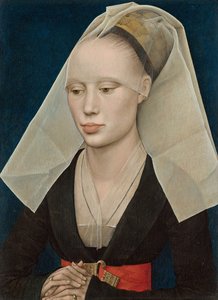
O artyście

A Master of Emotion: The Life and Legacy of Rogier van der Weyden

Rogier de la Pasture – known to history as Rogier van der Weyden – emerged around 1400 in the vibrant city of Tournai, nestled within what is now Belgium. His early life remains somewhat shrouded in mystery, but it’s believed he initially honed his skills not with brush and pigment alone, but as a goldsmith. This formative training instilled within him an unwavering dedication to meticulous detail and a refined sensibility for craftsmanship – qualities that would become hallmarks of his artistic style. The precision demanded by working with precious metals undoubtedly translated into the exquisite rendering of textures, fabrics, and expressions that define his masterpieces. He wasn’t merely depicting reality; he was recreating it with painstaking accuracy, imbued with an almost reverent attention to detail.

From Tournai to Brussels: A Rising Star

By 1427, van der Weyden had ascended to the rank of master within the Guild of Saint Luke in Tournai, a testament to his burgeoning talent and skill. This marked a significant turning point, solidifying his position as a professional artist and opening doors to important commissions. His ascent continued when he entered the service of Philip the Good, Duke of Burgundy, in 1435 – a patronage that would profoundly shape his career for the remainder of his life. Serving as court painter afforded him not only financial security but also access to an elite circle of influence and exposure to some of the most discerning eyes of the era. It was during this period that van der Weyden’s artistic vision truly began to mature, moving away from the somewhat rigid conventions of earlier Netherlandish painters towards a more emotionally resonant and naturalistic approach. He wasn't simply painting religious scenes; he was striving to evoke genuine feeling in the viewer, to create an experience that transcended mere observation.

The Language of Feeling: Style and Technique

Rogier van der Weyden’s artistic signature is immediately recognizable through several defining characteristics. His palette was remarkably rich and diverse, a vibrant tapestry of colors carefully chosen to avoid repetition and create depth and complexity within his compositions. He possessed an extraordinary ability to convey profound emotion – *pathos* – particularly in depictions of religious subjects like the Lamentation, where grief and sorrow are palpable. This emotional intensity wasn’t achieved through dramatic gestures or exaggerated expressions; rather, it was subtly woven into the very fabric of the painting, conveyed through delicate nuances of facial expression, body language, and composition. His figures, while adhering to the conventions of the time, demonstrate a growing interest in realistic representation – not just in anatomy and drapery, but also in capturing the psychological states of his subjects. They possess a dignified, almost sculptural quality, particularly evident in his grand triptychs, lending them an air of solemnity and reverence. He masterfully employed oil paint, building up layers of translucent glazes to achieve luminous effects and create a sense of depth and realism that was revolutionary for its time.

Notable Works and Enduring Masterpieces

Throughout his prolific career, van der Weyden produced numerous works that stand as testaments to his artistic prowess. *St Luke Drawing a Portrait of the Madonna*, housed in the Museum of Fine Arts, Boston, showcases his mastery of oil on panel and meticulous observation. The *Lamentation*, residing in the Musée des Beaux-Arts Tournai, Belgium, is perhaps his most celebrated work – a powerfully emotive depiction of Christ’s mourning, renowned for its dramatic use of *chiaroscuro* and its ability to evoke profound sorrow in the viewer. Multiple versions of *The Deposition* exist, each demonstrating his skill in conveying grief and drama with breathtaking sensitivity. The *Annunciation*, a masterpiece of refined style and attention to detail, exemplifies his ability to imbue even the most traditional subjects with a sense of freshness and vitality. And finally, the intricate and richly detailed *Bladelin Triptych* stands as a monumental achievement – a complex altarpiece that showcases the full range of van der Weyden’s artistic abilities. These works, and many others, continue to captivate audiences today, solidifying his position as one of the most important painters of the 15th century.

Lasting Influence: A Legacy Forged in Paint

Van der Weyden’s influence extended far beyond the borders of his native Flanders. His works were highly sought after throughout Europe, particularly in Italy and Spain, where they introduced a new level of emotional depth and naturalism to local artistic traditions. Although his fame experienced a period of relative decline in the 17th century, a rediscovery during the 19th century cemented his place as one of the most important painters of the 15th century. He stands alongside Jan van Eyck and Robert Campin as one of the “three great” Early Flemish masters, each contributing uniquely to the development of Northern Renaissance art. His innovative techniques and emotionally charged compositions paved the way for future generations of artists, inspiring countless imitators and influencing the course of Western painting for centuries to come. He helped establish oil painting as the dominant medium and elevated the status of the artist within society, transforming them from skilled craftsmen into revered creators. Rogier van der Weyden’s legacy continues to resonate today, a testament to his enduring genius and his profound understanding of the human condition.
Rogier van der Weyden

Rogier van der Weyden

1400 - 1464 , Belgia

Krótka nota

  • Artistic Movement Or Style: Rannolatyńska malarstwo
  • Artists Or Movements Influenced By This Artist:
    • Włoskie renesans
    • Hiszpańskie malarstwo
  • Artists Who Influenced This Artist:
    • Robert Campin
    • Jan van Eyck
  • Date Of Birth: c. 1400
  • Date Of Death: 1464
  • Full Name: Rogier van der Weyden
  • Nationality: Belgijczyk
  • Notable Artworks:
    • Lamentacja
    • Odpoczynek
    • Obmówienie Marii
  • Place Of Birth: Tournai, Belgia
Odkryj dzieła sztuki uporządkowane według tematów, stylów i cech charakterystycznych.




































