Wishlist Koszyk Cart
Zamów wydruk Zamów wydrukKup cyfrowy obraz Kup cyfrowy obraz UdostępnijUdostępnij
Szczegóły dziełaSzczegóły dzieła Dodaj do ulubionych Dodaj do ulubionych PobierzPobierz Podobne obiektyPodobne obiekty RTGRTG Pokaz slajdówPokaz slajdów

Levitation

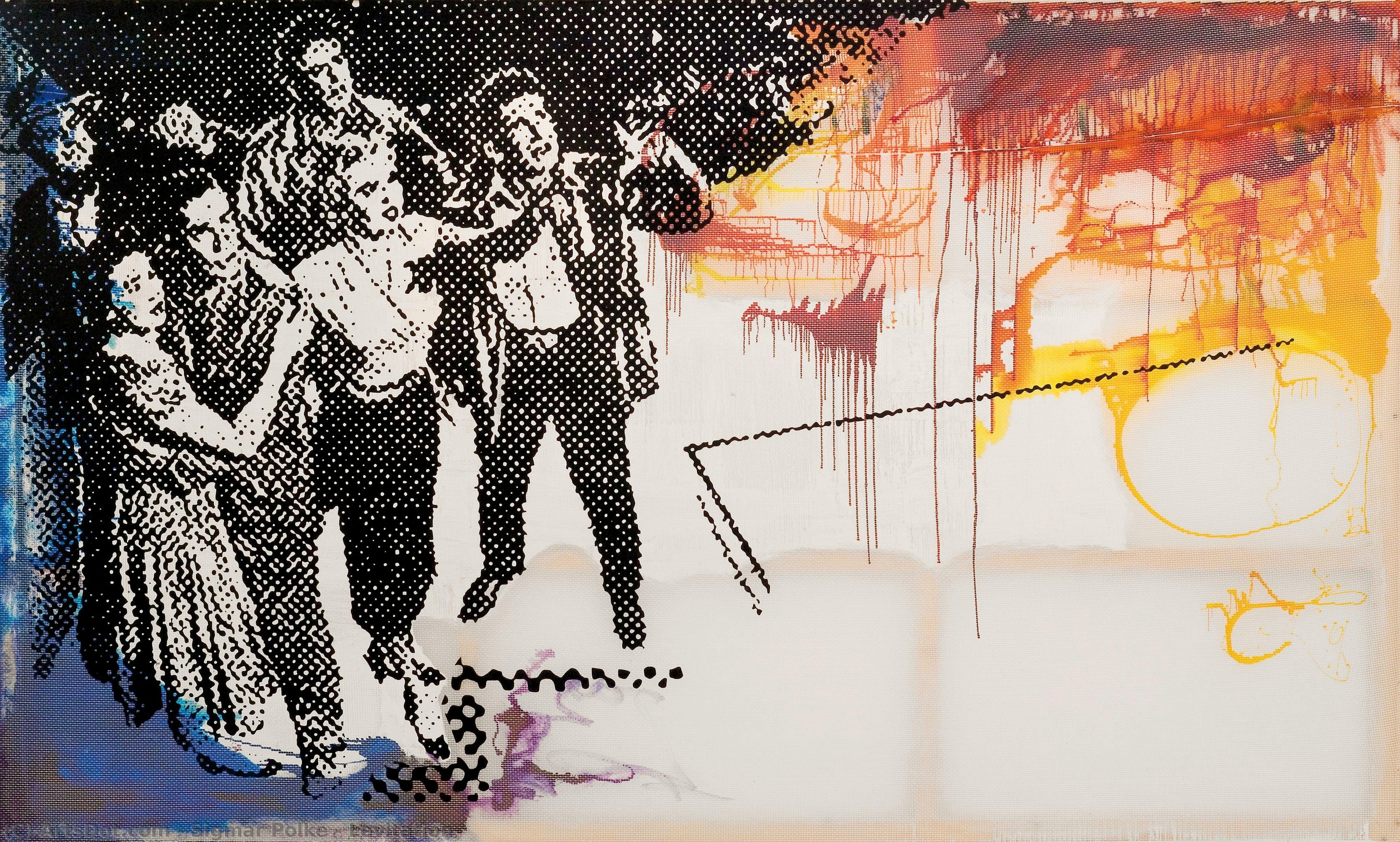
Sigmar Polke’s ‘Levitation,’ created in 2005, is a monumental black and white photograph depicting a painterly image featuring astonished witnesses and hinting at hidden depths beyond the frame. It exemplifies Polke's signature blend of experimental techniques and subversive commentary.

Sigmar Polke (1941-2010) był niemieckim malarzem i fotografem znanym z eksperymentalnych technik oraz krytycznego spojrzenia na sztukę i kulturę XX wieku. Jego twórczość skupia się na kapitalistycznym realizmie, wykorzystywaniu nietypowych materiałów oraz refleksji nad historią.

Ręcznie malowana reprodukcja olejowa

Ręcznie malowany olej na płótnie w Twoim wymiarze i ramie, tworzony na zamówienie przez naszych artystów.


P118B $10
P118H $10
P118W $10
P438Z $10
P508JH $12
P508YH $12
P805H $10
P805Z $10
P919BZ $10
P919G $10
P919XJ $10
P959ZH $10
P968JZ $12
W106C $8
W218G $10
W218JH $8
W218Y $10
W307PJ $10
W316G $10
W316PJ $8
W316Y $10
W398PJ $8
W4111J $10
W500HY $15
W500JH $15
W692G $12
W849H $8
W940BG $15
W953PJ $8

Standard
custom
CM
INCH

Wybierz spośród naszych predefiniowanych rozmiarów, które zachowują oryginalne proporcje dzieła sztuki.

szerokość
wysokość

Możesz wprowadzić własne wymiary, aby dopasować obraz do konkretnej ramy lub przestrzeni. Jeśli wybrany rozmiar nie będzie odpowiadał proporcjom oryginału, przytniecie dzieło sztuki lub rozszerzymy je o dodatkowe elementy, ręcznie domalowane przez artystę. Przed rozpoczęciem produkcji wyślemy projekt cyfrowy do Twojej akceptacji.
Należy pamiętać, że podgląd na ekranie nie odzwierciedla rzeczywistego przycinania ani rozszerzania obrazu. Tylko projekt dokładnie pokaże ostateczną kompozycję.
Choć oferujemy możliwość zamówienia niestandardowych rozmiarów, zalecamy wybór wymiaru z gotowej listy, aby zachować oryginalne proporcje dzieła.

Przykłady możliwych zmian: Zamień twarz na zdjęcie klienta; Dodaj zwierzę domowe (np. zamień kota na psa); Ukryj wiadomość w tle; Zmień krajobraz lub elementy tła.
Po złożeniu zamówienia zespół Most-Famous-Paintings.com skontaktuje się z klientem drogą mailową w celu uzyskania instrukcji i prześle wizualizację projektu

Dostawa na całym świecie () w ciągu 3/4 tygodni zamiast standardowych 5 tygodni. (18 Lipiec). Bez kompromisów w kwestii jakości.

why_choose_icon
Bezpłatna ekspresowa wysyłka na cały świat
why_choose_icon
Wysokiej jakości płótno lniane
why_choose_icon
Pełne ubezpieczenie przesyłki
why_choose_icon
Gwarancja zwrotu należności celnych
why_choose_icon
Gwarancja pełnego zgodności kolorystycznej
why_choose_icon
Polityka 60-dniowego zwrotu (tylko w przypadku wad)
why_choose_icon
Gwarancja 100% zwrotu pieniędzy
why_choose_icon
Zniżka przy większych zamówieniach

Suma całkowita

-

reproduction

Levitation

Technika reprodukcji

Wymiary reprodukcji

-

Cena całkowita

-

Szybkie fakty

  • Notable elements or techniques: Fabric stretcher visible
  • Movement: Contemporary Realism
  • Artist: Sigmar Polke
  • Dimensions: 300 x 500 cm
  • Year: 2005
  • Medium: Oil On Canvas
  • Subject or theme: Philosophical Reflection

Opis dzieła

Sigmar Polke’s “Levitation”: A Meditation on Perception and Decay

Sigmar Polke (1941–2010) stands as one of Germany's most influential visual artists, renowned for his pioneering exploration of photographic techniques and his uncompromising engagement with socio-political themes. His oeuvre consistently challenges conventional notions of representation, favoring unsettling juxtapositions and a deliberate embrace of chance to provoke contemplation about the nature of reality itself. “Levitation,” created in 2005, exemplifies this artistic ethos—a monumental canvas measuring 300 x 500 cm that transcends mere visual spectacle, inviting viewers into a profound dialogue with ideas surrounding illusion, memory, and the passage of time.
  • Subject Matter: The artwork depicts a seemingly banal tableau – a table laden with objects—yet Polke elevates this commonplace scene to an existential level through meticulous detail and subtle manipulation of color and texture. A group of figures stands before it, their faces turned towards the painting, capturing a moment of shared perplexity and observation.
  • Style & Technique: Polke’s distinctive style is characterized by a masterful blend of photographic realism and painterly abstraction. He employs encaustic—a technique combining beeswax, resin, and pigment—to create surfaces that are both luminous and subtly distressed. This layering process imbues the artwork with an inherent sense of decay, mirroring the artist's preoccupation with themes of loss and transformation.
  • Historical Context: Produced in the wake of the September 11th attacks, “Levitation” reflects Polke’s broader interest in confronting anxieties surrounding global instability and questioning established narratives. The image draws inspiration from a film still, referencing cinematic conventions to heighten its emotional impact and prompting viewers to consider how visual media shapes our understanding of experience.
  • Symbolism: The fractured surface of the painting—revealing glimpses of the stretcher fabric beneath—represents a deliberate disruption of illusion and an acknowledgement of the artwork’s materiality. Trails of blood descend from the upper right corner, symbolizing vulnerability and confronting uncomfortable truths. This visual motif underscores Polke's commitment to unsettling viewers with images that challenge their assumptions about beauty and certainty.
  • Emotional Impact: “Levitation” succeeds in capturing a palpable sense of unease and wonder. The artist’s gaze directs the viewer beyond the frame, suggesting an infinite expanse of imagination—a space where anxieties coexist with aspirations for transcendence. Ultimately, Polke invites us to contemplate not just what we see but how perception itself constructs our experience of the world.
Additional Research: Levitation, Levitate, or Levitating may refer to: == Concepts == Levitation (illusion), an illusion where a magician appears to levitate a person or object Levitation (paranormal), the claimed paranormal phenomenon of levitation, occurring without any scientific explanation Levitation (physics), the process by which an object is suspended against gravity, in a stable position without solid physical contact Levitation of saints, a mystical phenomenon attributed to some saints == Music == === Albums === Levitation (Hawkwind album) Levitation (Flamingods album) Levitate (Bruce Hornsby album) Levitate (The Fall album) === Songs === “Lev”

Biografia artysty

Sigmar Polke (1941–2010) – A Life Forged in Displacement: The Early Years and Artistic Formation of Sigmar Polke

Sigmar Polke’s artistic journey was profoundly shaped by the tumultuous currents of 20th-century history, beginning with his birth in Olsztyn, Poland, in 1941. His early life was marked by displacement; as a child, he fled with his family first to Thuringia and then, seeking refuge from Communist rule, to West Germany in 1953. This experience of being uprooted, of existing between worlds, instilled within him a lifelong skepticism towards fixed ideologies and a fascination with the instability of perception – themes that would become central to his art. Before dedicating himself fully to painting, Polke underwent an apprenticeship as a stained glass worker in Düsseldorf (1959-1960), a formative experience that honed his technical skill and introduced him to the possibilities of manipulating light and color. He then formally studied at the Kunstakademie Düsseldorf (1961-1967) under a constellation of influential figures: Karl Otto Götz, Gerhard Hoehme, and most significantly, Joseph Beuys. It was within this environment that Polke began to forge his unique artistic voice, one characterized by experimentation, irony, and a relentless questioning of established norms.

Early Influences and Artistic Beginnings

The Düsseldorf Kunstakademie proved to be a crucible for Polke’s burgeoning talent. His teachers—Karl Otto Götz, Gerhard Hoehme, and particularly Joseph Beuys—provided him with intellectual stimulation and encouraged him to explore unconventional approaches to artistic expression. Beuys's emphasis on shamanistic rituals and his belief in the transformative power of art profoundly impacted Polke’s worldview and informed his subsequent creative endeavors. This encounter ignited a passion for exploring the intersection between art, science, and spirituality—a preoccupation that would permeate much of his oeuvre. Simultaneously, he absorbed influences from Pop Art, recognizing its critique of consumer culture and its embrace of mass media imagery. However, unlike many of his contemporaries, Polke resisted easy categorization, preferring to develop his own distinctive style rooted in a deep engagement with German history and cultural traditions.

Capitalist Realism: A Critique of Ideology

In 1963, alongside Gerhard Richter, Konrad Lueg, and Manfred Kuttner, Polke co-founded *Kapitalistischer Realismus* (Capitalist Realism), a movement that deliberately challenged the dominant artistic paradigms of the time. This wasn’t merely an aesthetic stance; it was a radical political statement—a critique of both Western capitalism and Soviet Socialist Realism. The founders recognized that both systems presented idealized versions of reality, obscuring underlying contradictions and perpetuating dogma. Polke's early paintings from this period skillfully appropriated imagery from advertising, comics, and popular media, presenting them with a detached irony that exposed their ideological distortions. He wasn’t simply rejecting capitalism; he was demonstrating its pervasive influence on perception itself—a concept central to Beuys’s philosophical explorations. This provocative gesture established Polke as a pioneer of conceptual art and signaled his commitment to confronting social issues through artistic intervention.

Photography and Alchemy: Exploring Perception

The 1970s marked a pivotal shift in Polke's artistic trajectory toward photography. Driven by an unwavering curiosity, he embarked on extensive journeys—to Pakistan, Brazil, France, Afghanistan, and the United States—documenting everyday life with meticulous detail and capturing fleeting moments of absurdity. However, Polke didn’t treat photography as merely a recording device; he subjected his images to radical chemical manipulation—altering colors, textures, and meanings—pushing the boundaries of photographic representation. He embraced chance operations and deliberately introduced imperfections, mirroring Beuys's belief in embracing spontaneity and accepting the unpredictable nature of artistic creation. This period reflected Polke’s profound engagement with the concept of perception—how our understanding of the world is shaped by subjective experience and mediated through technology—a preoccupation that would continue throughout his career.

Later Work: Material Alchemy and Historical Reflection

From 1983 onwards, Polke experimented with unconventional materials—arsenic, meteor dust, turquoise, beeswax—incorporating them into his canvases alongside traditional pigments. This alchemical approach was driven by a desire to unlock hidden properties within matter and to create works that were constantly evolving, defying easy categorization. He drew inspiration from medieval and Renaissance art techniques—particularly *sfumato*, the subtle blending of colors used by Leonardo da Vinci—demonstrating an intellectual rigor alongside his artistic intuition. Polke’s later paintings engaged with historical events—often portraying them through fragmented imagery and distorted perspectives—reflecting a deep skepticism toward grand narratives and celebrating the complexities of human experience. His art remains challenging, demanding active engagement from the viewer and resisting simplistic interpretations. Sigmar Polke died in Cologne in June 2010 after a long battle with cancer, leaving behind a legacy as one of Germany’s most influential artists—a figure who championed experimentation, questioned dogma, and explored the fundamental questions of artistic practice.
Sigmar Polke

Sigmar Polke

1941 - 2010 , Polska

Kluczowe informacje

  • Artistic Movement Or Style:
    • Kapitalistischer Realismus
    • Neo-Expressionismus
  • Artists Or Movements Influenced By This Artist: ['German Art Informel']
  • Artists Who Influenced This Artist:
    • Joseph Beuys
    • Pop Art
  • Date Of Birth: 1941
  • Date Of Death: 2010
  • Full Name: Sigmar Polke
  • Nationality: Niemcy
  • Notable Artworks:
    • Large
    • Hope is
    • Alice in wonderland
  • Place Of Birth (City And Country): Oels, Poland