


x
 DrawingWallArtNeo-Plasticism
 1919
1919 31.0 x 22.0 cm
 Muzeum Sztuki w Budapeszcie
Druk giclée lub płótno o jakości muzealnej, szybka realizacja i szeroki wybór opcji wykończenia. ( Zamów ręcznie malowaną reprodukcję Kup obraz wysokiej rozdzielczości)





























Wybierz spośród naszych standardowych rozmiarów, które zachowują oryginalne proporcje dzieła sztuki.

Możesz wprowadzić własne wymiary, aby dopasować dzieło do konkretnej ramy lub przestrzeni. Jeśli wybrany rozmiar nie będzie odpowiadał proporcjom oryginalnego obrazu, przytniecie dzieło lub rozszerzymy obraz za pomocą odbicia lustrzanego lub jednolitego wypełnienia krawędzi. Przed rozpoczęciem produkcji prześlemy cyfrową wizualizację do Twojej akceptacji.
Prosimy pamiętać, że podgląd na ekranie nie odzwierciedla faktycznego przycinania ani rozszerzania. Tylko wizualizacja dokładnie pokaże końcową kompozycję.
Mimo dostępności niestandardowych rozmiarów, zalecamy wybór wymiaru z listy zdefiniowanej, aby zachować oryginalne proporcje.
Dostawa na cały świat () w ciągu 2 tygodni zamiast standardowych 4/5 tygodni. (16 Sierpień)


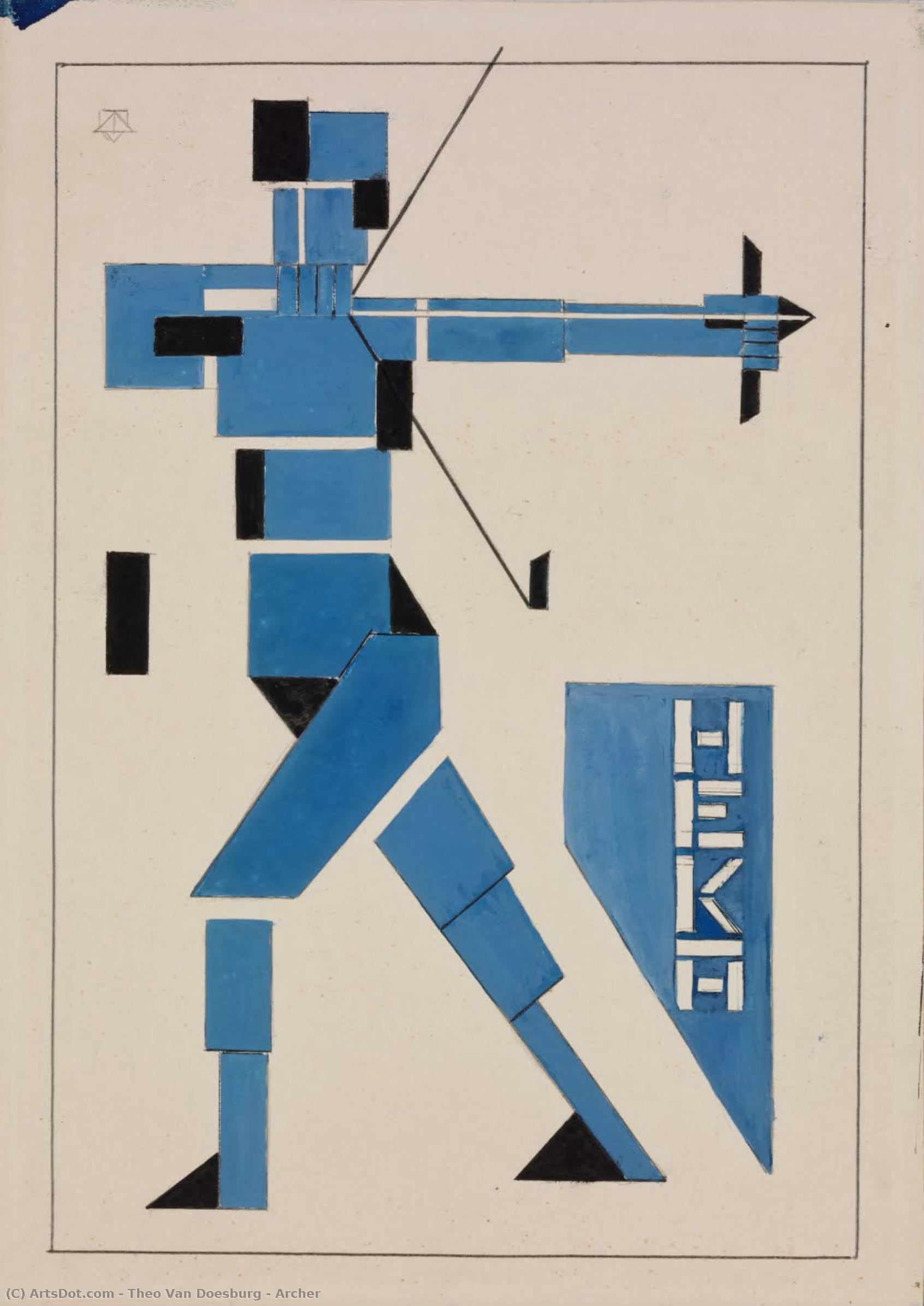
Archer
Wymiary reprodukcji
This evocative drawing, titled "Archer," captures a moment suspended in time—the breath held just before release. The subject is rendered with remarkable intensity: a man poised with a bow drawn taut, his gaze fixed upon an unseen target. It is not merely a depiction of sport or skill; it is a study in concentration, a visual meditation on intent. The artist has managed to distill the complex physicality of drawing a bow into a series of clean, decisive lines, giving the viewer a palpable sense of kinetic energy barely contained within the frame.
Dating from 1919, this work emerges from a pivotal period in art history. While Theo van Doesburg is perhaps best known for his later contributions to De Stijl and pure abstraction, this piece offers a fascinating window into his earlier explorations. The drawing retains the raw, expressive power reminiscent of German Expressionism, an influence that shaped much of his early career alongside figures like Wassily Kandinsky. It suggests an artist grappling with how to translate intense human experience—the focus, the tension, the potential for action—using lines and form before fully committing to geometric purity.
The medium itself contributes significantly to the artwork's emotional resonance. Presented as a black and white drawing, the artist relies entirely on line quality and contrast. The simplicity of the technique forces the viewer to concentrate on the gesture. Notice how the lines defining the bowstring and the drawn arrow create powerful diagonals, leading the eye inexorably toward the point of impact. This masterful use of negative space around the taut limbs enhances the feeling of imminent action, making the piece feel both restrained and explosive simultaneously.
Beyond its technical merits, "Archer" carries deep symbolic weight. The act of aiming is universally understood as the culmination of thought, practice, and will. It speaks to the human desire for precision, for achieving a defined goal after a period of preparation. For collectors or those designing a space, this piece can serve as a powerful talisman—a reminder that true power lies not just in the strength of the arm, but in the unwavering focus of the mind. It is an ode to discipline and directed energy.
Reproducing this drawing allows one to integrate a piece charged with narrative tension into any interior setting. Its graphic nature means it complements both minimalist modern decor that appreciates clean lines, as well as more richly decorated rooms seeking a focal point of intellectual drama. Owning this reproduction is acquiring not just an image, but a conversation starter—a quiet testament to the power of human focus captured by a master hand.


1883 - 1931 , Holandia

Explore the revolutionary De Stijl movement & Neo-Plasticism with our expert guide. Discover Piet Mondrian, Theo van Doesburg, and the lasting impact of this influential art style. Learn about collecting & investing in De Stijl masterpieces.
Odkryj 25 najsłynniejszych obrazów Vincenta van Gogha! Poznaj historie, techniki i emocje kryjące się za 'Gwieździstą noc', 'Słonecznikami' i innymi arcydziełami. Reprodukcje najwyższej jakości na Most-Famous-Paintings.com – inspiracje dla Twojego wnętrza.

APS ofrece reproducciones de bellas artes y encargos personalizados desde 2004. Confían en nosotros corporaciones, hoteles y coleccionistas selectos para obras de arte de calidad museística, servicio discreto y soluciones artísticas completas. ¡Póngase en contacto con nosotros para obtener un presupuesto personalizado!
Odkryj 25 arcydzieł Francisco Goyi – od portretów królewskich po dramatyczne 'Czarne Malowidła'. Poznaj historię, technikę i emocje hiszpańskiego mistrza. Reprodukcje obrazów najwyższej jakości na Most-Famous-Paintings.com! Eksploruj kolekcję online.

Explore the revolutionary art of Piet Mondrian and the principles of Neo-Plasticism. Discover De Stijl's influence, iconic compositions like 'Composition with Red, Yellow and Blue,' and Mondrian’s lasting legacy on modern design.


Bądź na bieżąco z najnowszymi wiadomościami ze świata sztuki, ekskluzywnymi ofertami i inspiracjami dekoratorskimi.
Opowiedz nam o swoim projekcie, a nasi eksperci przygotują dla Ciebie 3 spersonalizowane propozycje dzieł sztuki.
Przygotujemy dla Ciebie 3 propozycje zupełnie za darmo!


 Podgląd w skali
 Wyślij jako kartkę
 Udostępnij
 Szczegóły dzieła

 Pobierz
 Podobne obiekty
 RTG
RTG Pokaz slajdów
 Rozwiń treść







 Opcja ze szkłem jest dostępna wyłącznie w rozmiarach poniżej 110 cm


