Sprzedawaj swoją sztukę
Lista życzeń Koszyk zakupowy Cart
Podgląd w skaliPodgląd w skali Podgląd ARPodgląd AR Zamów ręcznie malowaną reprodukcję Zamów ręcznie malowaną reprodukcjęKup obraz wysokiej rozdzielczości Kup obraz wysokiej rozdzielczości Wyślij jako kartkęWyślij jako kartkę
Szczegóły dziełaSzczegóły dzieła Dodaj do ulubionych Dodaj do ulubionych PobierzPobierz Podobne obiektyPodobne obiekty RTGRTG Pokaz slajdówPokaz slajdów

Sorrow

Vincent van Gogh's poignant lithograph 'Sorrow' captures profound grief and despair through stark lines & muted tones, reflecting the artist’s emotional turmoil. Explore this iconic work of art.

Vincent van Gogh (1853-1890): Genialny malarz postimpresjonistyczny, twórca 'Nocy nad Sekwaną' i 'Słoneczników'. Jego emocjonalne obrazy wywarły ogromny wpływ na sztukę współczesną. Odkryj jego świat!

Giclée / Wydruk artystyczny

Druk giclée lub płótno o jakości muzealnej, szybka realizacja i szeroki wybór opcji wykończenia. (Zamów ręcznie malowaną reprodukcję Zamów ręcznie malowaną reprodukcjęKup obraz wysokiej rozdzielczości Kup obraz wysokiej rozdzielczości)

P118B $10
P118H $10
P118W $10
P438Z $10
P508JH $12
P508YH $12
P805H $10
P805Z $10
P919BZ $10
P919G $10
P919XJ $10
P959ZH $10
P968JZ $12
W106C $8
W218G $10
W218JH $8
W218Y $10
W307PJ $10
W316G $10
W316PJ $8
W316Y $10
W398PJ $8
W4111J $10
W500HY $15
W500JH $15
W692G $12
W849H $8
W940BG $15
W953PJ $8

Standard
custom
CM
INCH

Wybierz spośród naszych standardowych rozmiarów, które zachowują oryginalne proporcje dzieła sztuki.

szerokość
wysokość

Możesz wprowadzić własne wymiary, aby dopasować dzieło do konkretnej ramy lub przestrzeni. Jeśli wybrany rozmiar nie będzie odpowiadał proporcjom oryginalnego obrazu, przytniecie dzieło lub rozszerzymy obraz za pomocą odbicia lustrzanego lub jednolitego wypełnienia krawędzi. Przed rozpoczęciem produkcji prześlemy cyfrową wizualizację do Twojej akceptacji.
Prosimy pamiętać, że podgląd na ekranie nie odzwierciedla faktycznego przycinania ani rozszerzania. Tylko wizualizacja dokładnie pokaże końcową kompozycję.
Mimo dostępności niestandardowych rozmiarów, zalecamy wybór wymiaru z listy zdefiniowanej, aby zachować oryginalne proporcje.

Dostawa na cały świat () w ciągu 2 tygodni zamiast standardowych 4/5 tygodni. (19 Sierpień)

why_choose_icon
Bezpłatna ekspresowa wysyłka na cały świat
why_choose_icon
Wysokiej jakości płótno lniane
why_choose_icon
Pełne ubezpieczenie przesyłki
why_choose_icon
Gwarancja zwrotu należności celnych i podatków importowych
why_choose_icon
Gwarancja wiernego odwzorowania kolorów
why_choose_icon
Polityka 60-dniowego zwrotu (tylko w przypadku wad)
why_choose_icon
Gwarancja 100% zwrotu kosztów
why_choose_icon
Zniżka przy zamówieniu wielu produktów

Suma całkowita

$ 68

reproduction

Sorrow

Giclée / Wydruk artystyczny

Wymiary reprodukcji

-

Cena całkowita

$ 68

Szybki podgląd

  • Movement: Post-Impressionism
  • Notable elements: Monochromatic palette
  • Location: Van Gogh Museum, Amsterdam
  • Year: 1882
  • Medium: Lithograph
  • Subject or theme: Emotional distress
  • Dimensions: 39.1 x 29.9 cm

Quiz o sztuce

Do każdego pytania dotyczy tylko jedna poprawna odpowiedź.

Pytanie 1:
What is the primary emotion conveyed by Vincent van Gogh’s lithograph ‘Sorrow’?
Pytanie 2:
The lithograph 'Sorrow' is based on a real-life event. What was the subject of Van Gogh’s attention during this period?
Pytanie 3:
What technique is most prominently used in ‘Sorrow’ to create its somber mood?
Pytanie 4:
What is the significance of the watermark ‘Sotow’ visible in the lithograph?
Pytanie 5:
Considering the lithograph technique, what does the relatively flat perspective of ‘Sorrow’ suggest about Van Gogh's artistic approach?

Opis kolekcjonerski

Vincent van Gogh’s “Sorrow”: A Lithograph of Profound Melancholy

Vincent van Gogh's "Sorrow," created in 1882, isn’t merely a depiction of a woman; it’s a distilled essence of human despair rendered with the stark precision and emotional intensity that would come to define his artistic legacy. Produced as a lithograph – a technique often associated with cooler, more restrained imagery – this work nevertheless pulsates with an almost unbearable weight of sadness, offering a poignant glimpse into Van Gogh's evolving understanding of form and feeling during a pivotal period in his artistic development.

The image presents a solitary figure seated on the ground, her posture conveying a profound sense of defeat. Her face is largely obscured, adding to the universality of her suffering – she becomes an archetype of grief rather than a specific individual. The composition is vertically oriented, emphasizing the downward gaze and slumped shoulders, visually reinforcing the feeling of being weighed down by sorrow. Lines dominate the image; they delineate the contours of the woman’s body with deliberate sharpness, creating a sense of both vulnerability and resilience. These lines aren't soft or blended; instead, they are assertive, almost brittle, mirroring the fragility of her emotional state.

The Lithographic Process: A Controlled Expression

Lithography, unlike painting, relies on a stone – typically limestone – treated with wax to create an image. Ink is then applied to the polished surface, and when paper is pressed against it, an impression is formed. This process inherently lends itself to a more graphic quality than brushstrokes, resulting in a somewhat flattened perspective and a focus on line and tone. Van Gogh, however, masterfully utilized this technique to imbue his work with a remarkable degree of emotional depth. The monochromatic palette – primarily shades of gray and black – amplifies the somber mood, stripping away any potential distractions and forcing the viewer to confront the raw emotion at the heart of the image.

The deliberate use of line creates texture and suggests volume without relying on traditional shading methods. Notice how the lines around her hair cascade down her back, creating a sense of weight and sorrowful beauty. The ground she sits upon is similarly defined, contributing to the overall feeling of confinement and despair. It’s a testament to Van Gogh's ability to harness the limitations of the medium – in this case, lithography – to achieve an extraordinary level of expressive power.

Symbolism and Context: A Reflection of Personal Turmoil

“Sorrow” was created during a period of intense personal struggle for Van Gogh. He had recently moved to The Hague, seeking respite from the pressures of his life in Paris, but found himself grappling with feelings of isolation and disillusionment. This lithograph is believed to be inspired by a woman he encountered who had lived a life marked by hardship and poverty – a poignant reminder of human suffering that deeply affected him. The obscured face serves as a powerful symbol of anonymity and the universality of grief; it’s not about *this* specific woman, but about the shared experience of sorrow itself.

Interestingly, Van Gogh himself wrote a brief description alongside the lithograph, quoting from Michelet's writings: “How can there be lonely, deserted women in the world?” This quote reveals his empathy and concern for those marginalized by society. The image becomes not just an artistic statement but also a social commentary on the plight of vulnerable individuals.

A Timeless Portrait of Human Emotion

"Sorrow" is more than simply a lithograph; it’s a profoundly moving meditation on human suffering and resilience. Van Gogh's masterful use of line, tone, and composition creates an image that resonates deeply with the viewer, evoking a sense of empathy and understanding. It stands as a testament to his ability to transform personal pain into universal art – a poignant reminder of the enduring power of emotion and the beauty that can be found even in the darkest corners of the human experience. Reproductions of this work offer a chance to bring this powerful image into any space, serving as a quiet contemplation on the complexities of sorrow and the strength of the human spirit.


O artyście

A Life Painted in Emotion: The World of Vincent van Gogh

Vincent Willem van Gogh, a name synonymous with artistic passion and turbulent genius, remains one of the most recognizable and beloved figures in Western art history. Born on March 30, 1853, in Groot-Zundert, Netherlands, his journey was not one of immediate acclaim but rather a slow burn of dedication, struggle, and ultimately, profound influence. The eldest of six children born to a Protestant minister, Theodorus van Gogh, Vincent’s early life was steeped in religious contemplation, a sensibility that would subtly permeate much of his later work. Though he displayed an inclination towards drawing from a young age, his path wasn't immediately clear; he explored various vocations – art dealer, teacher, and missionary – before fully embracing the artist’s life. These experiences, though seemingly disparate, proved formative, instilling in him a deep empathy for the working class and a profound sense of spiritual seeking that would become hallmarks of his artistic vision. Early influences included the Dutch Masters like Rembrandt van Rijn and Frans Hals, whose masterful use of light and shadow resonated with young Vincent, as well as contemporary French painters Jean-François Millet and Camille Corot, who depicted scenes of rural life with a poignant realism.

From Darkness to Light: Artistic Development and Style

Van Gogh’s serious engagement with painting began around 1880, largely self-taught, driven by an inner compulsion to express the world as he perceived it. His initial works reflected his compassion for the marginalized, focusing on the lives of peasants and laborers – exemplified in pieces like The Potato Eaters. These early paintings are characterized by dark, earthy tones and a raw, almost brutal honesty that sought to capture the hardship and dignity of rural existence. The figures in *The Potato Eaters* aren’t idealized; they're depicted with unflinching realism, their faces etched with weariness and toil. This wasn’t simply a documentary record; it was an attempt to convey the profound respect Van Gogh held for these individuals, highlighting their resilience and humanity. A pivotal moment arrived with his move to Paris in 1886, where he was exposed to the vibrant world of Impressionism and Post-Impressionism. This encounter proved transformative, injecting brighter colors into his palette and encouraging experimentation with new techniques. He absorbed the lessons of artists like Monet, Renoir, and Pissarro, but never fully adopted their style; instead, he forged a path uniquely his own. His distinctive style rapidly evolved, becoming instantly recognizable for its bold colors, expressive brushwork, and emotional intensity. Van Gogh didn’t merely *represent* reality; he sought to convey the feeling of being within it, utilizing impasto – thick layers of paint – to create texture and imbue his canvases with a palpable energy. This technique wasn't simply aesthetic; it was an integral part of his expressive language, allowing him to translate inner turmoil and ecstatic joy onto the canvas.

Periods of Intensity: Key Works and Artistic Phases

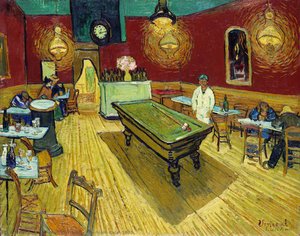
Van Gogh’s artistic journey can be broadly divided into distinct periods, each marked by unique characteristics and significant works. The Dutch Period (1880-1886), as mentioned, was defined by somber tones and depictions of peasant life. These early paintings, often characterized by a limited palette and meticulous detail, reflect his initial attempts to capture the essence of rural existence. The subsequent Parisian Period (1886-1888) saw a dramatic shift towards brighter colors and experimentation with Impressionist techniques. He studied the works of artists like Monet and Pissarro, learning how to capture fleeting moments of light and color. However, it was during the Arles Period (1888-1889), in the south of France, that Van Gogh reached a peak of creative intensity. Surrounded by the radiant light and vibrant landscapes of Provence, he produced some of his most iconic works: Sunflowers, *The Night Café*, and *Starry Night Over the Rhône*. These paintings are not merely depictions of scenes; they are emotional landscapes, pulsating with life and imbued with a sense of longing. The swirling brushstrokes in *Starry Night* aren’t simply representing stars; they're conveying a feeling of awe and wonder, perhaps even a hint of anxiety. His use of color became increasingly expressive, employing vibrant yellows, blues, and greens to evoke specific moods and emotions. His final years, spent in Saint-Rémy and Auvers-sur-Oise (1889-1890), were marked by continued artistic output despite increasing mental distress. Confined to an asylum at Saint-Rémy following a breakdown, he found solace in painting the surrounding countryside, resulting in masterpieces like The Starry Night, a swirling vortex of color and emotion that continues to captivate viewers today. Even during this period of profound suffering, his portraits – particularly those of Dr. Gachet – reveal an extraordinary sensitivity and psychological depth.

A Legacy Forged in Suffering: Achievements and Historical Significance

Despite facing rejection and struggling with mental illness throughout his life, Van Gogh created over 2,100 artworks in just over a decade—approximately 860 oil paintings, 150 watercolors, and over 1000 drawings and sketches. This astonishing output is testament to his unwavering dedication and relentless creative drive. Remarkably, during his lifetime, only one painting – *The Red Vineyard* – was sold. Recognition came posthumously, slowly at first, then with increasing momentum in the early 20th century. His work profoundly influenced the development of modern art, particularly Expressionism and Fauvism, inspiring artists to prioritize emotional expression over realistic representation. His bold use of color, distorted forms, and expressive brushwork paved the way for new artistic possibilities. Today, Van Gogh’s paintings are among the most recognizable and valuable artworks in the world, commanding record prices at auction and drawing millions of visitors to museums worldwide. But his legacy extends far beyond monetary value; he remains a cultural icon, representing the archetype of the “tortured artist” – though this narrative often overshadows his skill, dedication, and artistic vision. The Van Gogh Museum in Amsterdam stands as a testament to his enduring influence, showcasing his work and celebrating his life for generations to come. His art continues to resonate with audiences because it speaks to universal human experiences—love, loss, hope, despair—with an honesty and vulnerability that transcends time and culture.
  • Major Influences: Dutch Masters (Rembrandt, Hals), Millet, Corot.
  • Key Periods: Dutch, Parisian, Arles, Saint-Rémy/Auvers-sur-Oise.
  • Notable Works: The Potato Eaters, Sunflowers, Starry Night, The Night Café.
vincent willem van gogh

vincent willem van gogh

1853 - 1890 , Holandia

Krótka nota

  • Artistic Movement Or Style: Postimpresjonizm
  • Artists Or Movements Influenced By This Artist:
    • Ekspresjonizm
    • Fawizm
  • Artists Who Influenced This Artist:
    • Rembrandt
    • Millet
  • Date Of Birth: 30 marca 1853
  • Date Of Death: 29 lipca 1890
  • Full Name: Vincent Willem van Gogh
  • Nationality: Holender
  • Notable Artworks:
    • Słoneczniki
    • Gwiazda Nocy
    • Jedzący kartofle
  • Place Of Birth: Zundert, Holandia
Odkryj dzieła sztuki uporządkowane według tematów, stylów i cech charakterystycznych.