x

 Akryl na płótnieSztuka ściennaHigh Renaissance
 1505
1505 92.0 x 126.0 cm
 Musée du Petit Palais
Ręcznie malowany obraz olejny na płótnie, wykonany na zamówienie przez naszych artystów w wybranym przez Ciebie wymiarze i oprawie. ( Zamów wydruk Kup obraz wysokiej rozdzielczości)





























Wybierz spośród naszych standardowych rozmiarów, które zachowują oryginalne proporcje dzieła sztuki.

Możesz wprowadzić własne wymiary, aby dopasować obraz do konkretnej ramy lub przestrzeni. Jeśli wybrany rozmiar nie będzie odpowiadał proporcjom oryginału, przytniecie dzieło sztuki lub rozszerzymy je o dodatkowe elementy, ręcznie domalowane przez artystę. Przed rozpoczęciem produkcji wyślemy projekt cyfrowy do Twojej akceptacji.
Należy pamiętać, że podgląd na ekranie nie odzwierciedla rzeczywistego przycinania ani rozszerzania obrazu. Tylko projekt dokładnie pokaże ostateczną kompozycję.
Choć oferujemy możliwość zamówienia niestandardowych rozmiarów, zalecamy wybór wymiaru z gotowej listy, aby zachować oryginalne proporcje dzieła.
Dostawa na całym świecie () w ciągu 3–4 tygodni zamiast standardowych 5 tygodni. (16 Sierpień). Bez kompromisów w kwestii jakości.


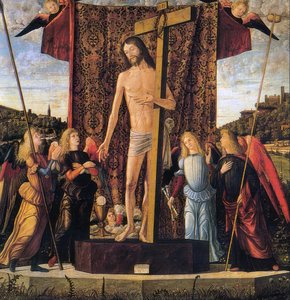
Holy Conversation
Wymiary reprodukcji
Vittore Carpaccio’s “Holy Conversation,” completed around 1505 in Venice, stands as a testament to the enduring influence of early Netherlandish art blended seamlessly with Venetian Renaissance sensibilities. More than just a depiction of religious iconography—it's an immersive experience into the spiritual landscape of its time.
The painting portrays Saint Ursula’s Legend, a poignant tale recounting the miraculous survival of 117 virgin maidens during a perilous journey to Cologne Cathedral. Carpaccio meticulously captures this narrative drama, presenting the figures—Ursula, her attendants, and Saint Benedict—engaged in earnest prayer amidst a richly detailed medieval setting.
Carpaccio’s style diverges markedly from the humanist fervor sweeping across Italy during his lifetime. Unlike many of his contemporaries who embraced idealized forms and classical proportions, Carpaccio prioritizes realism—a characteristic inherited from Antonello da Messina and profoundly shaped by the artistic traditions of Bruges. The artist employs tempera on canvas, a technique favored for its luminosity and ability to render subtle gradations of color. Observe how Carpaccio skillfully utilizes light to illuminate faces and drapery, creating an atmosphere of solemn contemplation.
“Holy Conversation” reflects the fervent piety prevalent in Venice during the Renaissance—a devotion rooted in pilgrimage traditions centered on Saint Ursula’s shrine. The cathedral itself served as a focal point for spiritual fervor, attracting pilgrims from across Europe who sought divine grace. Carpaccio's depiction captures this palpable atmosphere of faith and reverence, transporting viewers back to a pivotal moment in medieval religious history.
Carpaccio’s masterful use of color—particularly the dominant hues of gold and crimson—embodies symbolic significance. Gold represents divine glory and holiness, while crimson symbolizes Christ's sacrifice and spiritual passion. The figures’ postures of prayer convey humility and devotion, emphasizing their yearning for communion with God. Furthermore, Carpaccio incorporates architectural elements—such as the cathedral’s arches—to reinforce the painting’s sacred dimension.
"Holy Conversation" transcends mere visual representation; it evokes a profound emotional response. The serene expressions of Saint Ursula and her companions convey compassion and unwavering faith, inviting contemplation on themes of purity, perseverance, and spiritual transcendence. Carpaccio’s meticulous attention to detail—from the folds of drapery to the textures of stone—creates an immersive experience that resonates with viewers centuries later.
Explore the captivating Venetian Renaissance paintings of Vittore Carpaccio (1465-1526). Known for narrative cycles like ‘The Legend of St. Ursula,’ his work blends early Netherlandish & Italian styles with a unique orientalist flair. Discover his intricate details, narrative cycles like 'The Legend of St. Ursula,' and unique artistic style.


1465 - 1526 , Włochy

Explore the luminous mastery of the Venetian Renaissance. Discover how masters like Titian and Giorgione revolutionized art through colorito, light, and atmosphere. An expert guide to the golden age of Italian painting for collectors and enthusiasts.


Bądź na bieżąco z najnowszymi wiadomościami ze świata sztuki, ekskluzywnymi ofertami i inspiracjami dekoratorskimi.
Opowiedz nam o swoim projekcie, a nasi eksperci przygotują dla Ciebie 3 spersonalizowane propozycje dzieł sztuki.
Przygotujemy dla Ciebie 3 propozycje zupełnie za darmo!


 Podgląd w skali
 Wyślij jako kartkę
 Udostępnij
 Szczegóły dzieła

 Pobierz
 Podobne obiekty
 RTG
RTG Pokaz slajdów
 Rozwiń treść







 Opcja ze szkłem jest dostępna wyłącznie w rozmiarach poniżej 110 cm