


x

Ręcznie malowany obraz olejny na płótnie, wykonany na zamówienie przez naszych artystów w wybranym przez Ciebie wymiarze i oprawie. ( Zamów wydruk Kup obraz wysokiej rozdzielczości)





























Wybierz spośród naszych standardowych rozmiarów, które zachowują oryginalne proporcje dzieła sztuki.

Możesz wprowadzić własne wymiary, aby dopasować obraz do konkretnej ramy lub przestrzeni. Jeśli wybrany rozmiar nie będzie odpowiadał proporcjom oryginału, przytniecie dzieło sztuki lub rozszerzymy je o dodatkowe elementy, ręcznie domalowane przez artystę. Przed rozpoczęciem produkcji wyślemy projekt cyfrowy do Twojej akceptacji.
Należy pamiętać, że podgląd na ekranie nie odzwierciedla rzeczywistego przycinania ani rozszerzania obrazu. Tylko projekt dokładnie pokaże ostateczną kompozycję.
Choć oferujemy możliwość zamówienia niestandardowych rozmiarów, zalecamy wybór wymiaru z gotowej listy, aby zachować oryginalne proporcje dzieła.
Dostawa na całym świecie () w ciągu 3–4 tygodni zamiast standardowych 5 tygodni. (21 Sierpień). Bez kompromisów w kwestii jakości.


Study for Grüner Rand
Wymiary reprodukcji
Wassily Kandinsky's "Study for Grüner Rand," painted in 1920, isn’t merely a depiction of a scene; it’s an immersion into the nascent world of abstract expressionism. Born from a confluence of influences – the vibrant hues of Russian folk art, the profound emotional resonance of Wagnerian opera, and the burgeoning theories of Theosophy – this watercolor captures a pivotal moment in Kandinsky's artistic evolution. It represents a deliberate departure from representational painting, moving towards a purely subjective language of color and form, a visual embodiment of inner experience.
The painting’s subject is deliberately ambiguous, shrouded in a dreamlike atmosphere. A woman, rendered with fluid brushstrokes and a simplified palette, occupies the foreground, seemingly engaged in an activity – perhaps dancing, perhaps contemplating. However, it's crucial to recognize that this isn't about literal representation. Kandinsky wasn't striving for photographic accuracy; instead, he sought to translate his emotional and spiritual responses onto the canvas. The figures are not portraits but rather conduits for feeling, their forms dissolving into a dynamic interplay of color and line.
Kandinsky’s technique is characterized by its bold use of color – a hallmark of his mature style. He employed a limited palette, primarily utilizing shades of red, blue, yellow, and black, yet he masterfully manipulated these hues to evoke a wide range of emotions. The vibrant reds suggest passion and energy, while the blues convey tranquility and introspection. Yellows radiate warmth and optimism, and blacks provide grounding and depth. Crucially, Kandinsky believed that color possessed an inherent spiritual quality, independent of its visual appearance. He meticulously studied color theory, drawing inspiration from Goethe’s theories on colors and their psychological effects.
Notice the layering of washes – a technique characteristic of watercolor—that creates a sense of depth and luminosity. Kandinsky wasn't simply applying paint; he was building up layers of color, allowing them to interact and bleed into one another, mirroring the complexities of human emotion. The loose brushwork contributes to the painting’s ethereal quality, further emphasizing its focus on feeling rather than form.
Beyond the immediate visual impact, “Study for Grüner Rand” is rich in symbolic meaning. The woman herself can be interpreted as a representation of the soul, seeking connection with the surrounding world. The scattered figures and instruments – a violin, cellos, and trombone – evoke musicality and harmony, reflecting Kandinsky’s belief that art should transcend mere visual representation to become a form of spiritual expression. The title itself, “Grüner Rand” (Green Border), hints at boundaries—the limits of perception, the divisions between the inner and outer worlds.
Kandinsky's work during this period was deeply influenced by Theosophy, which posited that all things in the universe were interconnected through geometric forms. He believed that art could reveal these underlying patterns and facilitate a deeper understanding of reality. “Study for Grüner Rand” embodies this belief, presenting a visual representation of a complex spiritual landscape.
“Study for Grüner Rand” stands as a crucial bridge between Kandinsky’s earlier figurative work and his later, fully abstract paintings. It demonstrates his growing commitment to exploring the expressive potential of pure color and form. This piece is not just a beautiful artwork; it's a foundational document in the history of modern art, paving the way for generations of artists who sought to liberate themselves from the constraints of representation and embrace the power of abstraction. Its enduring appeal lies in its ability to evoke profound emotions and invite viewers into a world of pure feeling.


1866 - 1944 , Rosja
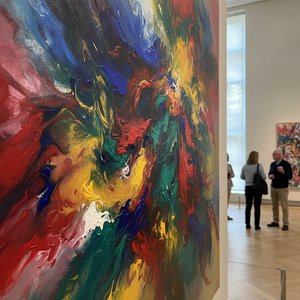
Explore the profound emotional depth of Lyrical Abstraction. Discover how masters like Raymond Parker used color and form to bridge Impressionism and Abstract Expressionism. Learn about this pivotal movement through our expert-led art history guide.

Explore the profound emotional depth of Color Field painting. Discover the history of mid-century abstraction, from Rothko to Newman, and learn how pure color transforms the viewer's experience through our expert art history guide.

Explore the profound history and technical mastery of watercolor painting. From medieval manuscripts to the luminous works of John Singer Sargent, discover how artists capture light and transparency through this delicate, enduring medium.

Discover the profound emotional depth and investment potential of contemporary abstraction. Our expert guide explores how texture, movement, and form create timeless value for discerning art collectors and sophisticated interiors.


Bądź na bieżąco z najnowszymi wiadomościami ze świata sztuki, ekskluzywnymi ofertami i inspiracjami dekoratorskimi.
Opowiedz nam o swoim projekcie, a nasi eksperci przygotują dla Ciebie 3 spersonalizowane propozycje dzieł sztuki.
Przygotujemy dla Ciebie 3 propozycje zupełnie za darmo!


 Podgląd w skali
 Wyślij jako kartkę
 Udostępnij
 Szczegóły dzieła

 Pobierz
 Podobne obiekty
 RTG
RTG Pokaz slajdów


 Rozwiń treść







 Opcja ze szkłem jest dostępna wyłącznie w rozmiarach poniżej 110 cm


