Venda sua arte
Lista de desejos Carrinho de compras Cart
Visualizar em escalaVisualizar em escala Visualizar em RAVisualizar em RA Encomendar impressão Encomendar impressãoEncomendar reprodução pintada à mão Encomendar reprodução pintada à mão EnviarEnviar
Ver detalhesVer detalhes Adicionar aos favoritos Adicionar aos favoritos BaixarBaixar SemelhantesSemelhantes Raio XRaio X Apresentação de slidesApresentação de slides

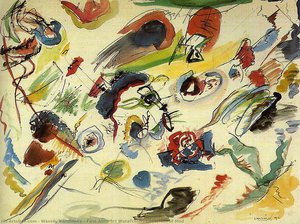
Abstraction Based on Flower Forms, I

Vibrant floral abstractions blend with surreal elements in this 1921 watercolor by Georgian modernist David Kakabadze, offering a unique window into early twentieth-century avant-garde art for your collection.

Um pintor vanguardista georgiano pioneiro que combinou tradições nacionais com influências europeias como o Cubismo e o Futurismo, conhecido por obras emblemáticas como "Sailboats" e projetos inovadores em cinema e teatro.

Adquira uma imagem digital de alta resolução e aprimorada, muito superior à prévia online.

Cada arquivo é meticulosamente preparado por nossos especialistas internos, utilizando ferramentas avançadas e retoques manuais de alta precisão. Garantimos que cada imagem apresente clareza excepcional, fidelidade de cores e detalhes minuciosos.

O arquivo final é entregue por e-mail em até 72 horas, otimizado para uso imediato em ambientes profissionais, editoriais e de impressão. Esta é a mesma qualidade utilizada por estúdios de design de alto nível, editoras e galerias.

Imagem Digital

Baixe um arquivo de alta resolução para exibição pessoal, impressão e projetos criativos. (Encomendar impressão Encomendar impressãoEncomendar reprodução pintada à mão Encomendar reprodução pintada à mão)

Preço Total

$ 24,90

Incluído em cada pedido de imagem digital

Entrega Digital Especializada e Garantida

Ao escolher o Most-Famous-Paintings.com, você não está apenas adquirindo uma imagem — você está recebendo uma obra de arte digital profissionalmente aprimorada, elaborada com precisão e com garantia de satisfação. Aqui está tudo o que acompanha seu pedido, automaticamente:

shipping_icon
Entrega rápida por e-mail

O seu arquivo de imagem digital em alta resolução será enviado por e-mail em até 72 horas após o pedido — pronto para uso imediato.

canvas_icon
Arquivo Digital com IA Otimizado

Sua obra de arte é otimizada profissionalmente por meio de ferramentas avançadas de IA e edição manual, garantindo o máximo de detalhes, clareza e precisão de cores.

insurance_icon
Reenvio gratuito vitalício

Apagou ou perdeu o seu ficheiro acidentalmente? Não se preocupe – nós reenviamos para si a qualquer momento, gratuitamente.

tax_icon
Sem Taxas de Importação - Sempre

Desfrute da sua obra de arte instantaneamente, sem taxas alfandegárias, impostos ou custos de entrega — downloads digitais são sempre isentos de taxas.

color_icon
Garantia de Precisão de Cores

Garantimos que sua imagem digital reflita as cores originais com a maior fidelidade possível, utilizando ferramentas profissionais e gerenciamento de cores.

return_icon
Garantia de Satisfação de 60 Dias

Se você não estiver satisfeito com sua imagem digital, nós a revisaremos ou reembolsaremos 100% dentro de 60 dias — sem perguntas.

guarantee_icon
Garantia de Reembolso 100%

Não está satisfeito? Receba o reembolso total em até 60 dias após o recebimento do seu arquivo digital — sem perguntas.

discount_icon
Descontos para pedidos em lote

Compre 3 imagens, economize 10% - Compre 5, economize 15% - Compre 10+, economize 20%. Ideal para projetos criativos, galerias e agências.

Detalhes Rápidos

  • Title: Abstraction Based on Flower Forms, I
  • Location: Art Palace of Georgia, Tbilisi
  • Subject or theme: Flower forms and abstract shapes
  • Artistic style: Early 20th-century abstraction
  • Notable elements: Yellow and black shoes, clock
  • Medium: Watercolor on paper

Descrição do Colecionável

A Visionary Dance of Form and Color

In the delicate interplay of "Abstraction Based on Flower Forms, I," we encounter a profound moment in the evolution of Georgian Modernism. Created in 1921 by the visionary polymath David Kakabadze, this watercolor on paper serves as a mesmerizing window into an era where the boundaries of reality were being courageously redrawn. The composition unfolds upon a deep, evocative blue background, acting as a nocturnal or celestial stage for a dreamlike arrangement of shapes. While the title suggests a botanical origin, the painting transcends mere representation, inviting the viewer into a surrealist landscape where organic floral motifs collide with unexpected, almost whimsical elements. The presence of scattered yellow and black shapes—reminance of shoes—alongside a subtle clock in the upper corner, creates a delightful tension between the natural world and the artifacts of human existence, challenging our perceptions of time and space.

The technique employed by Kakabadze is nothing short of masterful, utilizing the fluid, translucent nature of watercolor to achieve a sense of ethereal lightness. Each stroke contributes to a layered complexity, where earthy tones and vibrant accents bleed into one another, creating a rhythmic movement across the 23 x 18 cm surface. This piece exemplifies the early 20th-century shift toward abstraction, where the artist’s goal was not to mimic the physical world, but to capture its underlying energy and essence. For the discerning collector or interior designer, this artwork offers a sophisticated focal point; its intricate textures and balanced color palette provide a sense of intellectual depth and quiet contemplation, making it an ideal centerpiece for spaces that value avant-garde history and artistic nuance.

The Legacy of a Georgian Master

To understand the emotional resonance of this work, one must look to the life of David Kakabadze himself. A true pioneer, Kakabadze was a figure who bridged the gap between the traditional roots of his native Georgia and the radical currents of the European avant-garde. His scientific background in natural sciences allowed him to approach art with a unique structural understanding, which is evident in the way he deconstructs floral forms into geometric abstractions. This painting is not merely an aesthetic exercise; it is a testament to a period of intense cultural transformation. The juxtaposition of the ephemeral—the flower—with the mechanical—the clock—speaks to the broader modernist preoccupation with the fleeting nature of life amidst the encroaching industrial age.

Owning a high-quality reproduction of such a significant piece allows one to bring a fragment of art history into the contemporary home. The artwork’s ability to evoke both mystery and tranquility makes it a versatile choice for modern decor, whether placed in a minimalist gallery-style setting or a richly textured study. It serves as a conversation starter, a piece of "living" history that continues to pulse with the creative spirit of 1921. As we gaze upon these abstracted forms, we are reminded of the power of art to reshape our reality, offering a timeless escape into a world where color and shape tell stories far beyond the reach of words.


Biografia do Artista

A Pioneer of Georgian Modernism: The Life and Art of David Kakabadze

David Kakabadze, born in the village of Kukhi near Khoni, Georgia, in 1889, stands as a pivotal figure in the development of twentieth-century Georgian art. His career was one of remarkable innovation, seamlessly blending the burgeoning currents of European avant-garde movements with a deep reverence for his native Georgian traditions. Kakabadze wasn’t merely an artist; he was a polymath – a painter, graphic artist, scenic designer, art scholar, cinematic innovator, and even an amateur photographer. This multifaceted approach to creativity defined his artistic journey and cemented his legacy as one of Georgia's most important modernist masters. His early life, though rooted in the simplicity of a peasant family, was marked by intellectual curiosity fostered through sponsorship that allowed him to pursue studies at St. Petersburg University, graduating with a degree in natural sciences in 1916. Simultaneously, he honed his artistic skills under Dmitroyev-Kavkazsky and immersed himself in the study of Georgia’s rich artistic heritage. This dual education – scientific rigor combined with artistic sensitivity – would become a hallmark of his work.

Parisian Encounters and Artistic Transformation

Following a brief period teaching and painting in Tbilisi, Kakabadze embarked on a transformative chapter of his life in Paris from 1919 to 1927. This sojourn placed him at the epicenter of the European avant-garde, exposing him to Cubism, Futurism, and other radical artistic experiments. He actively participated in exhibitions with the Société des Artistes Indépendants, forging connections with fellow Georgian artists Lado Gudiashvili and Shalva Kikodze. It was during this period that Kakabadze’s style underwent a dramatic evolution. Initially captivated by the landscapes of his native Imereti province – particularly the ethereal beauty of misty mountains and shimmering lakes – he began to explore “subjectless painting,” experimenting with unconventional materials like metal, mirror glass, and stained glass in place of traditional paints. This exploration wasn't merely about technical innovation; it was a quest to redefine the very essence of pictorial representation. He delved deeply into Cubism, absorbing its fragmented forms and analytical approach, yet always maintaining a distinct artistic voice that prevented his work from becoming mere imitation. His theoretical writings during this time, published in Parisian art journals, demonstrate a profound engagement with the intellectual underpinnings of modern art, establishing him as a thought leader within the modernist community. He meticulously dissected visual perception, questioning established conventions and advocating for new ways of perceiving and interpreting reality—a stance that foreshadowed many developments in later artistic movements.

Innovation Beyond the Canvas: Cinema and Stage Design

Kakabadze’s inventive spirit extended far beyond painting. Recognizing the potential of new technologies, he began experimenting with cinema in the early 1920s, driven by a desire to overcome what he perceived as film's inherent limitations. He envisioned a cinematic experience that transcended passive observation, aiming for immersion and emotional impact—a vision remarkably prescient considering the technological landscape of his time. Driven by this ambition, he designed and patented a stereoscopic film projector that created the illusion of three-dimensionality without the need for glasses – a monumental feat of engineering and artistic ingenuity that positioned him as a pioneer of 3D cinema decades before it became commonplace. This inventive streak also manifested in his stage designs, particularly during his collaboration with the renowned Georgian theatre director Kote Marjanishvili after returning to Georgia in 1927. His sets were not merely backdrops but immersive environments incorporating innovative techniques like projections, light effects, and collage-like constructions—a bold departure from traditional theatrical aesthetics. He conceived elaborate productions that pushed boundaries of visual storytelling, transforming the theatre into a space for experimentation and artistic exploration.

Return to Georgia and Enduring Legacy

Kakabadze’s return to Georgia in 1927 coincided with the rise of Soviet power and the imposition of Socialist Realism as the dominant artistic style. This presented Kakabadze with an undeniable challenge—a confrontation between his deeply ingrained modernist convictions and the ideological imperatives of the era. Despite facing pressure from official circles, he steadfastly defended his artistic principles, refusing to compromise on his vision of art as a vehicle for intellectual freedom and aesthetic experimentation. He continued to contribute to Georgian culture through documentary filmmaking focused on preserving cultural heritage—a testament to his belief in the importance of documenting and celebrating Georgia’s traditions. Furthermore, he taught at Tbilisi State Academy of Arts, nurturing the next generation of artists and ensuring that his influence would endure beyond his own lifetime. David Kakabadze passed away in 1952, leaving behind a body of work that was largely overlooked for decades—a regrettable circumstance considering its significance as a cornerstone of Georgian modernist art. However, in recent years, there has been a growing appreciation for Kakabadze’s contribution to the artistic landscape and an increasing recognition of his pioneering spirit—a legacy destined to inspire artists for generations to come.

Key Works and Collections

Some of Kakabadze’s most notable works include Sailboats, Bretagne, and Sketch for Getting Various Grades of Light in a Single Electric Bulb. These pieces exemplify his ability to synthesize European artistic trends with Georgian cultural identity—a characteristic that distinguishes him from many of his contemporaries. His work can be found in prominent collections around the world, including the Art Palace of Georgia – Museum of Cultural History in Tbilisi, the Berardo Collection Museum in Lisbon, and the Thyssen-Bornemisza Museum in Madrid. Furthermore, a significant collection of his early works resides at Yale University—a testament to Kakabadze’s international recognition during his lifetime.
David Kakabadze

David Kakabadze

1889 - 1952 , Geórgia

Informações Rápidas

  • Artistic Movement Or Style: Avant-garde, Cubism
  • Artists Or Movements Influenced By This Artist: ['Numerous artists']
  • Date Of Birth: August 20, 1889
  • Full Name: David Kakabadze
  • Nationality: Georgian
  • Notable Artworks:
    • Sailboats
    • Bretagne
    • Sketch for Getting Various Grades of Light in a Single Electric Bulb
  • Place Of Birth: Kutaisi, Georgia