x

Impressão giclée ou em tela de qualidade de museu, com produção rápida e opções flexíveis de acabamento. ( Encomendar reprodução pintada à mão Comprar imagem em alta resolução)





























Escolha entre os nossos tamanhos pré-definidos que respeitam as proporções originais da obra de arte.

Você pode inserir suas próprias dimensões para se ajustar a uma moldura ou espaço específico. Se o tamanho selecionado não corresponder às proporções da imagem original, iremos recortar a obra de arte ou estender a imagem com uma borda espelhada ou preenchimento sólido. Um mockup digital será enviado para sua aprovação antes do início da produção.
Por favor, observe que a visualização na tela não reflete o recorte ou a extensão real. Apenas o mockup mostrará com precisão a composição final.
Embora tamanhos personalizados estejam disponíveis, recomendamos selecionar uma dimensão da lista predefinida para preservar as proporções originais.
Entrega mundial () em 2 semanas, em vez das 4/5 semanas padrão. (18 Agosto)


A Serva de Bocks
Dimensões da Reprodução
Édouard Manet’s “The Waitress,” also known as “La Serveuse de Bocks,” is more than just a depiction of a commonplace scene; it's a pivotal window into the burgeoning modernity of 19th-century Paris. Painted in 1879, this work transcends its seemingly simple subject matter to become a powerful statement about social change and the evolving role of women within urban society. Manet, a key figure bridging Realism and Impressionism, masterfully captures a fleeting moment in a bustling café, inviting us into a world brimming with quiet observation and subtle commentary.
The painting immediately draws the eye to its central subject: a waitress, her posture conveying both weariness and an almost detached neutrality. She stands behind a table, her gaze directed slightly off-canvas – a deliberate choice by Manet that creates a sense of mystery and invites the viewer to become an active participant in the scene. The composition is remarkably balanced, utilizing strong diagonals created by the table and the patrons’ postures to guide the eye through the crowded space. Notice how Manet employs loose brushstrokes, characteristic of his style, which capture not just the appearance of the figures but also the atmosphere of the café – the murmur of conversation, the clinking of glasses, the diffused light filtering through the windows.
Manet’s decision to portray a working-class woman in such detail was revolutionary for its time. Prior to this period, artists typically focused on aristocratic subjects or historical events. Manet, however, chose to depict everyday life – specifically the often-overlooked world of Parisian café patrons and their servers. This shift reflected a broader cultural trend towards greater social realism and a desire to represent contemporary society with honesty and immediacy. The painting’s subject matter wasn't merely observed; it was deliberately chosen to challenge conventional artistic norms and provoke thought about the changing dynamics of urban life.
The historical context is crucial to understanding Manet’s intentions. Paris in the 1870s was undergoing rapid transformation, with industrialization, urbanization, and social upheaval reshaping its landscape and its people. Manet's work reflects this dynamic tension – a blend of traditional artistic techniques alongside a modern sensibility that sought to capture the spirit of the age. The painting’s realism is further enhanced by Manet’s use of light and shadow, which create a sense of depth and volume, bringing the scene to life with remarkable clarity.
Beyond its realistic depiction, “The Waitress” is rich in subtle symbolism. The waitress's neutral expression suggests a certain detachment from her surroundings – perhaps reflecting the challenges and frustrations inherent in her profession. The man drinking wine in the foreground, with his back turned to the viewer, represents a typical Parisian patron, absorbed in his own world. Even the arrangement of the figures within the café contributes to the painting’s overall narrative, creating a sense of movement and interaction.
Manet's masterful use of color further enhances the emotional impact of the work. The muted tones of the background – browns, grays, and blues – create a sense of atmosphere and depth, while the brighter colors used to depict the waitress’s dress and the wine glass draw attention to her figure. The painting evokes a feeling of quiet observation, inviting us to contemplate the lives and experiences of those who populate the bustling streets of Paris. It's a poignant reminder that even in the midst of urban chaos, moments of human connection and quiet contemplation can be found.
“The Waitress” remains a remarkably relevant work of art today, offering insights into the social and cultural dynamics of 19th-century Paris. Manet’s innovative approach to subject matter, his masterful use of technique, and his ability to capture the essence of human experience continue to resonate with viewers across generations. Reproductions of this iconic painting are highly sought after by art collectors and interior designers alike, adding a touch of historical elegance and artistic sophistication to any space.
Relevant Links:
Additional Information: For more information on Impressionist art and to explore other works by Manet, visit https://Most-Famous-Paintings.com.


1832 - 1883 , França
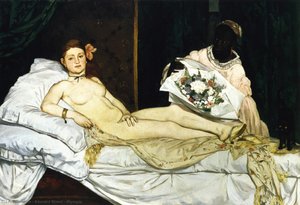
Descubra as 25 obras-primas de Édouard Manet, o mestre do Impressionismo! Explore a história por trás de 'Le Déjeuner sur l'herbe', 'Olympia' e mais. Reproduções de arte exclusivas para decorar sua casa com elegância. Most-Famous-Paintings.

Journey through Impressionistic Realism with 10 iconic masterpieces by Monet, Renoir & Van Gogh. Explore art history, techniques & find museum-quality reproductions for your home at Most-Famous-Paintings.com. Discover all masterpieces online!
Descubra os 10 quadros impressionistas que revolucionaram a arte! Explore Monet, Renoir, Degas e outros mestres. História, técnica e cores vibrantes para inspirar sua decoração. Encontre reproduções de alta qualidade em

Explore the life & art of Édouard Manet, a pivotal figure bridging Realism and Impressionism. Discover his revolutionary techniques, controversial masterpieces like 'Olympia,' and lasting impact on modern art history.

Descubra 10 obras-primas do Realismo! Explore a história, técnica e emoção por trás de Courbet, Millet e outros artistas icônicos. Encontre reproduções de arte exclusivas para decorar sua casa com Most-Famous-Paintings.com.


Fique por dentro das últimas notícias de arte, ofertas exclusivas e ideias de decoração.
Conte-nos sobre o seu projeto e os nossos especialistas em arte fornecerão 3 sugestões de arte personalizadas.
Deixe que selecionamos 3 opções especialmente para você – Grátis!


 Visualizar em escala
 Enviar
 Compartilhar
 Ver detalhes

 Baixar
 Semelhantes
 Raio X
 Apresentação de slides

 Ver mais







 A opção de vidro está disponível apenas para tamanhos inferiores a 110 cm