x

Impressão giclée ou em tela de qualidade de museu, com produção rápida e opções flexíveis de acabamento. ( Encomendar reprodução pintada à mão Comprar imagem em alta resolução)





























Escolha entre os nossos tamanhos pré-definidos que respeitam as proporções originais da obra de arte.

Você pode inserir suas próprias dimensões para se ajustar a uma moldura ou espaço específico. Se o tamanho selecionado não corresponder às proporções da imagem original, iremos recortar a obra de arte ou estender a imagem com uma borda espelhada ou preenchimento sólido. Um mockup digital será enviado para sua aprovação antes do início da produção.
Por favor, observe que a visualização na tela não reflete o recorte ou a extensão real. Apenas o mockup mostrará com precisão a composição final.
Embora tamanhos personalizados estejam disponíveis, recomendamos selecionar uma dimensão da lista predefinida para preservar as proporções originais.
Entrega mundial () em 2 semanas, em vez das 4/5 semanas padrão. (18 Agosto)


O Cantor de Rua
Dimensões da Reprodução
Édouard Manet’s ‘The Street Singer,’ painted in 1862, isn't merely a portrait; it’s a carefully constructed tableau vivant—a snapshot of urban life brimming with quiet observation and subtle social commentary. This captivating work, currently residing within the esteemed Museum of Fine Arts in Boston, offers a rare glimpse into the burgeoning modernism that was reshaping the art world at the time. It's a piece that invites prolonged contemplation, revealing layers of meaning beneath its seemingly simple composition.
Édouard Manet’s ‘The Street Singer,’ painted in 1862, isn’t merely a portrait; it’s a carefully constructed tableau vivant—a snapshot of urban life brimming with quiet observation and subtle social commentary. This captivating work, currently residing within the esteemed Museum of Fine Arts in Boston, offers a rare glimpse into the burgeoning modernism that was reshaping the art world at the time. It's a piece that invites prolonged contemplation, revealing layers of meaning beneath its seemingly simple composition.
At first glance, the painting presents a straightforward depiction: a young woman, Victorine Meurent, stands before a nondescript doorway, her hand delicately touching her face, a guitar case resting at her feet. The scene unfolds outdoors, subtly suggested by the presence of a stray cat nestled on the left side of the canvas – a detail that anchors the image firmly within the realities of Parisian streets. However, Manet’s genius lies in his masterful manipulation of light and shadow, creating an atmosphere of both intimacy and detachment. He employs a loose, expressive brushstroke—a hallmark of his style—that eschews the smooth, polished surfaces favored by academic painters. Instead, he uses visible strokes to build form and texture, imbuing the scene with a palpable sense of immediacy.
“The Street Singer” represents a pivotal shift in Manet’s artistic trajectory and, more broadly, in the course of Western painting. Moving away from the idealized depictions prevalent in earlier portraiture, Manet presents his subject with an unvarnished honesty. Victorine's face is not meticulously rendered; instead, it possesses a certain weariness, a hint of melancholy that speaks to her life as a street performer. Her gaze is averted, suggesting a private world beyond the viewer’s perception. This deliberate choice challenged the conventions of the Salon, where idealized beauty and heroic narratives were typically prioritized.
Painted during a period of rapid social and economic change in Paris, “The Street Singer” reflects the growing visibility of urban poverty and the rise of popular entertainment. Street musicians like Victorine were an integral part of Parisian life, providing music for passersby in exchange for coins. Manet’s decision to depict her in such a candid manner—without romanticizing or idealizing her situation—was a bold statement about the realities of working-class existence.
Furthermore, the painting can be interpreted as a commentary on the changing role of women in society. Victorine's position as a street performer challenges traditional notions of female virtue and domesticity. She is an independent figure, navigating the complexities of urban life with resilience and dignity. The inclusion of the cat adds another layer of symbolism—a reminder of the animalistic instincts that persist beneath the veneer of civilization.
“The Street Singer” stands as a cornerstone of modern art, paving the way for Impressionists like Monet and Renoir. Manet’s emphasis on capturing fleeting moments, his use of unconventional subjects, and his rejection of academic conventions profoundly influenced subsequent generations of artists. The painting's enduring appeal lies in its ability to evoke a sense of nostalgia for a bygone era while simultaneously offering a poignant reflection on the human condition. It is a testament to Manet’s artistic vision—a window into Parisian life, a celebration of urban beauty, and a powerful statement about the complexities of modern society.
Photo Description: The painting is a portrait of a woman standing in front of a doorway with her hand to her face. She appears to be wearing a hat and has a guitar case nearby. The scene takes place outdoors, as indicated by the presence of a cat on the left side of the image. There are also two potted plants visible in the background, one near the top right corner and another towards the bottom left corner. Additionally, there is a book located close to the center of the painting, possibly belonging to the woman or someone else in the scene.
Size: Unknown
Date: 1862


1832 - 1883 , França
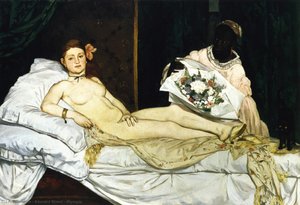
Descubra as 25 obras-primas de Édouard Manet, o mestre do Impressionismo! Explore a história por trás de 'Le Déjeuner sur l'herbe', 'Olympia' e mais. Reproduções de arte exclusivas para decorar sua casa com elegância. Most-Famous-Paintings.

Descubra as 25 obras-primas de John Singer Sargent, o mestre do retrato e do impressionismo americano. Explore a história, técnica e beleza atemporal de seus quadros mais famosos. Encontre reproduções de arte exclusivas para decorar sua casa com elegância em Most-Famous-Paintings.com.

Journey through Impressionistic Realism with 10 iconic masterpieces by Monet, Renoir & Van Gogh. Explore art history, techniques & find museum-quality reproductions for your home at Most-Famous-Paintings.com. Discover all masterpieces online!
Explore 10 defining masterpieces of Romantic Realism! Discover Courbet, Millet & Daumier's powerful paintings—capturing emotion and social realities. Find museum-quality reproductions for your home at Most-Famous-Paintings.com.

Explore the captivating world of Alfred Stevens, a pioneer of intimate realism & Symbolist painting. Discover his elegant portraits of Parisian women and learn about his Dutch influences & lasting legacy. Art history insights at Most-Famous-Paintings.


Fique por dentro das últimas notícias de arte, ofertas exclusivas e ideias de decoração.
Conte-nos sobre o seu projeto e os nossos especialistas em arte fornecerão 3 sugestões de arte personalizadas.
Deixe que selecionamos 3 opções especialmente para você – Grátis!


 Visualizar em escala
 Enviar
 Compartilhar
 Ver detalhes

 Baixar
 Semelhantes
 Raio X
 Apresentação de slides


 Ver mais







 A opção de vidro está disponível apenas para tamanhos inferiores a 110 cm