x

Óleo sobre tela pintado à mão no seu tamanho e moldura, feito sob encomenda pelos nossos artistas. ( Encomendar impressão Comprar imagem em alta resolução)





























Escolha entre os nossos tamanhos pré-definidos que respeitam as proporções originais da obra de arte.

Pode inserir as suas próprias dimensões para se adequar a uma moldura ou espaço específico. Se o tamanho selecionado não corresponder às proporções da imagem original, iremos cortar a obra de arte ou estender a pintura com elementos adicionais pintados à mão. Um esboço digital será enviado para sua aprovação antes do início da produção.
Tenha em atenção que a pré-visualização no ecrã não reflete o corte ou extensão real. Apenas o esboço mostrará com precisão a composição final.
Embora tamanhos personalizados estejam disponíveis, recomendamos selecionar uma dimensão da lista predefinida para preservar as proporções originais.
Entrega mundial () em 3 a 4 semanas, em vez das 5 semanas padrão. (21 Agosto). Sem comprometer a qualidade.


The Brother
Dimensões da Reprodução
Egon Schiele’s “The Brother,” painted in 1911, stands as a poignant testament to the artist's preoccupation with themes of intimacy, loss, and the inescapable confrontation with death—a characteristic hallmark of Expressionist art. This arresting watercolor depicts two figures seated closely together, their faces turned towards each other in an unspoken exchange of gaze. The man’s posture exudes quiet contemplation, while his eyes are fixed on the woman beside him who is enveloped in repose.
Vienna during Schiele’s time was a crucible of artistic innovation, fueled by intellectual currents questioning traditional values and embracing psychological exploration. The Expressionist movement sought to convey inner emotional states rather than external appearances—a reaction against Impressionism's focus on capturing fleeting moments of beauty. Schiele’s work aligns perfectly with this broader artistic ethos, reflecting the anxieties and uncertainties of a generation grappling with societal upheaval.
The inclusion of a figure representing death—often interpreted as a stylized monk—is arguably the painting's most striking symbolic element. This depiction isn’t merely gruesome; it serves as a visual representation of mortality and its inescapable influence on human experience. The woman’s closed eyes symbolize acceptance, perhaps even surrender to the inevitable, while the man’s gaze suggests an attempt to comprehend this profound reality.
"The Brother" transcends mere visual depiction; it evokes a palpable sense of melancholy and introspection. Schiele skillfully captures the unspoken tension between intimacy and fear—the awareness that even in moments of closeness, death looms as an ever-present shadow. The painting’s subdued palette and expressive brushstrokes invite contemplation on themes of loss, vulnerability, and the human condition—a timeless exploration of existential concerns that continues to resonate with audiences today.

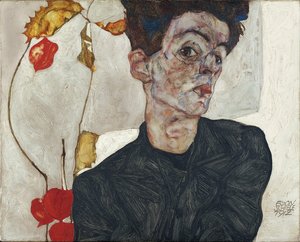
1890 - 1918 , Áustria

Explore the profound history and technical mastery of watercolor painting. From medieval manuscripts to the luminous works of John Singer Sargent, discover how artists capture light and transparency through this delicate, enduring medium.


Fique por dentro das últimas notícias de arte, ofertas exclusivas e ideias de decoração.
Conte-nos sobre o seu projeto e os nossos especialistas em arte fornecerão 3 sugestões de arte personalizadas.
Deixe que selecionamos 3 opções especialmente para você – Grátis!


 Visualizar em escala
 Enviar
 Compartilhar
 Ver detalhes

 Baixar
 Semelhantes
 Raio X
 Apresentação de slides

 Ver mais







 A opção de vidro está disponível apenas para tamanhos inferiores a 110 cm