x

Óleo sobre tela pintado à mão no seu tamanho e moldura, feito sob encomenda pelos nossos artistas. ( Encomendar impressão Comprar imagem em alta resolução)





























Escolha entre os nossos tamanhos pré-definidos que respeitam as proporções originais da obra de arte.

Pode inserir as suas próprias dimensões para se adequar a uma moldura ou espaço específico. Se o tamanho selecionado não corresponder às proporções da imagem original, iremos cortar a obra de arte ou estender a pintura com elementos adicionais pintados à mão. Um esboço digital será enviado para sua aprovação antes do início da produção.
Tenha em atenção que a pré-visualização no ecrã não reflete o corte ou extensão real. Apenas o esboço mostrará com precisão a composição final.
Embora tamanhos personalizados estejam disponíveis, recomendamos selecionar uma dimensão da lista predefinida para preservar as proporções originais.
Entrega mundial () em 3 a 4 semanas, em vez das 5 semanas padrão. (20 Agosto). Sem comprometer a qualidade.


Título: Untitled (3460)
Dimensões da Reprodução
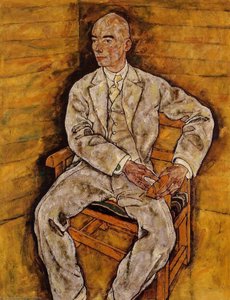
The image before us, “Untitled (3460),” is a profoundly unsettling yet undeniably captivating work by Egon Schiele – an artist whose life and art were inextricably linked to themes of mortality, vulnerability, and the raw intensity of human emotion. Painted in a style deeply rooted in Expressionism, this piece transcends mere representation; it’s a visceral exploration of the psyche, rendered with a startling directness that continues to resonate powerfully today. The central figure, a woman presented with an arresting frankness, immediately commands attention. Her exposed breasts are not merely a physical detail but a deliberate gesture, embodying a potent symbol of both vulnerability and defiant sexuality – a characteristic frequently explored by Schiele throughout his oeuvre.
The painting’s vintage feel, reminiscent of the artist's late output, suggests a period of intense personal struggle. Schiele’s biography reveals a childhood marked by loss and instability; the early death of his father, consumed by syphilis, cast a long shadow over his life and profoundly influenced his artistic vision. This trauma is palpable in the work – a sense of impending doom, a preoccupation with the ephemeral nature of existence, and an unflinching gaze at the darker aspects of human experience. The woman’s posture, coupled with the enigmatic object she holds in her hands (likely a piece of cloth or scarf), hints at a private ritual, a moment of introspection amidst a world fraught with uncertainty.
Schiele's technique is instantly recognizable. He employed bold, gestural lines – thick, swirling strokes that seem to vibrate with energy—to define the figure’s form and imbue the painting with movement. The color palette is deliberately muted, dominated by earthy tones and somber hues, further amplifying the sense of melancholy and introspection. Notice how he uses shading not to create volume but to emphasize contours and suggest a fragile physicality. The artist's mastery lies in his ability to convey emotion through form alone; there’s little reliance on realistic detail, instead prioritizing the expression of inner turmoil.
Egon Schiele (1890-1918) was a pivotal figure in the Expressionist movement, though he often resisted easy categorization. His work is characterized by its unflinching honesty, psychological depth, and exploration of taboo subjects – sexuality, death, and the human condition. Born in Vienna, Austria, his artistic development was shaped by both formal training at the Academy of Fine Arts and a deeply personal engagement with the anxieties of modern life. His mentor, Gustav Klimt, introduced him to the world of art, but Schiele quickly forged his own distinctive path, one marked by a raw intensity that set him apart.
Schiele’s exploration of mortality is particularly poignant given his own tragically short life. He died at the young age of 28 during the First World War, likely from complications related to influenza. His paintings often depict figures on the brink of death or consumed by grief – a reflection of his own experiences and anxieties. “Untitled (3460)” can be interpreted as a meditation on this fundamental human experience, capturing both the terror and the beauty inherent in facing our own mortality.
Beyond its immediate visual impact, "Untitled (3460)" is rich in symbolic meaning. The woman’s exposed breasts can be seen as a challenge to conventional notions of femininity and morality, reflecting Schiele's rejection of societal constraints. The object she holds – whether a scarf or piece of cloth – may represent comfort, protection, or perhaps even a shroud, hinting at the inevitability of death. The overall composition creates a sense of claustrophobia and intimacy, drawing the viewer into the woman’s private world. This painting is not simply a portrait; it's an invitation to contemplate the complexities of human existence – our vulnerabilities, our desires, and our ultimate fate.
Most-Famous-Paintings offers meticulously crafted hand-painted reproductions of this iconic work by Egon Schiele, allowing you to experience its power and beauty in exquisite detail. Explore our collection today and bring a piece of this profound masterpiece into your home or office.

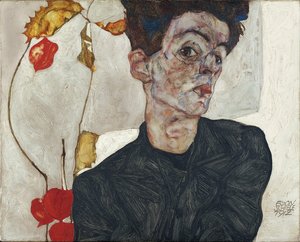
1890 - 1918 , Áustria

Explore the profound emotional depth of Expressionist portraiture. From Edvard Munch to Francis Bacon, discover how masters used distortion and color to reveal inner truths. Learn about this pivotal movement and find museum-quality oil reproductions for your collection.


Fique por dentro das últimas notícias de arte, ofertas exclusivas e ideias de decoração.
Conte-nos sobre o seu projeto e os nossos especialistas em arte fornecerão 3 sugestões de arte personalizadas.
Deixe que selecionamos 3 opções especialmente para você – Grátis!


 Visualizar em escala
 Enviar
 Compartilhar
 Ver detalhes

 Baixar
 Semelhantes
 Raio X
 Apresentação de slides

 Ver mais







 A opção de vidro está disponível apenas para tamanhos inferiores a 110 cm