


x

 Óleo sobre telaArte de ParedeMannerism
 1577Idade Moderna Inicial
 191.0 x 152.0 cm
Óleo sobre tela pintado à mão no tamanho e moldura de sua escolha, feito sob encomenda pelos nossos artistas. ( Comprar impressão Comprar imagem)





























Escolha entre os nossos tamanhos pré-definidos que respeitam as proporções originais da obra de arte.

Pode inserir as suas próprias dimensões para se adequar a uma moldura ou espaço específico. Se o tamanho selecionado não corresponder às proporções da imagem original, iremos cortar a obra de arte ou estender a pintura com elementos adicionais pintados à mão. Um esboço digital será enviado para sua aprovação antes do início da produção.
Tenha em atenção que a pré-visualização no ecrã não reflete o corte ou extensão real. Apenas o esboço mostrará com precisão a composição final.
Embora tamanhos personalizados estejam disponíveis, recomendamos selecionar uma dimensão da lista predefinida para preservar as proporções originais.
Entrega mundial () em 3 a 4 semanas, em vez das 5 semanas padrão. (23 Agosto). Sem comprometer a qualidade.


Saint Sebastian
Tamanho da Reprodução
Doménikos Theotokópoulos, universally known as El Greco—“the Greek”—stands apart from his contemporaries as an artist whose life and oeuvre defied easy categorization. Born in Crete in 1541, under Venetian rule, his artistic journey traversed Venice and Rome before finding its ultimate expression in the spiritual heartland of Spain: Toledo. He wasn’t merely a product of these places; he synthesized their influences into something wholly unique—a style that anticipated the emotional intensity of Expressionism and the fragmented forms of Cubism centuries later.
El Greco's mastery resided not just in his technical prowess but also in his profound understanding of religious iconography. Trained initially within the Byzantine tradition, he instilled in himself a meticulous attention to detail and an unwavering devotion to portraying spiritual truths with visceral immediacy. This foundational grounding wouldn’t confine him; he boldly embraced new artistic horizons, signing his works in Greek—often appending “Krḗs”—Crete—as a proud declaration of his origins, even as he ventured into uncharted stylistic territories.
The genesis of El Greco's distinctive style can be traced back to his formative years in Crete and Venice. Influenced by Byzantine art’s solemn grandeur and Venetian painting’s vibrant color palettes, El Greco developed a visual language characterized by elongated figures, dramatic lighting, and an overwhelming preoccupation with conveying emotional depth—elements that would become hallmarks of his oeuvre.
El Greco's artistic vision decisively rejected the prevailing aesthetic conventions of the Renaissance, opting instead for Mannerism—a movement that prioritized expressive distortion over idealized beauty. This stylistic choice is evident throughout his paintings, where figures are rendered with exaggerated proportions and contorted poses, reflecting a deliberate departure from classical ideals.
Consider Saint Sebastian (1576–1579), arguably El Greco’s most iconic work. The painting exemplifies Mannerist principles with its elongated figure of Saint Sebastian—a stylistic device that lends an ethereal quality to his suffering—and the dramatic use of chiaroscuro—the stark contrast between light and shadow—that intensifies the emotional impact.
El Greco's technique is characterized by loose brushwork, layering of paint, and a masterful manipulation of color. He achieved remarkable textural richness through visible brushstrokes, creating luminous skin tones and conveying palpable emotion. The artist’s meticulous attention to detail—particularly in capturing expressive gestures—contrasts sharply with the stylistic simplification favored by Renaissance artists.
Saint Sebastian's creation coincided with the Counter-Reformation—a period of fervent religious fervor within the Catholic Church following the Protestant Reformation. El Greco’s Toledo residence profoundly influenced his artistic output, providing him with a fertile environment for exploring themes of faith, sacrifice, and spiritual torment.
The painting depicts Saint Sebastian—a Roman soldier martyred for his Christian faith in the 3rd century AD—who became a popular saint during times of plague, invoked as a protector against disease due to the association of arrows with pestilence. El Greco’s depiction transcends mere historical representation; it embodies profound symbolism reflecting anxieties about mortality and divine grace.
The upward gaze of Saint Sebastian signifies a plea for divine intervention—a yearning for solace amidst suffering—while the desolate landscape rendered in muted earth tones evokes a sense of isolation and spiritual desolation. The artist’s masterful use of chiaroscuro amplifies these emotional resonances, drawing the viewer's eye to Saint Sebastian’s anguished expression.
El Greco’s stylistic innovations anticipated developments in later artistic movements—Expressionism and Cubism—demonstrating his enduring influence on subsequent generations of artists. His distinctive visual language continues to inspire contemporary painters and designers, cementing his place as one of the most transformative figures in European art history.

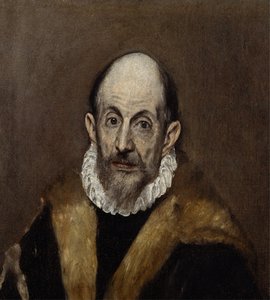
1541 - 1614 , Grécia

Explore the dramatic evolution of Mannerism from High Renaissance perfection to El Greco's spiritual intensity. Discover the history, techniques, and enduring legacy of this transformative era through an expert art-history lens.

Explore the profound drama of Spanish Baroque art. Delve into the mastery of light, shadow, and realism through the legendary works of Diego Velázquez and the Spanish Golden Age with our expert-led historical guide.


Fique por dentro das últimas notícias de arte, ofertas exclusivas e ideias de decoração.
Conte-nos sobre o seu projeto e os nossos especialistas em arte fornecerão 3 sugestões de arte personalizadas.
Deixe que selecionamos 3 opções especialmente para você – Grátis!


 Visualizar na parede
 Compartilhar
 Compartilhar
 Detalhes

 Baixar imagem
 Semelhantes
 Raio X
 Slideshow
 Ler mais







 A opção de vidro está disponível apenas para tamanhos inferiores a 110 cm


