


x

Óleo sobre tela pintado à mão no seu tamanho e moldura, feito sob encomenda pelos nossos artistas. ( Ver impressão do pedido Baixar imagem em alta resolução)





























Escolha entre os nossos tamanhos pré-definidos que respeitam as proporções originais da obra de arte.

Pode inserir as suas próprias dimensões para se adequar a uma moldura ou espaço específico. Se o tamanho selecionado não corresponder às proporções da imagem original, iremos cortar a obra de arte ou estender a pintura com elementos adicionais pintados à mão. Um esboço digital será enviado para sua aprovação antes do início da produção.
Tenha em atenção que a pré-visualização no ecrã não reflete o corte ou extensão real. Apenas o esboço mostrará com precisão a composição final.
Embora tamanhos personalizados estejam disponíveis, recomendamos selecionar uma dimensão da lista predefinida para preservar as proporções originais.
Entrega mundial () em 3 a 4 semanas, em vez das 5 semanas padrão. (10 Agosto). Sem comprometer a qualidade.


Street
Dimensões da Reprodução
Fernand Léger's "Street" offers a captivating glimpse into the burgeoning dynamism of early 20th-century urban life, rendered with a distinctive naive style that simultaneously evokes a sense of primitive authenticity and sophisticated abstraction. Painted by one of the most influential figures of the Cubist movement, this artwork isn’t merely a depiction of a street scene; it's an exploration of how modernity – specifically the impact of industrialization and the machine age – was perceived and translated onto canvas. Léger, born Joseph Fernand Henri Léger in 1881 in Argentan, Normandy, brought a unique perspective to art, shaped by his upbringing amidst the rural landscapes that contrasted sharply with the burgeoning mechanical world he sought to capture.
Léger's artistic journey was profoundly influenced by the technological advancements of his time. He saw in the machine age not just a source of pollution or disruption, but also a new aesthetic – one characterized by clean lines, geometric shapes, and a sense of powerful movement. “Street” embodies this fascination, presenting figures and objects as fragmented yet recognizable forms, echoing the mechanical structures that were transforming urban landscapes. The bicycle, a symbol of personal mobility in an increasingly mechanized world, is rendered with particular attention to its angularity and solidity, reflecting Léger’s interest in the formal qualities of industrial design.
This approach was revolutionary for its time. While many artists retreated into pure abstraction, Léger sought to bridge the gap between the tangible world and the realm of artistic expression. He wasn't simply depicting a street; he was constructing a visual vocabulary that spoke directly to the anxieties and aspirations of a society undergoing rapid transformation.
Beyond its formal qualities, “Street” carries a subtle emotional weight. The figures, though rendered in a simplified style, convey a sense of everyday activity – people going about their business, interacting with one another. This focus on the ordinary elevates the scene to something more profound, suggesting that even the most mundane aspects of urban life could be imbued with artistic significance. Léger’s use of color and composition creates a dynamic tension, capturing both the energy and the potential alienation of modern city life.
The painting's naive style invites viewers to engage with it on an intuitive level, bypassing intellectual analysis and tapping into a primal sense of recognition. It is a testament to Léger’s belief that art should be accessible to all, regardless of their formal training or cultural background.
Fernand Léger's “Street” stands as a pivotal work in the history of modern art, demonstrating his unique ability to synthesize Cubist principles with a distinctly personal vision. His influence extended beyond painting, impacting sculpture, design, and architecture. Today, reproductions of this captivating artwork offer an opportunity to experience firsthand the innovative spirit of one of the 20th century’s most important artists – a reminder that even in the midst of technological change, the human element remains at the heart of artistic expression.

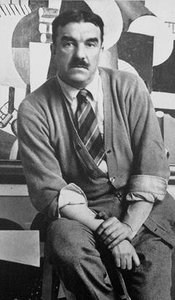
1881 - 1955 , França

Descubra as 10 obras de arte que revolucionaram a modernidade! Explore a história por trás de Van Gogh, Monet, Picasso e outros mestres. Encontre reproduções de alta qualidade para transformar seu ambiente com Most-Famous-Paintings.com.

Descubra 10 obras de arte icônicas que capturam a atmosfera industrial! Explore Monet, Manet e outros mestres do Impressionismo e Realismo. Encontre reproduções de alta qualidade para transformar sua decoração em Most-Famous-Paintings.com.
Descubra as 25 obras-primas de Katsushika Hokusai, o mestre do ukiyo-e! Explore a história por trás de 'A Grande Onda' e outras gravuras japonesas icônicas. Encontre reproduções de arte exclusivas para decorar sua casa com elegância em Most-Famous-Paintings.com.

Explore the captivating world of realism in art history! Discover iconic street scenes & genre paintings from masters like Courbet & Brown. Expert analysis & museum-quality reproductions at Most-Famous-Paintings.

Descubra as 25 obras mais emblemáticas do MoMA, de Van Gogh a Warhol! Explore a história da arte moderna, movimentos como Cubismo e Expressionismo, e encontre reproduções de alta qualidade para decorar sua casa. Inspire-se em Monet, Picasso e Kandinsky. Explore a coleção completa na Most-Famous-Paintings.com


Fique por dentro das últimas notícias de arte, ofertas exclusivas e ideias de decoração.
Conte-nos sobre o seu projeto e os nossos especialistas em arte fornecerão 3 sugestões de arte personalizadas.
Deixe que selecionamos 3 opções especialmente para você – Grátis!


 Visualizar em escala
 Enviar
 Compartilhar
 Ver detalhes

 Baixar
 Semelhantes
 Raio X
 Apresentação de slides

 Ver mais







 A opção de vidro está disponível apenas para tamanhos inferiores a 110 cm


