


x

Impressão giclée ou em tela de qualidade de museu, com produção rápida e opções flexíveis de acabamento. ( Encomendar reprodução pintada à mão Comprar imagem em alta resolução)





























Escolha entre os nossos tamanhos pré-definidos que respeitam as proporções originais da obra de arte.

Você pode inserir suas próprias dimensões para se ajustar a uma moldura ou espaço específico. Se o tamanho selecionado não corresponder às proporções da imagem original, iremos recortar a obra de arte ou estender a imagem com uma borda espelhada ou preenchimento sólido. Um mockup digital será enviado para sua aprovação antes do início da produção.
Por favor, observe que a visualização na tela não reflete o recorte ou a extensão real. Apenas o mockup mostrará com precisão a composição final.
Embora tamanhos personalizados estejam disponíveis, recomendamos selecionar uma dimensão da lista predefinida para preservar as proporções originais.
Entrega mundial () em 2 semanas, em vez das 4/5 semanas padrão. (20 Agosto)


Leo
Dimensões da Reprodução
Within the hallowed halls of the University of Salamanca resides a masterpiece of late 15th-century Spanish art – Fernando Gallego's "El Cielo de Salamanca," or “The Sky of Salamanca.” More than just a decorative ceiling, this vast mural is an ambitious cosmological depiction, a testament to the burgeoning scientific curiosity and artistic skill of its time. Commissioned around 1480 during a period of intense intellectual exchange between Europe and Spain, the painting transcends mere ornamentation; it’s a vibrant synthesis of religious symbolism, classical learning, and nascent astronomical observation.
Gallego, a master painter working within the influential Hispano-Flemish style, skillfully blended Northern European realism with the established traditions of Spanish art. He was deeply influenced by the meticulous detail and illusionistic techniques characteristic of Flemish artists like Rogier van der Weyden, yet he infused his work with a distinctly Iberian sensibility – a richness in color, a dramatic use of light, and an emphasis on narrative clarity. The sheer scale of “The Sky of Salamanca” – spanning approximately 130 square meters – demanded a masterful command of perspective and composition, showcasing Gallego’s technical prowess.
“El Cielo de Salamanca” isn't simply a depiction of the night sky; it’s an attempt to represent the cosmos as understood by scholars during the late 15th century. Based on Ptolemy’s “Almagest,” a foundational text in astronomy, the mural charts 48 constellations and the known planets – Sun, Moon, Mercury, Venus, Mars, Jupiter, and Saturn. Gallego meticulously rendered each celestial body, imbuing them with symbolic significance rooted in classical mythology and religious iconography. The figures are not merely astronomical objects; they’re presented as characters within a grand narrative of creation and divine order.
Notably, the painting reflects the prevailing belief that planets were not distant spheres but rather inhabited by gods and spirits. This perspective is evident in the depiction of Mars as a warrior figure, Jupiter as a regal king, and Venus as an angelic being. The artist’s attention to detail extends beyond the constellations themselves; he incorporates elements like the Milky Way, rendered with shimmering gold leaf, further enhancing the illusion of depth and grandeur.
Beyond its astronomical accuracy, “El Cielo de Salamanca” is rich in symbolic meaning. The central figure, Christ, is positioned at the heart of the cosmos, symbolizing divine authority and the foundation of all creation. Surrounding him are figures from Christian mythology – St. Andrew, St. Peter, and St. Bartholomew – reinforcing the painting’s religious message. The inclusion of classical deities like Apollo and Hercules further underscores the synthesis of ancient and Christian thought that characterized Renaissance learning.
The mural's narrative unfolds through a series of interconnected scenes, depicting key moments in the biblical story from creation to the Last Judgment. This didactic purpose – intended to educate viewers about both religious doctrine and astronomical knowledge – is characteristic of many altarpieces commissioned during this period. The meticulous detail with which Gallego portrays each figure and scene speaks volumes about his artistic skill and dedication.
Despite its grandeur, “El Cielo de Salamanca” suffered significant damage over the centuries due to a fire in 1869 that destroyed much of the University’s library. Only approximately one-third of the original mural remains intact today. However, the surviving fragments offer an extraordinary glimpse into the artistic and intellectual world of 15th-century Spain. Restoration efforts continue to unveil more of this remarkable masterpiece, allowing us to appreciate Gallego's vision and his pivotal role in shaping the visual landscape of the University of Salamanca.
Reproductions of “El Cielo de Salamanca” provide a stunning opportunity to bring this celestial tapestry into your home or office. Whether you seek an evocative piece for a study, a grand statement for a living room, or simply a beautiful reminder of the wonders of the universe, a high-quality reproduction captures the essence and majesty of Gallego’s extraordinary creation.


1440 - 1507 , Espanha

Explore the majesty of the King of Beasts through art history. From Baroque drama to Romantic realism, discover how master painters capture the power and soul of lions in exquisite oil reproductions and fine art prints for discerning collectors.

Explore the captivating world of Fernando Botero! Discover his iconic 'Boterismo' style, Colombian influences, investment potential & lasting legacy. Expert insights for art collectors.

Descubra as 25 obras mais emblemáticas do MoMA, de Van Gogh a Warhol! Explore a história da arte moderna, movimentos como Cubismo e Expressionismo, e encontre reproduções de alta qualidade para decorar sua casa. Inspire-se em Monet, Picasso e Kandinsky. Explore a coleção completa na Most-Famous-Paintings.com
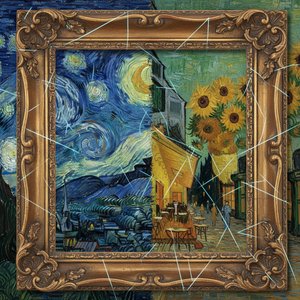
Descubra as 25 obras-primas de Vincent van Gogh, do icônico 'Noite Estrelada' aos vibrantes 'Girassóis'. Explore a história, cores e emoção por trás de cada pintura. Reproduções de alta qualidade em Most-Famous-Paintings.com!

Descubra os 10 quadros pós-impressionistas que revolucionaram a arte! Explore Van Gogh, Monet e Cézanne. Encontre reproduções de alta qualidade para decorar sua casa com obras atemporais em Most-Famous-Paintings.com.


Fique por dentro das últimas notícias de arte, ofertas exclusivas e ideias de decoração.
Conte-nos sobre o seu projeto e os nossos especialistas em arte fornecerão 3 sugestões de arte personalizadas.
Deixe que selecionamos 3 opções especialmente para você – Grátis!


 Visualizar em escala
 Enviar
 Compartilhar
 Ver detalhes

 Baixar
 Semelhantes
 Raio X
 Apresentação de slides

 Ver mais







 A opção de vidro está disponível apenas para tamanhos inferiores a 110 cm


