


x

 Acrylic On CanvasWallArtExpressionist Abstraction
 1952
1952 66.0 x 56.0 cm
 Tate Britain
Adquira uma imagem digital de alta resolução e aprimorada, muito superior à prévia online.
Cada arquivo é meticulosamente preparado por nossos especialistas internos, utilizando ferramentas avançadas e retoques manuais de alta precisão. Garantimos que cada imagem apresente clareza excepcional, fidelidade de cores e detalhes minuciosos.
O arquivo final é entregue por e-mail em até 72 horas, otimizado para uso imediato em ambientes profissionais, editoriais e de impressão. Esta é a mesma qualidade utilizada por estúdios de design de alto nível, editoras e galerias.
Baixe um arquivo de alta resolução para exibição pessoal, impressão e projetos criativos. ( Encomendar impressão Encomendar reprodução pintada à mão)
Ao escolher o Most-Famous-Paintings.com, você não está apenas adquirindo uma imagem — você está recebendo uma obra de arte digital profissionalmente aprimorada, elaborada com precisão e com garantia de satisfação. Aqui está tudo o que acompanha seu pedido, automaticamente:

O seu arquivo de imagem digital em alta resolução será enviado por e-mail em até 72 horas após o pedido — pronto para uso imediato.

Sua obra de arte é otimizada profissionalmente por meio de ferramentas avançadas de IA e edição manual, garantindo o máximo de detalhes, clareza e precisão de cores.

Apagou ou perdeu o seu ficheiro acidentalmente? Não se preocupe – nós reenviamos para si a qualquer momento, gratuitamente.

Desfrute da sua obra de arte instantaneamente, sem taxas alfandegárias, impostos ou custos de entrega — downloads digitais são sempre isentos de taxas.

Garantimos que sua imagem digital reflita as cores originais com a maior fidelidade possível, utilizando ferramentas profissionais e gerenciamento de cores.

Se você não estiver satisfeito com sua imagem digital, nós a revisaremos ou reembolsaremos 100% dentro de 60 dias — sem perguntas.

Não está satisfeito? Receba o reembolso total em até 60 dias após o recebimento do seu arquivo digital — sem perguntas.

Compre 3 imagens, economize 10% - Compre 5, economize 15% - Compre 10+, economize 20%. Ideal para projetos criativos, galerias e agências.
Francis Bacon's "Study for a Portrait," painted in 1952, isn’t merely a depiction of a man; it’s an excavation of the human psyche grappling with trauma and isolation. This intimate yet unsettling work, measuring just 66 x 56 cm, immediately draws the viewer into a space thick with unspoken anxieties – a testament to Bacon's profound ability to translate inner turmoil onto canvas. The painting captures a figure caught in a moment of intense, perhaps agonized, expression; his mouth agape, suggesting a scream trapped within, or a desperate plea lost in the void. The glasses and tie, seemingly mundane details, become symbols of an attempt at composure, a fragile facade struggling against the overwhelming force of emotion.
Understanding “Study for a Portrait” requires acknowledging the formative experiences that shaped Francis Bacon’s artistic vision. Born in Dublin in 1909, his childhood was marked by instability and emotional distance. Frequent moves due to his mother’s illness instilled a deep-seated sense of displacement – a feeling he would repeatedly explore throughout his career. His complex relationship with his father, coupled with the nurturing presence of his nanny, Jessie Lightfoot, further contributed to a landscape of unresolved emotions. It's crucial to note that Bacon didn’t begin painting until his late twenties, a delay that arguably intensified the urgency and raw power of his later works. This unconventional start fueled a relentless pursuit of expressing the unspoken anxieties simmering beneath the surface of human experience.
Bacon's technique is instantly recognizable – a deliberate distortion of form, a fragmentation of the figure that reflects its psychological state. He achieved this through layers of thin paint applied with rapid brushstrokes, creating a sense of movement and instability. The figures aren’t rendered realistically; instead, they are fractured, elongated, and often contorted into grotesque shapes. This stylistic choice isn't about ugliness, but rather about conveying the subjective experience of trauma – the feeling of being broken, fragmented, and utterly overwhelmed. The use of a palette knife adds to this textural intensity, creating a surface that feels both vulnerable and powerfully charged.
“Study for a Portrait” is laden with symbolic weight. The open mouth isn’t simply an expression of shouting; it represents a desperate attempt to release pent-up emotions, a futile cry for help. The glasses could symbolize a desire to see clearly through the fog of pain and confusion, while the tie suggests an adherence to societal expectations – a performance of normalcy that masks profound inner turmoil. Ultimately, the painting speaks to the universal experience of isolation, anxiety, and the struggle to maintain composure in the face of overwhelming adversity. It’s a hauntingly beautiful depiction of vulnerability, inviting viewers to confront their own anxieties and contemplate the hidden depths of the human condition.

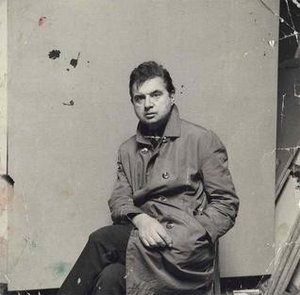
1909 - 1992 , Irlanda


Fique por dentro das últimas notícias de arte, ofertas exclusivas e ideias de decoração.
Conte-nos sobre o seu projeto e os nossos especialistas em arte fornecerão 3 sugestões de arte personalizadas.
Deixe que selecionamos 3 opções especialmente para você – Grátis!


 Visualizar em escala
 Enviar
 Compartilhar
 Ver detalhes

 Baixar
 Semelhantes
 Raio X
 Apresentação de slides
 Ver mais


