x

Impressão giclée ou em tela de qualidade de museu, com produção rápida e opções flexíveis de acabamento. ( Encomendar reprodução pintada à mão Comprar imagem em alta resolução)





























Escolha entre os nossos tamanhos pré-definidos que respeitam as proporções originais da obra de arte.

Você pode inserir suas próprias dimensões para se ajustar a uma moldura ou espaço específico. Se o tamanho selecionado não corresponder às proporções da imagem original, iremos recortar a obra de arte ou estender a imagem com uma borda espelhada ou preenchimento sólido. Um mockup digital será enviado para sua aprovação antes do início da produção.
Por favor, observe que a visualização na tela não reflete o recorte ou a extensão real. Apenas o mockup mostrará com precisão a composição final.
Embora tamanhos personalizados estejam disponíveis, recomendamos selecionar uma dimensão da lista predefinida para preservar as proporções originais.
Entrega mundial () em 2 semanas, em vez das 4/5 semanas padrão. (18 Agosto)


cirque
Dimensões da Reprodução
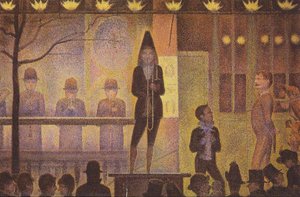
Georges Pierre Seurat's "Cirque," painted in 1891, isn’t merely a depiction of a circus; it’s an immersive experience, a carefully constructed illusion rendered in the revolutionary technique of Pointillism. This work stands as a pivotal moment in art history, bridging the Impressionist era with the nascent movements that would define modern painting. Seurat, a meticulous and intellectually driven artist, sought to capture not just what he *saw*, but how the eye perceives light and color – a pursuit rooted in scientific observation and a desire to unlock the secrets of visual sensation.
The scene unfolds with an almost dreamlike quality. A woman, poised and elegant atop a magnificent white horse, commands the center of attention, her presence radiating both power and grace. Around her swirl a vibrant tableau of performers – acrobats, animal handlers, and spectators – all bathed in the dappled light of a late afternoon sun. The artist’s eye doesn't simply record; it orchestrates an atmosphere of joyous chaos, capturing the energy and spectacle of the circus with remarkable precision. Notice how Seurat deliberately avoids sharp outlines, instead relying on countless tiny dots of color to build form and create a sense of depth and movement. This technique, born from his study of optics and color theory, is not haphazard; it’s a deliberate strategy to mimic the way our eyes actually perceive light.
Seurat's innovation, Pointillism – also known as Divisionism – was far more than just a stylistic choice. He meticulously developed his own system, based on the theories of Eugène Chevreul regarding simultaneous contrast and optical mixing. Each individual dot, or *point*, is intended to reflect light in a specific way, and when viewed from a distance, these dots coalesce into larger, blended colors that create an astonishingly luminous effect. It’s akin to building an image with tiny fragments of color, allowing the viewer's eye to do the work of mixing them together.
Beyond its technical brilliance, “Cirque” offers a glimpse into the anxieties and aspirations of late 19th-century France. The circus, a symbol of spectacle, entertainment, and escape, represented a world increasingly defined by industrialization and urbanization. Seurat’s depiction captures both the allure and the fleeting nature of this experience – a momentary burst of joy amidst a rapidly changing society. The woman on horseback can be interpreted as representing beauty, grace, and perhaps even a touch of danger, while the surrounding chaos hints at the underlying tensions of modern life.
Furthermore, “Cirque” embodies the spirit of *fin de siècle* – a period marked by both optimism and uncertainty. The vibrant colors and dynamic composition reflect a desire to celebrate beauty and pleasure, while the meticulous technique suggests a yearning for order and control in a world undergoing profound transformation. The painting’s influence can be seen in subsequent movements like Neo-Impressionism and Fauvism, demonstrating Seurat's lasting legacy on the course of art history.
Most-Famous-Paintings offers meticulously crafted hand-painted reproductions of Georges Seurat’s "Cirque," allowing you to experience the magic of this masterpiece in your own space. Our skilled artists faithfully recreate Seurat's Pointillist technique, capturing the luminous quality and intricate detail with exceptional accuracy. Whether adorning a gallery wall or adding a touch of artistic flair to your interior design, our reproductions provide an authentic representation of this iconic work. Invest in a piece of art history – order your “Cirque” reproduction today

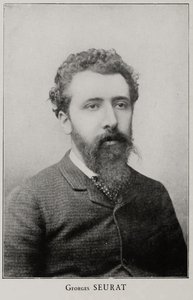
1859 - 1891 , França

Explore the scientific brilliance of Neo-Impressionism. Discover how masters like Georges Seurat revolutionized art through optical mixing, color theory, and the precision of Pointillism to capture the true essence of light.

Explore the scientific brilliance of Pointillism. Discover how masters like Georges Seurat revolutionized art through optical color mixing and the science of light. A definitive guide for classical art enthusiasts seeking to understand the physics behind Neo-Impressionist masterpieces.

Explore the transformative era of Post-Impressionism. Discover how masters like Van Gogh moved beyond light to embrace emotion, structure, and vibrant color, redefining modern art history through expressive brushwork and symbolic depth.


Fique por dentro das últimas notícias de arte, ofertas exclusivas e ideias de decoração.
Conte-nos sobre o seu projeto e os nossos especialistas em arte fornecerão 3 sugestões de arte personalizadas.
Deixe que selecionamos 3 opções especialmente para você – Grátis!


 Visualizar em escala
 Enviar
 Compartilhar
 Ver detalhes

 Baixar
 Semelhantes
 Raio X
 Apresentação de slides

 Ver mais







 A opção de vidro está disponível apenas para tamanhos inferiores a 110 cm