


x

Impressão giclée ou em tela de qualidade de museu, com produção rápida e opções flexíveis de acabamento. ( Encomendar reprodução pintada à mão Comprar imagem em alta resolução)





























Escolha entre os nossos tamanhos pré-definidos que respeitam as proporções originais da obra de arte.

Você pode inserir suas próprias dimensões para se ajustar a uma moldura ou espaço específico. Se o tamanho selecionado não corresponder às proporções da imagem original, iremos recortar a obra de arte ou estender a imagem com uma borda espelhada ou preenchimento sólido. Um mockup digital será enviado para sua aprovação antes do início da produção.
Por favor, observe que a visualização na tela não reflete o recorte ou a extensão real. Apenas o mockup mostrará com precisão a composição final.
Embora tamanhos personalizados estejam disponíveis, recomendamos selecionar uma dimensão da lista predefinida para preservar as proporções originais.
Entrega mundial () em 2 semanas, em vez das 4/5 semanas padrão. (19 Agosto)


A Young Lady
Dimensões da Reprodução
Henry Raeburn's “A Young Lady,” painted circa 1795-1800, isn’t merely a portrait; it’s a carefully constructed tableau of youthful sensibility and understated elegance. This captivating work, now residing within the National Gallery of Scotland, offers a glimpse into the burgeoning world of Scottish art during the late 18th century – an era where realism was championed alongside a profound appreciation for beauty and character. The painting immediately draws the viewer in with its intimate composition: a young woman, identified as Ann Edgar, sits poised before us, bathed in soft, diffused light that seems to emanate from an unseen window. Her gaze is direct, yet not confrontational; it holds a quiet contemplation, suggesting a thoughtful spirit beneath her composed exterior.
Raeburn’s masterful technique lies in his ability to capture the subtle nuances of human expression and texture. He employs a loose, almost impressionistic brushstroke – a departure from the rigid formality prevalent at the time – allowing for a remarkable sense of immediacy and spontaneity. The delicate rendering of her blonde hair, cascading loosely around her shoulders, is particularly noteworthy, as is the way he captures the subtle sheen of her white dress. The background, subtly rendered with trees hinting at a distant landscape, provides a gentle contrast to the figure’s stillness, creating a harmonious balance within the composition.
“A Young Lady” is deeply rooted in the artistic and intellectual currents of the Scottish Enlightenment. Raeburn was not simply documenting a likeness; he was striving to capture something deeper – the essence of his subject’s personality. This approach aligns perfectly with the philosophical ideals of the era, which emphasized observation, reason, and the pursuit of knowledge. Portraits during this period were often imbued with symbolic meaning, reflecting social status, moral values, and even personal aspirations. The inclusion of the clock and book – seemingly incidental details – subtly hint at the young lady’s intellectual pursuits and her engagement with the world beyond her immediate surroundings.
Furthermore, Raeburn's work reflects a shift away from the idealized representations favored by earlier portraitists. He eschewed the polished perfection of classical art in favor of a more naturalistic approach, prioritizing truthfulness and psychological insight. This commitment to realism was revolutionary for its time and helped establish Raeburn as one of Scotland’s most important artists.
Beyond its technical brilliance, “A Young Lady” resonates with a quiet emotional depth. The painting evokes a sense of serenity and introspection – a feeling that the young woman is lost in her own thoughts. Her posture, her gaze, and even the gentle curve of her lips all contribute to this impression of inner peace. The lighting itself plays a crucial role in shaping the mood, creating an atmosphere of warmth and intimacy.
Interestingly, Raeburn’s relationship with his subject is often debated. Some scholars suggest that he was captivated by Ann Edgar's beauty and intelligence, while others believe their connection was purely professional. Regardless of the nature of their relationship, “A Young Lady” stands as a testament to Raeburn’s ability to capture not just a likeness but also the spirit of his subject – a young woman poised on the threshold of adulthood, radiating both grace and quiet strength.
Today, “A Young Lady” remains one of Henry Raeburn's most celebrated works. Its enduring appeal lies in its timeless beauty, its psychological depth, and its masterful execution. High-quality reproductions offer a remarkable opportunity to experience the painting’s subtle nuances and emotional resonance firsthand. Whether displayed as a centerpiece in a grand salon or incorporated into a more intimate setting, this portrait continues to captivate viewers with its quiet elegance and profound sense of human connection. It serves as a poignant reminder of Raeburn's legacy – a legacy that cemented his place as a pivotal figure in the history of Scottish art.


1756 - 1823 , Escócia
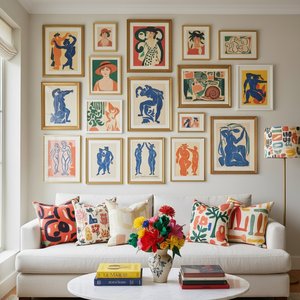
Descubra as 25 obras-primas de Henri Matisse que revolucionaram a arte moderna! Explore o Fauvismo, cores vibrantes e a história por trás dos quadros mais famosos do artista. Encontre reproduções de alta qualidade para decorar sua casa com Most-Famous-Paintings.com.

Explore the life & work of Henry Raeburn, a master Scottish portraitist. Discover his innovative techniques, captivating portraits of the Enlightenment era, and lasting legacy in art history. Learn more at Most-Famous-Paintings.

Explore the life & work of Henry Raeburn Dobson, a key figure bridging Scottish tradition & modern art. Discover his neoclassical portraits, landscapes, and connection to the Colourists. Learn about collecting his works.

Explore 10 defining masterpieces of Romantic Realism! Discover Courbet, Millet & Daumier's powerful paintings—capturing emotion and social realities. Find museum-quality reproductions for your home at Most-Famous-Paintings.com.

Explore the life & legacy of Robert Henri, a pivotal figure in American Realism. Discover his captivating portraits, influence on the Ashcan School, and enduring impact on art history. Learn more at Most-Famous-Paintings.


Fique por dentro das últimas notícias de arte, ofertas exclusivas e ideias de decoração.
Conte-nos sobre o seu projeto e os nossos especialistas em arte fornecerão 3 sugestões de arte personalizadas.
Deixe que selecionamos 3 opções especialmente para você – Grátis!


 Visualizar em escala
 Enviar
 Compartilhar
 Ver detalhes

 Baixar
 Semelhantes
 Raio X
 Apresentação de slides


 Ver mais







 A opção de vidro está disponível apenas para tamanhos inferiores a 110 cm


