Venda sua arte
Lista de desejos Carrinho de compras Cart
Visualizar em escalaVisualizar em escala Visualizar em RAVisualizar em RA Encomendar reprodução pintada à mão Encomendar reprodução pintada à mãoComprar imagem em alta resolução Comprar imagem em alta resolução EnviarEnviar
Ver detalhesVer detalhes Adicionar aos favoritos Adicionar aos favoritos BaixarBaixar SemelhantesSemelhantes Raio XRaio X Apresentação de slidesApresentação de slides

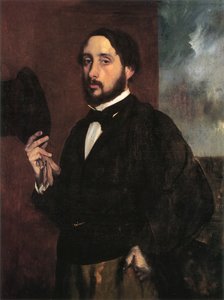
Eugene Manet

Captured in Impressionist style by Edgar Degas, ‘Eugene Manet’ portrays a tranquil portrait of a man smoking his pipe amidst horses and village houses—a masterful depiction reflecting the artist's dedication to capturing fleeting moments with remarkable realism.

Edgar Degas: um revolucionário artista francês, conhecido por seus deslumbrantes bailarinas, cenas parisienses e técnicas inovadoras – um mestre da arte moderna.

Giclée / Impressão de Arte

Impressão giclée ou em tela de qualidade de museu, com produção rápida e opções flexíveis de acabamento. (Encomendar reprodução pintada à mão Encomendar reprodução pintada à mãoComprar imagem em alta resolução Comprar imagem em alta resolução)

P118B $10
P118H $10
P118W $10
P438Z $10
P508JH $12
P508YH $12
P805H $10
P805Z $10
P919BZ $10
P919G $10
P919XJ $10
P959ZH $10
P968JZ $12
W106C $8
W218G $10
W218JH $8
W218Y $10
W307PJ $10
W316G $10
W316PJ $8
W316Y $10
W398PJ $8
W4111J $10
W500HY $15
W500JH $15
W692G $12
W849H $8
W940BG $15
W953PJ $8

Standard
custom
CM
INCH

Escolha entre os nossos tamanhos pré-definidos que respeitam as proporções originais da obra de arte.

largura
altura

Você pode inserir suas próprias dimensões para se ajustar a uma moldura ou espaço específico. Se o tamanho selecionado não corresponder às proporções da imagem original, iremos recortar a obra de arte ou estender a imagem com uma borda espelhada ou preenchimento sólido. Um mockup digital será enviado para sua aprovação antes do início da produção.
Por favor, observe que a visualização na tela não reflete o recorte ou a extensão real. Apenas o mockup mostrará com precisão a composição final.
Embora tamanhos personalizados estejam disponíveis, recomendamos selecionar uma dimensão da lista predefinida para preservar as proporções originais.

Entrega mundial () em 2 semanas, em vez das 4/5 semanas padrão. (15 Agosto)

why_choose_icon
Envio Expresso Gratuito para todo o Mundo
why_choose_icon
Tela de Linho Premium
why_choose_icon
Seguro de transporte total
why_choose_icon
Garantia de Reembolso de Impostos Alfandegários
why_choose_icon
Garantia de Fidelidade de Cor
why_choose_icon
Política de Devolução de 60 Dias (Apenas para Defeitos)
why_choose_icon
Garantia de reembolso de 100%
why_choose_icon
Desconto para múltiplas unidades

Preço Total

$ 68

reproduction

Eugene Manet

Giclée / Impressão de Arte

Dimensões da Reprodução

-

Preço Total

$ 68

Detalhes Rápidos

  • Title: Eugene Manet
  • Location: Private Collection
  • Artistic style: Realist Impressionism
  • Year: 1874
  • Medium: Oil on canvas
  • Movement: Impressionism
  • Artist: Edgar Degas

Descrição do Item

A Moment Frozen in Time: Decoding Edgar Degas’s Eugene Manet

The painting “Eugene Manet,” completed by Edgar Degas in 1874, isn't merely a portrait; it’s an exquisitely crafted distillation of Impressionist ideals—a testament to capturing fleeting moments and subtle nuances of everyday life. More than just depicting a gentleman enjoying the outdoors, Degas’s work invites us into a contemplative space where observation reigns supreme and artistic innovation breathes beneath the surface.

The Subject: A Familiar Face Amidst Rural Tranquility

At first glance, “Eugene Manet” presents a deceptively simple scene: a man seated on grass, puffing thoughtfully on a pipe. This unassuming posture speaks volumes about Degas’s approach—he eschews grand gestures or dramatic poses, prioritizing psychological realism over theatrical display. The sitter is dressed in formal attire – a dark suit and tie – subtly contrasting with the relaxed environment surrounding him. His gaze directs outwards, suggesting an awareness of his surroundings and perhaps a quiet contemplation of life itself. This deliberate choice underscores Degas’s fascination with portraying human subjects in natural settings, capturing their inner lives alongside external appearances.

Style & Technique: Impressionistic Precision

Degas's mastery lies not just in depicting the subject but in executing it with remarkable precision within the framework of Impressionism. Painted on canvas using oil paints—a technique favored by many artists of his era—the artwork benefits from a rich textural quality and vibrant color palette. Unlike the smooth, polished surfaces characteristic of Academic painting, Degas’s brushstrokes are visible, conveying movement and capturing the diffused light of a summer afternoon. The artist skillfully blends colors to create an atmospheric haze that envelops the figures and buildings in the background, furthering the sense of serenity and immediacy. This careful attention to detail—the subtle shading on the man's face, the texture of the pipe smoke—demonstrates Degas’s unwavering commitment to realism while simultaneously embracing the expressive potential of Impressionistic style.

Historical Context: Embracing Modern Life

“Eugene Manet” emerged during a pivotal period in art history – the rise of Impressionism. Artists like Monet and Renoir were actively rejecting traditional conventions, prioritizing subjective experience and capturing the ephemeral beauty of the natural world. Degas’s decision to portray a man in a rural setting reflects this broader artistic movement's desire to depict contemporary life with honesty and sensitivity. The painting exists within a circle of artists who championed realism alongside Impressionism, notably Mary Cassatt and Berthe Morisot, highlighting the intellectual ferment of the time.

Symbolic Resonance: Beyond Appearance

While outwardly calm, “Eugene Manet” possesses subtle symbolic layers. The pipe itself represents contemplation and leisure—a deliberate contrast to the pressures of urban life. The horses in the background serve as a reminder of Degas’s lifelong interest in animal subjects, reflecting his fascination with capturing movement and vitality. Furthermore, the quiet village scene symbolizes harmony between humanity and nature – a theme that resonates deeply within the Impressionist aesthetic.

Emotional Impact: A Quiet Reflection

Ultimately, “Eugene Manet” succeeds in conveying a profound emotional resonance. The painting invites viewers to pause and consider the beauty of simplicity—to appreciate the quiet moments of contemplation that define human experience. Degas’s masterful technique captures not just what is seen but also what is felt—a feeling of tranquility, observation, and understated dignity. It remains a powerful reminder that art can illuminate the deepest truths about our lives and surroundings.

Biografia do Artista

A Life Immersed in Movement

Edgar Degas, born Hilaire-Germain-Edgar De Gas in Paris on July 19, 1834, stands as a captivating enigma within the annals of art history. Often categorized alongside the Impressionists—Monet, Renoir, and others who revolutionized painting in the late 19th century—Degas fiercely resisted this label, preferring to identify himself as a realist. This commitment stemmed from his unwavering dedication to meticulous observation of the world around him, translating it onto canvas with an honesty that was both startling and profoundly insightful. His early life unfolded within the comfortable confines of a bourgeois upbringing; his father, a banker, and his mother, hailing from a Creole family in New Orleans, afforded him access to education and artistic training—though he often felt constrained by the rigid expectations of academic tradition. Initially enrolled at the Lycée Louis-le-Grand, Degas’s true education began when he immersed himself in the Louvre, meticulously copying works by masters like Raphael and Michelangelo, honing his skills and igniting a lifelong passion for classical art. However, this early training wasn't simply about imitation; it was a springboard for constant questioning and reevaluation of artistic norms—a defining characteristic that would shape his entire career. He possessed an independent spirit, refusing to be confined by convention, and this rebellious streak fueled his unique artistic vision.

Beyond Impressionism: A Distinct Artistic Voice

While contemporaries like Monet chased the ephemeral beauty of light outdoors, capturing fleeting moments in plein air, Degas largely maintained a studio-based practice. His process involved constructing scenes from careful observation and memory, often working from sketches and studies made at a distance. This deliberate approach allowed him to analyze forms and compositions with an unparalleled level of detail. His subject matter deliberately shifted away from the historical or mythological themes favored by many academic painters, instead focusing on the vibrant, often gritty reality of Parisian life. He found inspiration in the everyday experiences of ordinary people: laundresses hauling their heavy loads, cabaret singers captivating audiences with their performances, milliners crafting elaborate hats, and, most famously, dancers—particularly those performing at the Paris Opera Ballet. Degas didn’t merely paint beautiful ballerinas; he sought to capture the grueling reality of their profession – the endless rehearsals, the physical strain, the fleeting moments of grace amidst a world of relentless labor. His compositions were frequently unconventional, cropping figures in unexpected ways and utilizing asymmetrical arrangements that created a sense of dynamism and immediacy. He was a master of capturing movement, not through blurred lines or hazy effects, but through precise observation and careful rendering of form. Works like *Dancer, A Group of Dancers*, *Women Combing Their Hair*, and *The Dance Class* exemplify this dedication to portraying the human figure in motion and revealing the complexities of modern life. He wasn’t interested in superficial beauty; he sought to expose the truth beneath the surface.

Influences and Artistic Development

Degas's artistic journey was a rich tapestry woven from diverse influences. His early training instilled in him a deep respect for classical principles, particularly the work of Jean-Auguste-Dominique Ingres, whose emphasis on draftsmanship and precise form profoundly impacted his style. However, he also drew inspiration from Realist painters like Gustave Courbet, who challenged academic conventions and championed the depiction of contemporary life with unflinching honesty. A pivotal moment in his development occurred through his association with Camille Pissarro, a leading Impressionist who encouraged him to experiment with new techniques and broadened his artistic horizons. Degas was particularly captivated by Japanese prints—Ukiyo-e—which exerted a significant influence on his compositions, inspiring him to embrace asymmetrical arrangements, flattened perspectives, and bold patterns. He also keenly observed photography, recognizing its potential as a tool for studying movement and capturing fleeting moments in time. This willingness to incorporate diverse influences into his work – from classical art to Japanese prints to the burgeoning field of photography – is what truly distinguishes Degas and contributes to the unique character of his art. He wasn’t afraid to borrow from different sources, synthesizing them into something entirely new.

Major Achievements and Legacy

Edgar Degas died in Paris on September 27, 1917, leaving behind a remarkably diverse body of work that continues to captivate and inspire audiences worldwide. His innovative approach to composition, his masterful draftsmanship, and his unflinching portrayal of modern life have had a profound impact on the course of art history. He wasn’t simply a painter of dancers or racehorses; he was a keen observer of human nature, a master of form and movement, and a true innovator who redefined the possibilities of art. His influence can be seen in the work of Pablo Picasso and Henri Matisse, among others, demonstrating his lasting legacy as a pivotal figure in the transition from realism to modernism. Museums across the globe—including the Musée d'Orsay and the Musée de l’Orangerie in Paris—house significant collections of his paintings, pastels, sculptures, and prints, ensuring that his artistic vision will continue to be appreciated for generations to come.
  • A Master of Line: Degas's exceptional draftsmanship set him apart.
  • Modern Life as Subject: He focused on contemporary Parisian scenes, breaking from tradition.
  • Influence on Future Artists: His work profoundly impacted Picasso and Matisse.

Key Works

Among his most celebrated works are *Dancer and Tambourine*, a vibrant depiction of a ballerina in mid-performance; *The Ballet Class*, offering an intimate glimpse into the rigorous training of young dancers; *Degas in a Green Jacket*, capturing a candid moment of leisure; *The Collector*, showcasing a portrait of a wealthy art collector; and *Women Combing Their Hair*, a study of domestic life. These works, along with countless others, reveal Degas’s remarkable ability to capture the essence of his subjects – their beauty, their struggles, and their humanity.
hilaire-germain-edgar degas

hilaire-germain-edgar degas

1834 - 1917 , França

Informações Rápidas

  • Artistic Movement Or Style: Impressionismo, Realismo
  • Artists Or Movements Influenced By This Artist:
    • Picasso
    • Matisse
  • Artists Who Influenced This Artist:
    • Ingres
    • Courbet
    • Pissarro
  • Date Of Birth: 1834
  • Date Of Death: 1917
  • Full Name: Hilaire-Germain Edgar Degas
  • Nationality: Francês
  • Notable Artworks:
    • Dançarina e Tamborim
    • A Aula de Dança
    • Degas no Casaco Verde
    • O Colecionador
    • Mulheres penteando seus cabelos
  • Place Of Birth: Paris, França
Explore obras de arte organizadas por temas, estilos e características.