Lista de desejos Carrinho de compras Cart
Visualizar na paredeVisualizar na parede Ver em RAVer em RA Comprar impressão Comprar impressãoComprar imagem Comprar imagem CompartilharCompartilhar
DetalhesDetalhes Adicionar aos favoritos Adicionar aos favoritos Baixar imagemBaixar imagem SemelhantesSemelhantes Raio XRaio X SlideshowSlideshow

Landscape with Shepherd

A serene 17th-century Flemish landscape featuring a peaceful shepherd beneath lush trees by Jacques d'Arthois, capturing the tranquil beauty of pastoral life for your collection.

Jacques d'Arthois (1613-1686) was a Flemish landscape painter known for his detailed wooded scenes & tapestry designs. Explore his influence on 17thC art, featuring pastoral landscapes with figures and dramatic light.

Reprodução em Óleo Feita à Mão

Óleo sobre tela pintado à mão no tamanho e moldura de sua escolha, feito sob encomenda pelos nossos artistas. (Comprar impressão Comprar impressãoComprar imagem Comprar imagem)

P118B $10
P118H $10
P118W $10
P438Z $10
P508JH $12
P508YH $12
P805H $10
P805Z $10
P919BZ $10
P919G $10
P919XJ $10
P959ZH $10
P968JZ $12
W106C $8
W218G $10
W218JH $8
W218Y $10
W307PJ $10
W316G $10
W316PJ $8
W316Y $10
W398PJ $8
W4111J $10
W500HY $15
W500JH $15
W692G $12
W849H $8
W940BG $15
W953PJ $8

Standard
custom
CM
INCH

Escolha entre os nossos tamanhos pré-definidos que respeitam as proporções originais da obra de arte.

largura
altura

Pode inserir as suas próprias dimensões para se adequar a uma moldura ou espaço específico. Se o tamanho selecionado não corresponder às proporções da imagem original, iremos cortar a obra de arte ou estender a pintura com elementos adicionais pintados à mão. Um esboço digital será enviado para sua aprovação antes do início da produção.
Tenha em atenção que a pré-visualização no ecrã não reflete o corte ou extensão real. Apenas o esboço mostrará com precisão a composição final.
Embora tamanhos personalizados estejam disponíveis, recomendamos selecionar uma dimensão da lista predefinida para preservar as proporções originais.

Exemplos do que pode ser personalizado: Substituir o rosto pela foto do cliente; Adicionar um animal de estimação (ex: substituir gato por cão); Incluir uma mensagem oculta no fundo; Alterar a paisagem ou elementos do fundo.
Após o pedido, a equipa Most-Famous-Paintings.com enviará um e-mail ao cliente para solicitar instruções e fornecer uma prévia do esboço.

Entrega mundial () em 3 a 4 semanas, em vez das 5 semanas padrão. (22 Agosto). Sem comprometer a qualidade.

why_choose_icon
Envio expresso gratuito para todo o mundo
why_choose_icon
Tela de Linho de Alta Qualidade
why_choose_icon
Seguro de transporte completo
why_choose_icon
Garantia de Reembolso de Impostos Alfandegários
why_choose_icon
Garantia de Fidelidade Cromática
why_choose_icon
Política de Devolução em 60 Dias (Apenas para Defeitos)
why_choose_icon
Garantia de reembolso de 100%
why_choose_icon
Oferta de desconto por quantidade

Preço Total

$ 272

reproduction

Landscape with Shepherd

Técnica de Reprodução

Tamanho da Reprodução

-

Preço Total

$ 272

Informações Rápidas

  • Dimensions: 72 x 54 cm
  • Subject or theme: Pastoral landscape and daily life
  • Notable elements: Tree, mountains, shepherd, birds
  • Artistic style: Flemish landscape
  • Artist: Jacques d'Arthois

Descrição da Obra

A Pastoral Sanctuary in Brushstrokes

In the quietude of Jacques d'Arthois’ Landscape with Shepherd, the viewer is invited into a realm where time seems to suspend its frantic pace. This exquisite Flemish masterpiece captures a moment of profound serenity, centered around a solitary shepherd finding respite beneath the sprawling canopy of a lush, verdant tree. The composition is anchored by this central figure, whose presence evokes the timeless tradition of pastoral life—a theme that has long resonated with those seeking solace in the simplicity of nature. As the eye wanders from the textured leaves of the foreground to the hazy, majestic mountains rising in the distance, one feels an immediate sense of depth and atmospheric breathing room, as if the very air of the seventeenth century has been preserved within the frame.

The technique employed by d'Arthois is a masterclass in the Flemish tradition of landscape painting. With a meticulous hand, he renders the interplay of light and shadow, allowing sunlight to filter through the foliage and dance upon the scattered figures inhabiting this idyllic world. The artist utilizes a rich, organic palette—deep forest greens, earthy ochres, and the soft, ethereal blues of the distant peaks—to create a sense of immense scale. Notice how the subtle inclusion of birds in flight adds a layer of kinetic energy to an otherwise still scene, preventing the composition from feeling static and instead imbuing it with the gentle pulse of a living ecosystem.

Historical Resonance and Aesthetic Elegance

Born in Brussels during a period of significant cultural evolution, Jacques d'Arthois emerged as a specialist in the art of the woodland scene. His work reflects the seventeenth-century fascination with the "idealized landscape," where the wildness of nature is tamed into a harmonious stage for human existence. This painting serves as more than just a depiction of scenery; it is a window into a historical consciousness that valued the restorative power of the outdoors. For the discerning collector or interior designer, this piece offers a sophisticated narrative of peace and stability, making it an ideal centerpiece for spaces designed for contemplation and luxury.

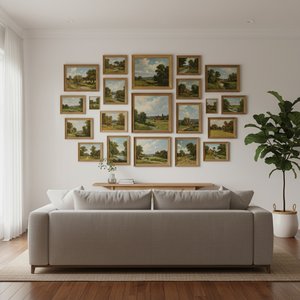
Integrating such a high-quality reproduction into a contemporary interior provides an instant infusion of classical elegance. Whether placed in a sun-drenched morning room or a moody, library-style study, the Landscape with Shepherd acts as a focal point that draws the gaze and invites conversation. Its ability to bridge the gap between historical grandeur and modern tranquility makes it a timeless choice for those looking to curate an environment of refined beauty and emotional depth.


Biografia do Artista

A Brussels Master of Woodland Scenes: The Life and Art of Jacques d’Arthois

Jacques d'Arthois, born in Brussels in 1613, emerged during a vibrant period for Flemish art—a time when landscape painting was steadily gaining prominence alongside the established traditions of portraiture and history. While not as widely celebrated as some of his contemporaries, d’Arthois carved out a significant niche for himself with his meticulously detailed depictions of wooded landscapes populated by figures engaged in everyday life or pastoral pursuits. His career unfolded against a backdrop of political and religious upheaval, yet he managed to cultivate a consistent style that resonated with patrons seeking both beauty and tranquility in their surroundings. Apprenticed to Jan Mertens in 1625, the specifics of his early training remain somewhat obscure; however, it’s clear that d'Arthois quickly developed an affinity for rendering the natural world with remarkable precision. He entered the Brussels Guild of St. Luke in 1634, marking a formal recognition of his artistic abilities and establishing him as a professional painter within the city’s thriving art community.

The Tapestry Designer and the Pastoral Ideal

D'Arthois wasn’t solely dedicated to easel painting; he also achieved considerable success as a tapestry designer, becoming a chartered cartoon designer for the city of Brussels in 1655. This dual role is significant because it illuminates his broader artistic sensibilities—his ability to translate compositions from one medium to another and his understanding of decorative principles. Tapestry design demanded a clarity of form and narrative that likely influenced his paintings, encouraging him to create scenes that were both visually compelling and easily interpretable. His landscapes often evoke a sense of idealized harmony, reflecting the pastoral ideal prevalent in 17th-century art—a longing for a simpler, more virtuous existence rooted in nature. The woods around Brussels served as his primary source of inspiration, and he frequently depicted them with a keen eye for atmospheric effects and subtle variations in light and shadow. Figures were often added to his compositions by other artists, notably David Teniers the Younger and Gonzales Coques, creating collaborative works that showcased both d’Arthois's landscape expertise and the figure painters’ skill in animating the scenes.

Influences and Artistic Development

Tracing the influences on d’Arthois’s style reveals a complex interplay of artistic traditions. Early works demonstrate a clear debt to Lodewijk de Vadder, another prominent Brussels landscape painter whose compositions often featured similar wooded settings and figure groupings. However, d'Arthois gradually developed his own distinctive voice, characterized by a greater emphasis on detail and a more refined sense of atmospheric perspective. The influence of Denis van Alsloot is also discernible in his early paintings, particularly in the rendering of trees and foliage. As he matured, d’Arthois began to experiment with larger-scale landscapes, responding to a growing demand for decorative works that could adorn churches and abbeys. These ambitious compositions required a sophisticated understanding of spatial organization and a mastery of color and tone. While documentary evidence is limited, it's believed that Cornelis Huysmans may have spent time in d’Arthois’s workshop around 1650, though the extent of his influence remains uncertain.

A Legacy of Imitation and Historical Significance

Jacques d’Arthois enjoyed a successful career during his lifetime, attracting commissions from both private patrons and religious institutions. He owned several houses, including one in the Sonian Forest—a testament to his prosperity and connection to the natural world he so often depicted. Despite experiencing financial difficulties later in life, his artistic reputation remained strong. His influence extended beyond Brussels, as evidenced by the presence of pupils who emulated his style and disseminated his aesthetic principles throughout the region. While no works are definitively signed by either his brother Nicolaes or his son Jan Baptist, it is believed that many paintings attributed to Jacques d’Arthois were actually created by these family members. This ambiguity underscores the challenges inherent in attributing 17th-century Flemish landscapes, but it also highlights the enduring appeal of d'Arthois’s style—a style that was widely imitated and followed by other landscape artists for generations. His contribution lies not in radical innovation, but in his skillful execution of a beloved genre and his ability to capture the beauty and tranquility of the Belgian countryside. He represents a vital link in the development of Flemish landscape painting, bridging the gap between earlier traditions and the more sophisticated approaches that would emerge in the following centuries.
jacques d' arthois

jacques d' arthois

1619 - 1686 , Belgium

Dados Rápidos

  • Artists Or Movements Influenced By This Artist: ['']
  • Artists Who Influenced This Artist: ['']
  • Date Of Birth: 1619
  • Date Of Death: 1686
  • Notable Artworks: ['']
  • Place Of Birth: WahooArt