x

Óleo sobre tela pintado à mão no seu tamanho e moldura, feito sob encomenda pelos nossos artistas. ( Encomendar impressão Comprar imagem em alta resolução)





























Escolha entre os nossos tamanhos pré-definidos que respeitam as proporções originais da obra de arte.

Pode inserir as suas próprias dimensões para se adequar a uma moldura ou espaço específico. Se o tamanho selecionado não corresponder às proporções da imagem original, iremos cortar a obra de arte ou estender a pintura com elementos adicionais pintados à mão. Um esboço digital será enviado para sua aprovação antes do início da produção.
Tenha em atenção que a pré-visualização no ecrã não reflete o corte ou extensão real. Apenas o esboço mostrará com precisão a composição final.
Embora tamanhos personalizados estejam disponíveis, recomendamos selecionar uma dimensão da lista predefinida para preservar as proporções originais.
Entrega mundial () em 3 a 4 semanas, em vez das 5 semanas padrão. (20 Agosto). Sem comprometer a qualidade.


Etienne Maurice Gerard
Dimensões da Reprodução
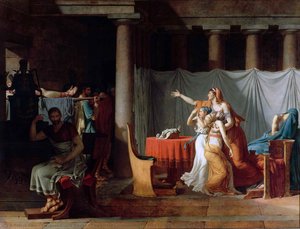
Jacques-Louis David's Etienne Maurice Gerard is more than just a portrait; it’s a meticulously crafted distillation of the Napoleonic era, a visual testament to military prowess, and a poignant reflection on the shifting tides of French history. Painted in 1816, shortly after Napoleon’s defeat and the subsequent exile of many prominent figures, this work captures General Gerard not merely as an individual, but as a symbol – a representation of France's past glory and its uncertain future. David, already a pivotal figure in the transition from Rococo to Neoclassical art, here masterfully employs the principles of his new style to elevate Gerard to heroic stature, imbuing the scene with a dramatic intensity that resonates far beyond a simple likeness.
The painting immediately draws the eye to Gerard’s commanding presence. He stands confidently on a balcony overlooking a distant landscape, his foot raised in a gesture of authority and control – a subtle yet powerful symbol of leadership. The composition is carefully balanced, utilizing strong diagonals created by the balcony railing and Gerard's stance to draw the viewer into the scene. David’s signature use of warm colors—rich reds, deep blues, and earthy browns—creates an atmosphere of power and gravitas, while his bold brushstrokes inject a sense of dynamism and movement into the otherwise formal arrangement.
David’s mastery of Neoclassical technique is evident in every meticulously rendered detail. The portrait showcases an extraordinary level of precision, particularly in the depiction of Gerard's uniform and medals. Each button, each fold of fabric, each glimmering emblem is painstakingly depicted, reflecting David’s dedication to accuracy and his deep understanding of military attire. This attention to detail isn’t merely decorative; it serves to underscore Gerard’s status as a decorated officer and a national hero – a man who had earned the respect and admiration of his peers.
The background landscape, rendered in muted tones, provides a dramatic backdrop for Gerard's figure. The distant mountains, visible through the hazy atmosphere, evoke a sense of vastness and timelessness, anchoring the portrait within the broader context of French history. Note also the subtle inclusion of architectural elements – the balustrade, the chairs—that subtly reinforce the Neoclassical aesthetic, grounding the scene in classical ideals of order and harmony.
Etienne Maurice Gerard is deeply embedded within the complex political and social landscape of post-revolutionary France. Gerard himself was a significant figure during the Napoleonic Wars, known for his bravery and strategic acumen. However, David’s portrayal transcends mere biographical representation; it speaks to the broader themes of power, ambition, and national identity that defined the era. The confident expression on Gerard's face—a subtle hint of determination mingled with quiet authority—suggests a man who has weathered storms and emerged victorious.
The painting’s creation coincided with a period of political instability in France, following Napoleon’s defeat and the restoration of the Bourbon monarchy. David, himself exiled from Paris, used this portrait as an opportunity to revisit his Neoclassical style and to celebrate the ideals of the past—a deliberate act of defiance against the prevailing conservative forces. The work can be interpreted as a nostalgic yearning for a bygone era of grandeur and military glory, while simultaneously serving as a reminder of France’s enduring legacy in the world of art and culture.
At Most-Famous-Paintings.com, we are proud to offer meticulously hand-painted reproductions of Etienne Maurice Gerard, capturing David's exceptional skill and the painting's dramatic intensity with unparalleled fidelity. Whether you choose a canvas print or an oil-painted replica, our artisans will ensure that every detail is rendered with precision and care, allowing you to bring this iconic masterpiece into your home or office.
To learn more about Jacques-Louis David and his remarkable career, please visit Jacques Louis David’s page on Most-Famous-Paintings. For further insights into the painting's historical context and artistic influences, we recommend exploring Jacques Louis David on Wikipedia and Neo-Classicism Art Movement on Most-Famous-Paintings.


1748 - 1800 , França

Explore the profound elegance of Neoclassicism. Discover how Enlightenment ideals, the discovery of Pompeii, and masters like Jacques-Louis David revived the glory of Greek and Roman antiquity through art defined by order, reason, and timeless beauty.


Fique por dentro das últimas notícias de arte, ofertas exclusivas e ideias de decoração.
Conte-nos sobre o seu projeto e os nossos especialistas em arte fornecerão 3 sugestões de arte personalizadas.
Deixe que selecionamos 3 opções especialmente para você – Grátis!


 Visualizar em escala
 Enviar
 Compartilhar
 Ver detalhes

 Baixar
 Semelhantes
 Raio X
 Apresentação de slides

 Ver mais







 A opção de vidro está disponível apenas para tamanhos inferiores a 110 cm