x

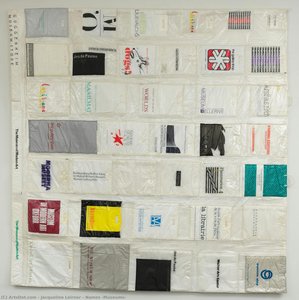
 1987
1987 20.0 x 13.0 cm
 Auckland Art Gallery Toi o Tāmaki
Adquira uma imagem digital de alta resolução e aprimorada, muito superior à prévia online.
Cada arquivo é meticulosamente preparado por nossos especialistas internos, utilizando ferramentas avançadas e retoques manuais de alta precisão. Garantimos que cada imagem apresente clareza excepcional, fidelidade de cores e detalhes minuciosos.
O arquivo final é entregue por e-mail em até 72 horas, otimizado para uso imediato em ambientes profissionais, editoriais e de impressão. Esta é a mesma qualidade utilizada por estúdios de design de alto nível, editoras e galerias.
Baixe um arquivo de alta resolução para exibição pessoal, impressão e projetos criativos. ( Ver impressão do pedido Alternar para pintura feita à mão)
Ao escolher o Most-Famous-Paintings.com, você não está apenas adquirindo uma imagem — você está recebendo uma obra de arte digital profissionalmente aprimorada, elaborada com precisão e com garantia de satisfação. Aqui está tudo o que acompanha seu pedido, automaticamente:

O seu arquivo de imagem digital em alta resolução será enviado por e-mail em até 72 horas após o pedido — pronto para uso imediato.

Sua obra de arte é otimizada profissionalmente por meio de ferramentas avançadas de IA e edição manual, garantindo o máximo de detalhes, clareza e precisão de cores.

Apagou ou perdeu o seu ficheiro acidentalmente? Não se preocupe – nós reenviamos para si a qualquer momento, gratuitamente.

Desfrute da sua obra de arte instantaneamente, sem taxas alfandegárias, impostos ou custos de entrega — downloads digitais são sempre isentos de taxas.

Garantimos que sua imagem digital reflita as cores originais com a maior fidelidade possível, utilizando ferramentas profissionais e gerenciamento de cores.

Se você não estiver satisfeito com sua imagem digital, nós a revisaremos ou reembolsaremos 100% dentro de 60 dias — sem perguntas.

Não está satisfeito? Receba o reembolso total em até 60 dias após o recebimento do seu arquivo digital — sem perguntas.

Compre 3 imagens, economize 10% - Compre 5, economize 15% - Compre 10+, economize 20%. Ideal para projetos criativos, galerias e agências.

Julian Dashper (1960–2009) stood as one of New Zealand’s most profound contemporary voices, an artist whose practice functioned as a sophisticated bridge between the local landscape and the global currents of art history. Born in Auckland, Dashper possessed a rare ability to navigate the tension between Aotear and the wider world, exploring how visual information is received, disseminated, and reinterpreted across geographical boundaries. His work was never merely about the creation of objects; rather, it was an intellectual inquiry into the very nature of seeing. To look at a Dashper piece is to engage with a self-conscious dialogue, where the artist’s hand meets the weight of modernist tradition, questioning how much of our understanding of "great art" is shaped by the reproductions and catalogues that reach us from afar.
His artistic journey began in the vibrant, transformative atmosphere of the late 1970s and early 1980s at the Elam School of Fine Arts, University of Auckland. During these formative years, Dashper’s practice emerged through the lens of expressive abstraction, a style that mirrored the burgeoning influences of European Minimalism and American Conceptualism. However, even in these early stages, a distinct conceptual rigor was evident. He did not simply paint; he interrogated the medium itself. As his career progressed, his focus shifted from the purely formal properties of paint to a more complex investigation of seriality and repetition. This evolution saw him move away from the singular, heroic gesture toward meticulously crafted installations and multi-media projects that challenged the boundaries between painting, sculpture, and performance.
One of the most captivating dimensions of Dashper’s oeuvre was his fascination with the concept of the series. He utilized repetition not as a way to create monotony, but as a tool to explore rhythm, memory, and the persistence of imagery. This is perhaps most famously embodied in his ambitious project, The Big Bang Theory. In this work, Dashper moved beyond the canvas to incorporate drum-kit installations, creating a sensory experience that merged visual abstraction with the visceral energy of sound. These works were not merely visual representations but were deeply embedded in the idea of performance and the temporal nature of art. His practice frequently expanded into other realms, including:
Through these varied mediums, Dashper maintained a consistent preoccupation with how art exists within its environment. He was acutely aware of the artist's role within the market and the institution, often using wry, conceptual approaches to critique or celebrate the structures that house creativity. His work functioned as a mirror, reflecting both the prestige and the limitations of the art world.
Dashper’s influence extended far beyond the shores of New Zealand. His pursuit of international dialogue led him to prestigious opportunities, most notably a Senior Fulbright Fellowship and a residency at the Chinati Foundation in Marfa, Texas, in 2001. This period in the American desert, a landscape synonymous with Minimalism, further refined his understanding of how scale and site-specificity interact with abstract form. His ability to hold his own within this global context earned him significant recognition, with his work being featured in major exhibitions across America and Australia, including notable showcases in Sydney and Sioux City.
Despite his untimely passing in 2009, the historical significance of Julian Dashper remains undiminished. He left behind a legacy that continues to challenge how we perceive the relationship between the local and the universal. By treating New Zealand’s geographical position not as an isolation, but as a unique vantage point from which to view the world, he redefined the possibilities for contemporary Pacific art. His work remains a vital testament to the power of intellectual curiosity, reminding us that art is not just a window into beauty, but a complex, ongoing conversation with history, culture, and the very way we perceive our place in the universe.

1960 - 2009 , New Zealand


Fique por dentro das últimas notícias de arte, ofertas exclusivas e ideias de decoração.
Conte-nos sobre o seu projeto e os nossos especialistas em arte fornecerão 3 sugestões de arte personalizadas.
Deixe que selecionamos 3 opções especialmente para você – Grátis!


 Visualizar em escala
 Enviar
 Compartilhar
 Ver detalhes

 Baixar
 Semelhantes
 Raio X
 Apresentação de slides
 Ver mais