


x

 Abstract Expressionism
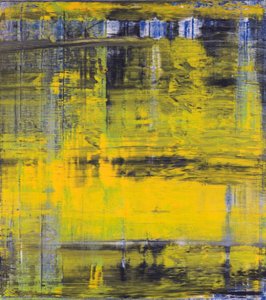
 1962
1962 165.0 x 137.0 cm
Adquira uma imagem digital de alta resolução e aprimorada, muito superior à prévia online.
Cada arquivo é meticulosamente preparado por nossos especialistas internos, utilizando ferramentas avançadas e retoques manuais de alta precisão. Garantimos que cada imagem apresente clareza excepcional, fidelidade de cores e detalhes minuciosos.
O arquivo final é entregue por e-mail em até 72 horas, otimizado para uso imediato em ambientes profissionais, editoriais e de impressão. Esta é a mesma qualidade utilizada por estúdios de design de alto nível, editoras e galerias.
Baixe um arquivo de alta resolução para exibição pessoal, impressão e projetos criativos. ( Encomendar impressão Encomendar reprodução pintada à mão)
Ao escolher o Most-Famous-Paintings.com, você não está apenas adquirindo uma imagem — você está recebendo uma obra de arte digital profissionalmente aprimorada, elaborada com precisão e com garantia de satisfação. Aqui está tudo o que acompanha seu pedido, automaticamente:

O seu arquivo de imagem digital em alta resolução será enviado por e-mail em até 72 horas após o pedido — pronto para uso imediato.

Sua obra de arte é otimizada profissionalmente por meio de ferramentas avançadas de IA e edição manual, garantindo o máximo de detalhes, clareza e precisão de cores.

Apagou ou perdeu o seu ficheiro acidentalmente? Não se preocupe – nós reenviamos para si a qualquer momento, gratuitamente.

Desfrute da sua obra de arte instantaneamente, sem taxas alfandegárias, impostos ou custos de entrega — downloads digitais são sempre isentos de taxas.

Garantimos que sua imagem digital reflita as cores originais com a maior fidelidade possível, utilizando ferramentas profissionais e gerenciamento de cores.

Se você não estiver satisfeito com sua imagem digital, nós a revisaremos ou reembolsaremos 100% dentro de 60 dias — sem perguntas.

Não está satisfeito? Receba o reembolso total em até 60 dias após o recebimento do seu arquivo digital — sem perguntas.

Compre 3 imagens, economize 10% - Compre 5, economize 15% - Compre 10+, economize 20%. Ideal para projetos criativos, galerias e agências.

Kenzo Okada stands as a singular figure in the tapestry of 20th-century art—a Japanese-born American painter who carved out an indelible mark within the vibrant, often turbulent landscape of Abstract Expressionism. His life and work embody a fascinating confluence of cultural heritage and avant-garde experimentation, acting as a bridge between the disciplined aesthetics of the East and the spontaneous energy of the West. Often celebrated as the first Japanese-American artist to achieve international acclaim within the Abstract Expressionist style, Okada brought to American abstraction a sense of civilized restraint, an elegance of device, and an unusual gift for the poetic transmutation of natural forms.
Born on September 28, 1902, in Yokohama, Japan, Okada’s early path was marked by a quiet struggle between familial expectation and personal passion. His father, a prominent industrialist, prioritized practical stability over the perceived instability of a creative life. Yet, following his father's passing, Okada found the freedom to pursue his true calling, enrolling at the Tokyo School of Fine Arts. This period of rigorous training in Western painting techniques provided him with a formidable foundation, but the allure of the global art scene proved too strong to resist. In 1924, driven by a thirst for the intellectual dynamism of Europe, he departed Japan for Paris, where he studied under the renowned Japanese expatriate Tsuguharu Foujita. This formative era in France exposed him to the stylistic innovations of Impressionism and Fauvism, planting the seeds for his eventual evolution toward abstraction.
The trajectory of Okada’s career was defined by a series of pivotal transitions that saw him moving from urban subjects to deeply meditative, lyrical abstractions. After debuting at the Salon d'Automne in Paris in 1927, he returned to Japan, quickly establishing himself as a respected figure through solo exhibitions and participation in prestigious groups like the Nika-ten. However, it was his eventual move to the United States that would catalyze his most significant artistic breakthroughs. In the mid-century New York art scene, Okada found a landscape that allowed him to merge his Japanese sensibilities with the burgeoning movement of Color Field painting and Abstract Expressionism.
His mature work is characterized by a profound sensitivity to color and a mastery of subtle tonalities. Unlike some of his contemporaries who relied on aggressive gestures, Okada’s technique often involved delicate, sensitive brushstrokes that created a sense of depth and atmospheric complexity. His paintings frequently evoke the essence of landscapes without explicitly depicting them; instead, they use earth colors, muted blues, and soft greens to create a poetic interpretation of the natural world. In masterpieces such as To Point and Grey, one can observe how he utilized abstract patterns and balanced compositions to achieve a state of tension and resolution, inviting the viewer into a space of quiet contemplation.
The historical significance of Kenzo Okada lies in his ability to harmonize disparate worlds. He did not merely adopt Western abstraction; he transformed it through the lens of an Eastern aesthetic rooted in subtlety and grace. This unique synthesis earned him some of the highest honors in the art world, including the Astorre Meyer Prize and the UNESCO Prize at the 29th Venice Biennale in 1958, where his work was featured in the Japan Pavilion.
His enduring influence is reflected in the prestigious collections that house his legacy. His works are held in the permanent collections of the world's most esteemed institutions, including:
Through his ability to translate the ephemeral qualities of light and nature into enduring abstract forms, Kenzo Okada remains a vital figure for scholars and lovers of art alike. He remains a pioneer who proved that abstraction could be both powerful and profoundly peaceful, leaving behind a body of work that continues to resonate with an elegance that transcends borders and generations.

1902 - 1982 , Japan


Fique por dentro das últimas notícias de arte, ofertas exclusivas e ideias de decoração.
Conte-nos sobre o seu projeto e os nossos especialistas em arte fornecerão 3 sugestões de arte personalizadas.
Deixe que selecionamos 3 opções especialmente para você – Grátis!


 Visualizar em escala
 Enviar
 Compartilhar
 Ver detalhes

 Baixar
 Semelhantes
 Raio X
 Apresentação de slides
 Ver mais



![Abstract Composition [triptych] — Vaclav Vytlacil, Abstract Expressionism](/media/artworks/images/thumbnails/e5/3d/e53db42ea02644b9a8e722f9d4dd3742.jpg)

