x

 Acrylic On CanvasWallArtSurrealism
 1961
1961 31.0 x 47.0 cm
Impressão giclée ou em tela de qualidade de museu, com produção rápida e opções flexíveis de acabamento. ( Encomendar reprodução pintada à mão Comprar imagem em alta resolução)





























Escolha entre os nossos tamanhos pré-definidos que respeitam as proporções originais da obra de arte.

Você pode inserir suas próprias dimensões para se ajustar a uma moldura ou espaço específico. Se o tamanho selecionado não corresponder às proporções da imagem original, iremos recortar a obra de arte ou estender a imagem com uma borda espelhada ou preenchimento sólido. Um mockup digital será enviado para sua aprovação antes do início da produção.
Por favor, observe que a visualização na tela não reflete o recorte ou a extensão real. Apenas o mockup mostrará com precisão a composição final.
Embora tamanhos personalizados estejam disponíveis, recomendamos selecionar uma dimensão da lista predefinida para preservar as proporções originais.
Entrega mundial () em 2 semanas, em vez das 4/5 semanas padrão. (15 Agosto)


Paradise (12)
Dimensões da Reprodução
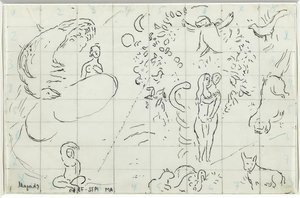
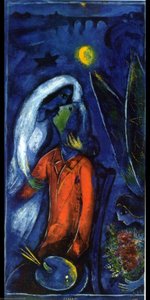
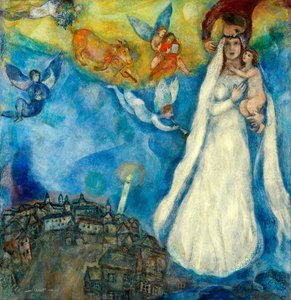
Marc Chagall's *Paradise (12)*, painted in 1961, isn’t merely a depiction of a biblical scene; it’s an immersion into the artist’s deeply personal universe—a vibrant tapestry woven from memory, faith, and the enduring spirit of his Vitebsk childhood. This canvas pulsates with a joyous energy, a testament to Chagall's ability to transform the familiar narratives of Eden into something profoundly moving and uniquely his own. The painting immediately draws the eye with its riotous color palette—a symphony of blues, greens, yellows, and reds that seem to shimmer with an inner light. It’s a world unbound by realism, where figures float and dance amidst a profusion of flowers, creating a sense of both earthly delight and celestial transcendence.
At the heart of *Paradise (12)* lies a group of figures—a multitude of individuals rendered in Chagall’s signature style. They aren't portraits, but rather embodiments of archetypes; Adam and Eve are present, naturally, but surrounded by a throng of family members, friends, and neighbors – all recognizable as characters from his Vitebsk past. The composition is deliberately loose and dynamic, suggesting movement and conversation. Notice how some figures are clustered together, engaged in animated dialogue, while others drift further into the background, lost in contemplation or simply enjoying the beauty of their surroundings. The arrangement feels less like a formal depiction and more like a spontaneous gathering—a celebration of life and connection.
Chagall’s work is rich with symbolism, drawing heavily on Jewish folklore and religious tradition. The abundance of flowers isn't simply decorative; they represent fertility, renewal, and the promise of eternal life. The presence of animals—a donkey, a bird, and a dog—adds layers of meaning, referencing biblical stories and representing aspects of nature and human relationships. The central figure, often interpreted as Chagall himself, is depicted with his characteristic flowing beard and distinctive hat, suggesting both humility and artistic authority. The inclusion of figures from his family – including his wife, Valentina (known as Bella) – reinforces the painting’s deeply personal nature, transforming a biblical narrative into a celebration of familial love and heritage.
*Paradise (12)* is executed in gouache on canvas, a medium that lends itself beautifully to Chagall’s expressive style. The flat, vibrant colors are applied with broad brushstrokes, creating a sense of immediacy and spontaneity. The lack of precise detail contributes to the painting's dreamlike quality—it feels as though we’re peering into a vivid memory or glimpsing a fleeting vision. Chagall’s use of color is particularly noteworthy; he employs contrasting hues to create visual excitement and depth, while also utilizing subtle gradations to suggest light and shadow. The overall effect is one of joyous exuberance—a testament to the artist's mastery of his chosen medium.
Beyond its technical brilliance, *Paradise (12)* possesses a profound emotional resonance. It’s not simply a retelling of the story of Adam and Eve; it's an affirmation of life’s beauty, joy, and interconnectedness. The painting radiates warmth and optimism—a reminder that even in the face of adversity, there is always hope for renewal and redemption. It invites us to contemplate our own relationships, our memories, and our place within the larger tapestry of human experience. *Paradise (12)* remains a powerful testament to Chagall’s enduring legacy as one of the 20th century's most beloved and influential artists.

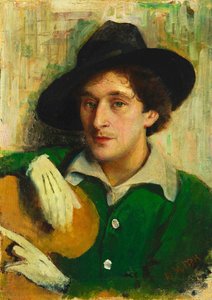
1887 - 1985 , Belarus

Explore the profound depths of Surrealism. From Dalí’s dreamscapes to Magritte’s enigmas, master the history of the subconscious mind through our expert art guide and discover museum-quality oil reproductions of the world's most iconic surrealist masterpieces.

Explore the profound depths of Surrealism with our expert guide. From Dalí's dreamscapes to Breton's manifesto, uncover the history, symbolism, and technical mastery of this revolutionary movement. Perfect for students and collectors seeking deep art-historical insight.


Fique por dentro das últimas notícias de arte, ofertas exclusivas e ideias de decoração.
Conte-nos sobre o seu projeto e os nossos especialistas em arte fornecerão 3 sugestões de arte personalizadas.
Deixe que selecionamos 3 opções especialmente para você – Grátis!


 Visualizar em escala
 Enviar
 Compartilhar
 Ver detalhes

 Baixar
 Semelhantes
 Raio X
 Apresentação de slides
 Ver mais







 A opção de vidro está disponível apenas para tamanhos inferiores a 110 cm