x


 Comprar impressão Encomendar pintura
 Enviar
 Detalhes da obra
 Adicionar aos favoritos
 Baixar
 Semelhantes
 Raio X
 Slideshow
 LithographyOtherNaive Primitivism
 1966Modern
 31.0 x 26.0 cm
Adquira uma imagem digital de alta resolução e aprimorada, muito superior à prévia online.
Cada arquivo é meticulosamente preparado por nossos especialistas internos, utilizando ferramentas avançadas e retoques manuais de alta precisão. Garantimos que cada imagem apresente clareza excepcional, fidelidade de cores e detalhes minuciosos.
O arquivo final é entregue por e-mail em até 72 horas, otimizado para uso imediato em ambientes profissionais, editoriais e de impressão. Esta é a mesma qualidade utilizada por estúdios de design de alto nível, editoras e galerias.
Baixe um arquivo de alta resolução para exibição pessoal, impressão e projetos criativos.
Ao escolher o Most-Famous-Paintings.com, você não está apenas recebendo uma imagem — você está recebendo uma obra de arte digital profissionalmente aprimorada, elaborada com precisão e com garantia de satisfação. Aqui está tudo o que acompanha seu pedido, automaticamente:

O seu arquivo de imagem digital em alta resolução será enviado por e-mail em até 72 horas após o pedido — pronto para uso imediato.

Sua obra de arte é otimizada profissionalmente por meio de ferramentas avançadas de IA e edição manual, garantindo o máximo de detalhes, clareza e precisão de cores.

Apagou ou perdeu o seu ficheiro acidentalmente? Não se preocupe – nós reenviamos para si a qualquer momento, gratuitamente.

Desfrute da sua obra de arte instantaneamente, sem taxas alfandegárias, impostos ou custos de entrega — downloads digitais são sempre isentos de taxas.

Garantimos que sua imagem digital reflita as cores originais com a maior fidelidade possível, utilizando ferramentas profissionais e gerenciamento de cores.

Se você não estiver satisfeito com sua imagem digital, nós a revisaremos ou reembolsaremos 100% dentro de 60 dias — sem perguntas.

Não está satisfeito? Receba o reembolso total em até 60 dias após o recebimento do seu arquivo digital — sem perguntas.

Compre 3 imagens, economize 10% - Compre 5, economize 15% - Compre 10+, economize 20%. Ideal para projetos criativos, galerias e agências.
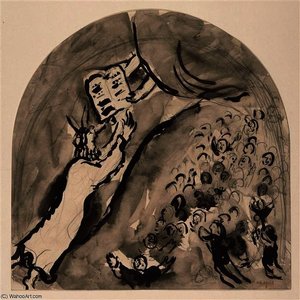
Marc Chagall’s 1966 lithograph, “Ten Commandements,” is more than just a depiction of biblical narrative; it’s a profound meditation on faith, memory, and the enduring power of childhood dreams. Executed in a style that leans heavily into naive or primitivist aesthetics – a hallmark of Chagall's later work – this piece invites viewers to step into a world where reality blends seamlessly with fantastical imagery. The image itself presents a solitary figure, a man draped in a vibrant red robe, holding two luminous white objects within his hands. His gaze is fixed upon them with an intensity that suggests both reverence and childlike wonder. This isn't a formal, academic rendering of the Ten Commandments; rather, it’s a deeply personal interpretation filtered through Chagall’s unique artistic lens.
Born Moishe Shagal in 1887 in Liozna, Belarus – a town that would forever remain etched within his artistic consciousness – Chagall's early life profoundly shaped his oeuvre. Liozna, with its distinctive blend of Russian Orthodox and Jewish cultural influences, provided the fertile ground for his imaginative world. This lithograph powerfully evokes this formative environment; the red robe, a frequent motif in his work, alludes to the traditional attire of Hasidic Jews, while the luminous objects could represent the sacred texts or perhaps simply the pure light of faith itself. The scene feels intensely intimate, as if we are witnessing a private moment of contemplation – a return to the foundational beliefs of his youth.
Created in 1966 using lithography, “Ten Commandements” demonstrates Chagall’s masterful command of this printmaking technique. Lithography relies on a chemical process that allows for subtle gradations of tone and texture, creating an effect remarkably similar to painting. The resulting image is characterized by its soft edges, dreamlike atmosphere, and vibrant color palette – a deliberate choice reflecting Chagall's desire to capture the emotional essence of his subjects rather than striving for photographic realism. The technique lends itself perfectly to conveying the ethereal quality of memory and the fantastical elements that populate his art.
The two white objects held by the figure are open to interpretation, adding another layer of complexity to this already rich artwork. They could represent the tablets containing the Ten Commandments, or perhaps they symbolize innocence, purity, and the unwavering belief that guided Chagall’s life. The man's solitary presence amplifies the sense of introspection and spiritual yearning inherent in the work. Chagall frequently employed symbolism to convey deeper meanings, inviting viewers to engage with the artwork on a personal level. This piece is not simply about religious law; it’s about the human search for meaning and truth.
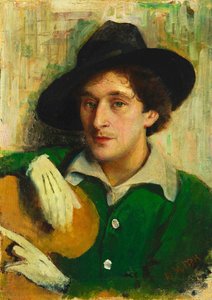
1887 - 1985 , Belarus


Fique por dentro das últimas notícias de arte, ofertas exclusivas e ideias de decoração.
Conte-nos sobre o seu projeto e os nossos especialistas em arte fornecerão 3 sugestões de arte personalizadas.
Deixe-nos selecionar 3 opções especialmente para você – Grátis!


 Compartilhar

 Ver mais