x

 Giz pastelHigh Renaissance
 1518Renascimento
 238.0 x 209.0 cm
Impressão giclée ou em tela de qualidade de museu, com produção rápida e opções flexíveis de acabamento. ( Encomendar reprodução pintada à mão Comprar imagem em alta resolução)





























Escolha entre os nossos tamanhos pré-definidos que respeitam as proporções originais da obra de arte.

Você pode inserir suas próprias dimensões para se ajustar a uma moldura ou espaço específico. Se o tamanho selecionado não corresponder às proporções da imagem original, iremos recortar a obra de arte ou estender a imagem com uma borda espelhada ou preenchimento sólido. Um mockup digital será enviado para sua aprovação antes do início da produção.
Por favor, observe que a visualização na tela não reflete o recorte ou a extensão real. Apenas o mockup mostrará com precisão a composição final.
Embora tamanhos personalizados estejam disponíveis, recomendamos selecionar uma dimensão da lista predefinida para preservar as proporções originais.
Entrega mundial () em 2 semanas, em vez das 4/5 semanas padrão. (17 Agosto)


Studies for The Risen Christ (recto)
Dimensões da Reprodução
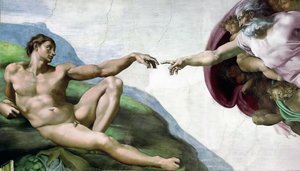
Within the hallowed halls of Most-Famous-Paintings.com, we offer an unparalleled opportunity to connect with the raw genius of Michelangelo Buonarroti through meticulously crafted hand-painted reproductions. Today, we delve into “Studies for The Risen Christ (recto),” a remarkably intimate and profoundly revealing work from 1518 – a piece that transcends mere preparatory sketches and instead offers a glimpse into the very process of artistic creation itself. Measuring an impressive 238 x 209 cm, this chalk drawing is not simply a study; it’s a testament to Michelangelo's relentless pursuit of anatomical accuracy and spiritual depth.
The image captures a figure powerfully poised – likely representing the resurrected Christ – his hands resting confidently on his hips. Michelangelo’s mastery of chalk is immediately apparent, evidenced by the incredibly detailed musculature rendered with astonishing precision. The lines are not merely outlines; they possess a palpable weight and volume, suggesting an understanding of three-dimensional form that was revolutionary for its time. Notice the subtle variations in tone achieved through layering and shading – techniques that anticipate the monumental marble sculpture he would later realize. The drawing’s scale invites close inspection, revealing the artist's meticulous attention to every contour, every vein, every ripple of muscle beneath the skin.
“Studies for The Risen Christ (recto)” exists within a pivotal moment in art history. Michelangelo was simultaneously engaged in the ambitious design of Villa Madama in Rome – a project tragically curtailed by the Sack of 1527 – and, crucially, wrestling with the monumental challenge of depicting the resurrected Christ. This drawing provides invaluable insight into his approach to this complex commission. The sheer scale of the final sculpture demanded an exhaustive understanding of human anatomy, and these studies demonstrate Michelangelo’s dedication to achieving that level of realism. The work reflects a deep engagement with classical ideals of beauty and proportion, yet it is firmly rooted in the burgeoning scientific interest in the human body that characterized the Renaissance.
Interestingly, this piece was created during a period of intense political and religious upheaval. Rome itself was scarred by conflict and uncertainty, mirroring the spiritual struggle embodied within the image of Christ’s resurrection. The drawing's stark simplicity – devoid of overt symbolism beyond the figure itself – speaks to a profound concentration on the purely anatomical and artistic challenge at hand. It is a moment of intense focus, a solitary artist grappling with the divine through the language of human form.
The “Studies for The Risen Christ (recto)” exists within a broader body of work – notably its counterpart, the “verso” study, also executed in chalk on a similar scale. Furthermore, the completed sculpture itself, "The Risen Christ," stands as a testament to Michelangelo’s vision, housed with exquisite care at Casa Buonarroti in Florence. Examining these related works reveals a fascinating process of refinement and experimentation – a sculptor constantly testing and adjusting his design before committing it to stone.
To appreciate the significance of this drawing, one might also consider its place within the broader artistic landscape of the High Renaissance. Raphael’s “Madonna with the Blue Diadem,” created around the same period, offers a contrasting approach – prioritizing elegance and grace over anatomical rigor. Leonardo da Vinci's "Study for the Last Supper: James" showcases his unique sfumato technique and psychological depth. These works, alongside Michelangelo’s, illuminate the diverse paths taken by Renaissance artists as they sought to capture the essence of human experience and divine beauty.
Most-Famous-Paintings.com is proud to offer a meticulously hand-painted reproduction of “Studies for The Risen Christ (recto).” Unlike mass-produced prints, our reproductions capture the texture, nuance, and emotional resonance of the original drawing with unparalleled fidelity. Imagine this powerful image gracing your walls – a tangible connection to one of history’s greatest artistic minds. Whether you are an art collector, an interior designer seeking to infuse your space with timeless beauty, or simply an admirer of Michelangelo's genius, our reproduction offers a unique opportunity to own a piece of Renaissance history.
Explore the full collection and discover how you can bring this extraordinary study into your home today. Click here to view the complete reproduction.


1475 - 1564 , Itália

Explore the profound genius of the Renaissance Trinity. Delve into a comparative study of Leonardo da Vinci, Michelangelo, and Raphael, uncovering their unique contributions to art history, technique, and the enduring legacy of Italian High Renaissance mastery.


Fique por dentro das últimas notícias de arte, ofertas exclusivas e ideias de decoração.
Conte-nos sobre o seu projeto e os nossos especialistas em arte fornecerão 3 sugestões de arte personalizadas.
Deixe que selecionamos 3 opções especialmente para você – Grátis!


 Visualizar em escala
 Enviar
 Compartilhar
 Ver detalhes

 Baixar
 Semelhantes
 Raio X
 Apresentação de slides
 Ver mais







 A opção de vidro está disponível apenas para tamanhos inferiores a 110 cm